Refillable packaging is reshaping how brands design, distribute, and market products. As sustainability regulations tighten and consumer expectations evolve, refillable packaging has become one of the most effective strategies for reducing material waste while maintaining product performance.
Unlike traditional single-use packaging, refillable packaging systems are engineered for multiple use cycles. This structural shift reduces raw material consumption and enables brands to transition from linear to circular packaging models.
What Is Refillable Packaging?
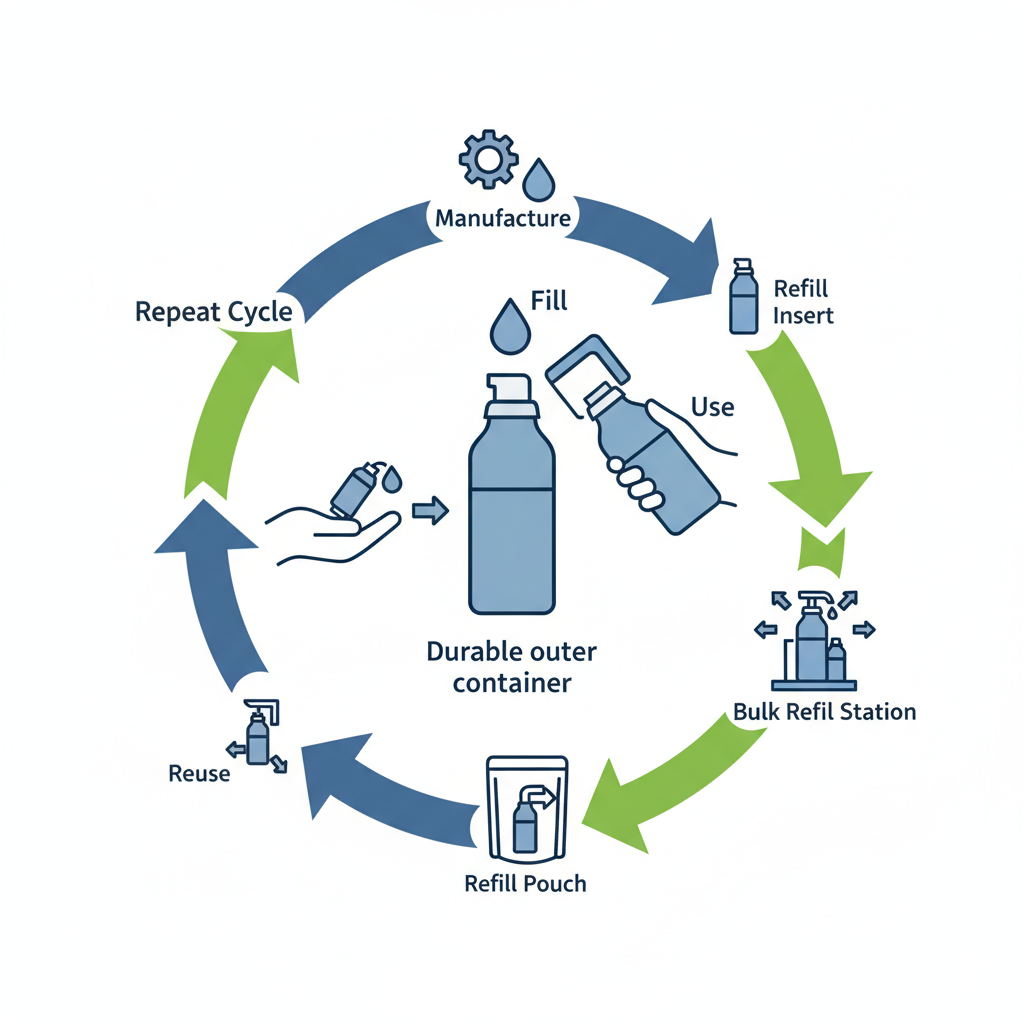
Refillable packaging refers to a durable primary container designed to remain in use while only the product insert, cartridge, pouch, or internal chamber is replaced.
It differs from:
- Recyclable packaging, which is discarded after use
- Reusable packaging, which may not involve structured refill systems
- Returnable packaging, which requires reverse logistics
The defining feature of refillable packaging is planned multi-cycle durability combined with lightweight refill components.
How Refillable Packaging Systems Work
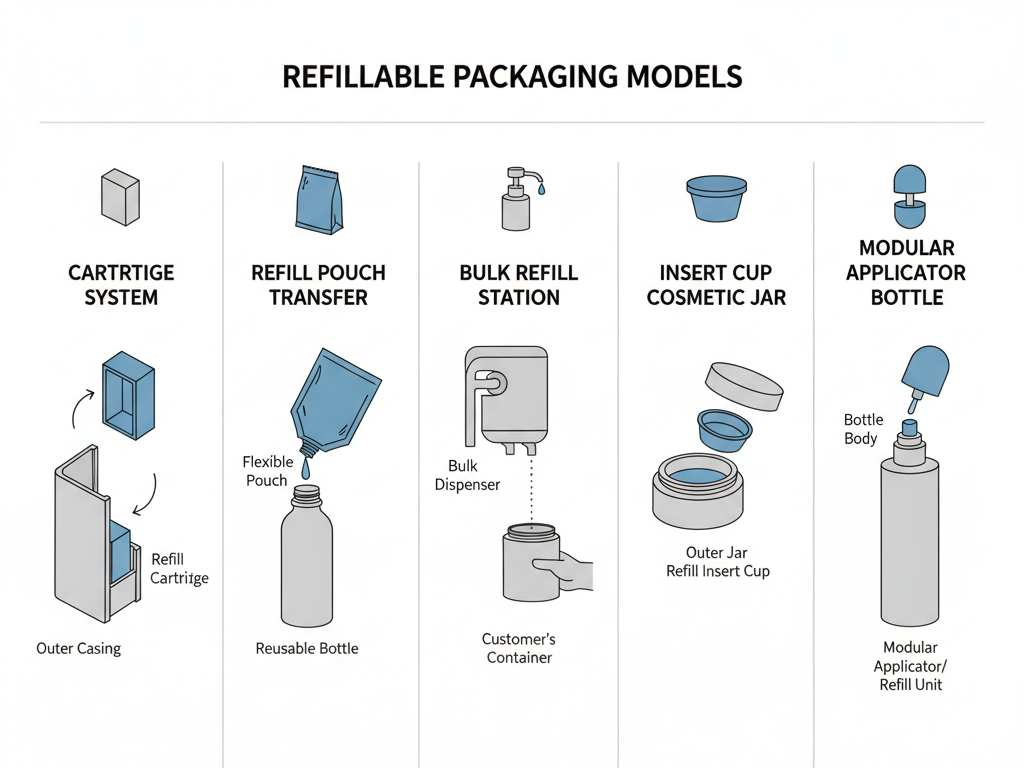
Refillable packaging systems vary by industry, but typically follow one of the following models:
- Cartridge-Based Systems
Outer container remains permanent; internal cartridge is replaced. - Refill Pouch Systems
Consumer transfers product from flexible pouch into durable container. - Bulk Refill Stations
Consumer refills container at retail station. - Insert Cup Systems
Common in cosmetic cream jars. - Modular Applicator Systems
Outer body remains; dispensing mechanism or chamber replaced.
Each model balances convenience, cost, environmental impact, and logistics complexity.
Materials Used in Refillable Packaging
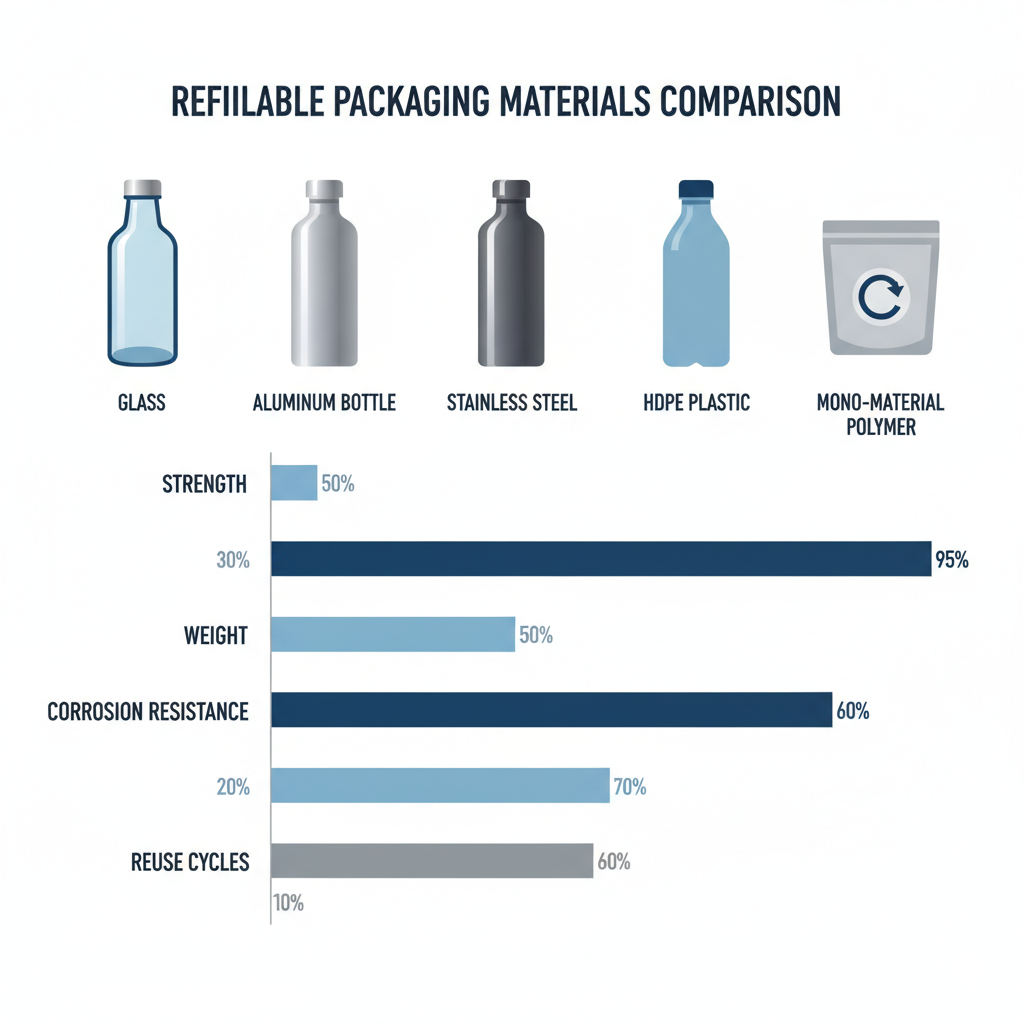
Material durability determines refill success. Common materials include:
- Glass
- Aluminum
- Stainless steel
- High-density polymers
- Mono-material engineered plastics
Why Material Choice Matters
Refillable packaging must withstand:
- Mechanical stress
- Repeated opening cycles
- Cleaning exposure
- Chemical compatibility
- Long-term aesthetic wear
Durability and lifecycle strength are more important than initial cost.
Environmental Impact of Refillable Packaging
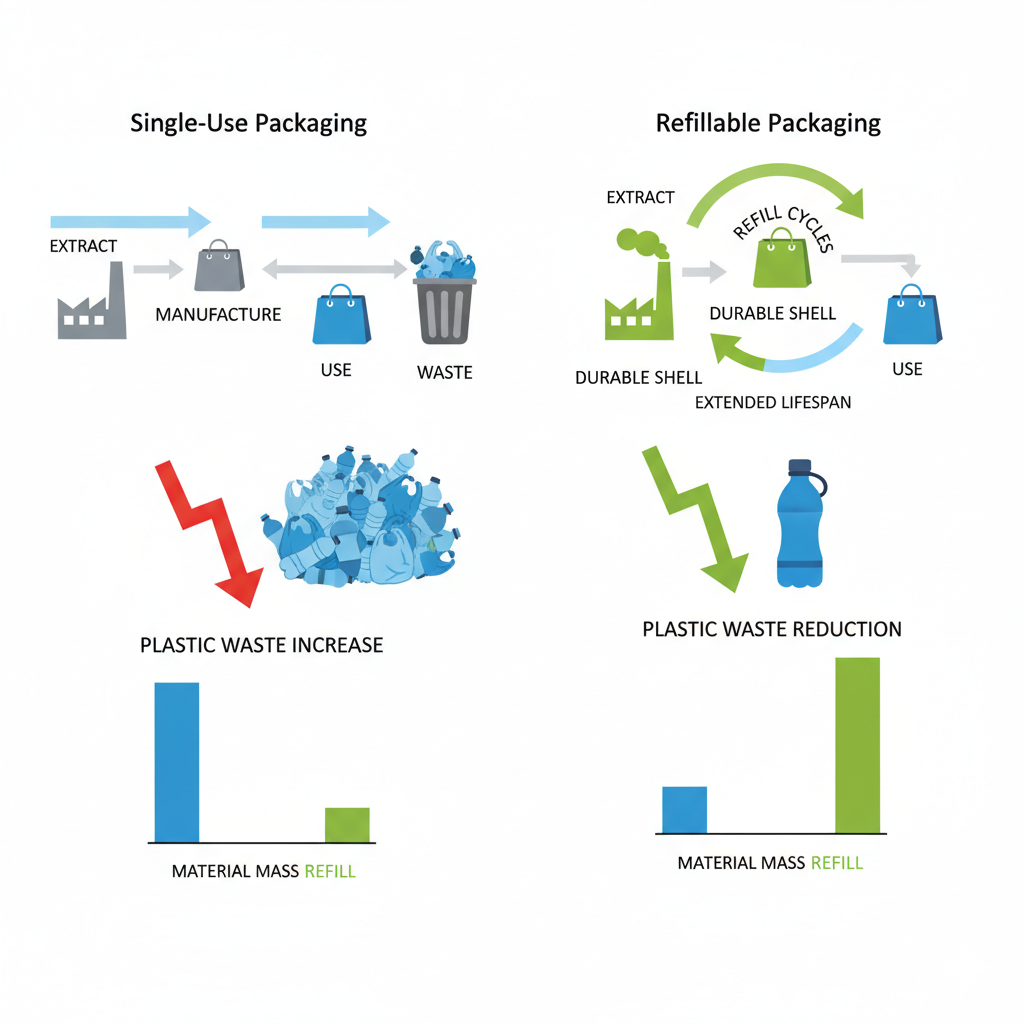
Refillable packaging reduces environmental impact when reuse cycles exceed breakeven thresholds.
Environmental benefits increase with:
- Higher reuse frequency
- Lower refill weight
- Reduced packaging mass per unit
- Optimized logistics
Lifecycle assessments indicate refillable systems can significantly reduce plastic consumption compared to single-use packaging when properly adopted.
However, consumer participation rate directly influences impact performance.
Business Strategy Behind Refillable Packaging
Refillable packaging is not just an environmental initiative — it is a business model shift.
- Revenue Model Shift
Refill systems promote recurring refill purchases. - Brand Differentiation
Sustainable packaging enhances brand positioning. - Packaging Cost Distribution
Durable outer shells amortize material investment across multiple cycles. - Regulatory Alignment
Supports compliance with emerging sustainability legislation.
Challenges of Refillable Packaging Adoption
Refillable systems require:
- Consumer education
- Packaging durability testing
- Compatibility validation
- Seal performance over repeated use
- Tooling investment
- Supply chain coordination
Not all product categories are equally suited for refillable systems.
Refillable Packaging in the Cosmetics Industry
While refillable packaging applies across industries, cosmetics has emerged as one of the fastest-growing adoption segments. Beauty brands increasingly seek refillable solutions to:
- Reduce plastic intensity
- Strengthen premium positioning
- Meet sustainability reporting targets
- Encourage customer loyalty
Refillable systems in cosmetics commonly include:
- Cartridge-based foundation systems
- Refillable cream jars
- Refillable aluminum bottles
- Applicator-integrated refill systems
Why Aluminum Is a Leading Material in Refillable Cosmetic Packaging
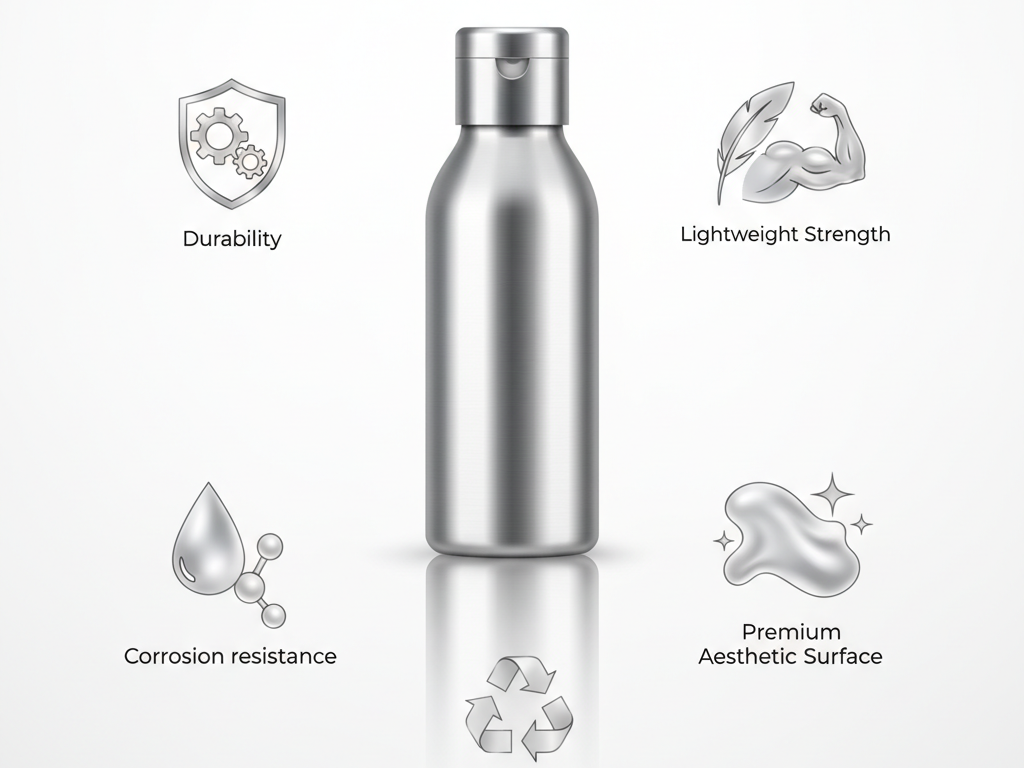
Among refillable packaging materials, aluminum offers distinct advantages:
- High structural durability
- Lightweight strength
- Corrosion resistance with internal coatings
- Premium metallic aesthetic
- Infinite recyclability
For refillable cosmetic bottles, aluminum provides a long-life outer shell that can be paired with replaceable inner refill units.
Refillable Aluminum Packaging Solutions
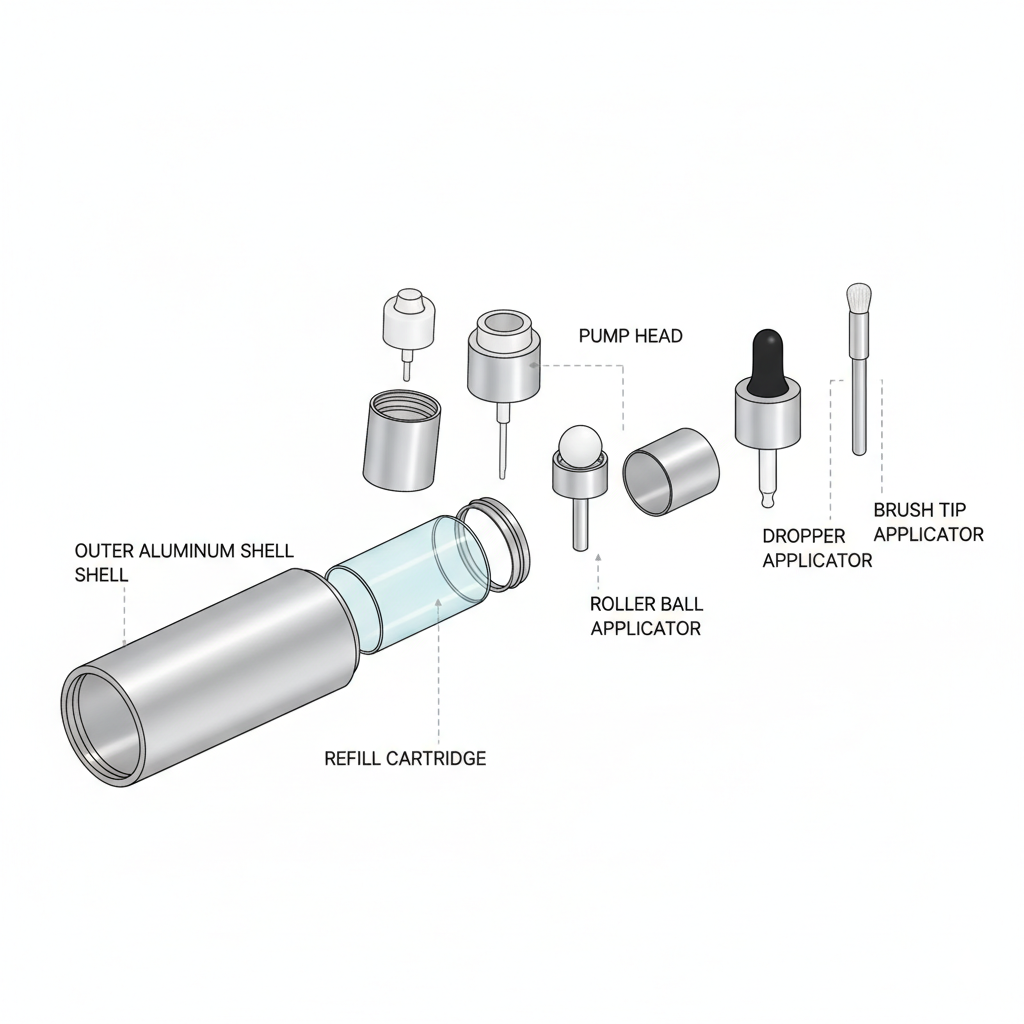
Refillable Aluminum Cosmetics Bottles with Different Applicators
Aluminum refillable bottles can integrate:
- Pump heads
- Roller ball applicators
- Dropper systems
- Brush tips
- Precision nozzles
By maintaining the aluminum exterior while replacing internal components, brands achieve durability and sustainability alignment.
Custom Refillable Aluminum Tube Structures
Custom cylindrical aluminum tube formats can function as durable refillable shells for niche cosmetic and specialty applications.
Advantages include:
- Strong barrier protection
- High-end branding surface
- Structural longevity
- Reduced packaging turnover
These structures combine refillable principles with premium material durability.
Future Outlook of Refillable Packaging
Refillable packaging is expected to expand across industries as:
- Regulatory requirements increase
- Consumers demand waste reduction
- Brands shift toward circular models
Technological innovations will improve refill compatibility, sealing systems, and lightweight refill formats.
Frequently Asked Questions
Is refillable packaging sustainable?
Yes, when reuse rates exceed material breakeven thresholds.
Is aluminum suitable for refillable packaging?
Yes, due to durability, recyclability, and structural strength.
Is refillable packaging more expensive?
Initial investment is higher, but lifecycle economics can improve long-term value.
Conclusion
Refillable packaging represents a structural evolution in packaging design. By combining durable outer materials with lightweight refill systems, brands can reduce waste, improve customer retention, and strengthen sustainability positioning.
In cosmetics, refillable aluminum packaging offers a balance between durability, aesthetic value, and environmental responsibility — making it one of the most promising directions for sustainable beauty packaging.