
If your artwork has more than three colors, gradients, or photorealistic detail, offset printing is almost always the right call — it delivers the sharpest, most consistent color on aluminum tubes at scale. If you’re running a simple one- or two-color logo and want durability without a huge order, screen printing wins on cost and toughness. And if you’re testing a new product line, launching a limited edition, or simply can’t commit to a 10,000-unit MOQ, digital printing gets you branded tubes fast without the setup headache. The right choice isn’t about which method is ‘best’ — it’s about matching the technology to your artwork complexity, order volume, and timeline.
Why the Printing Method Matters More Than Most Buyers Realize
Here’s a mistake we see constantly: a brand designs beautiful packaging artwork, sends it to a supplier, and only finds out during production that the printing method can’t actually reproduce what they designed. A soft pastel gradient that looked perfect in Illustrator turns muddy and banded on the tube. That’s not a factory error — it’s a mismatch between artwork and process, and it happens because printing method gets treated as an afterthought instead of a design decision made upfront.
Each printing technique works fundamentally differently on a curved aluminum surface, and that physical reality shapes what’s possible. Understanding this before you finalize your packaging design saves you a redesign cycle and, often, real money.
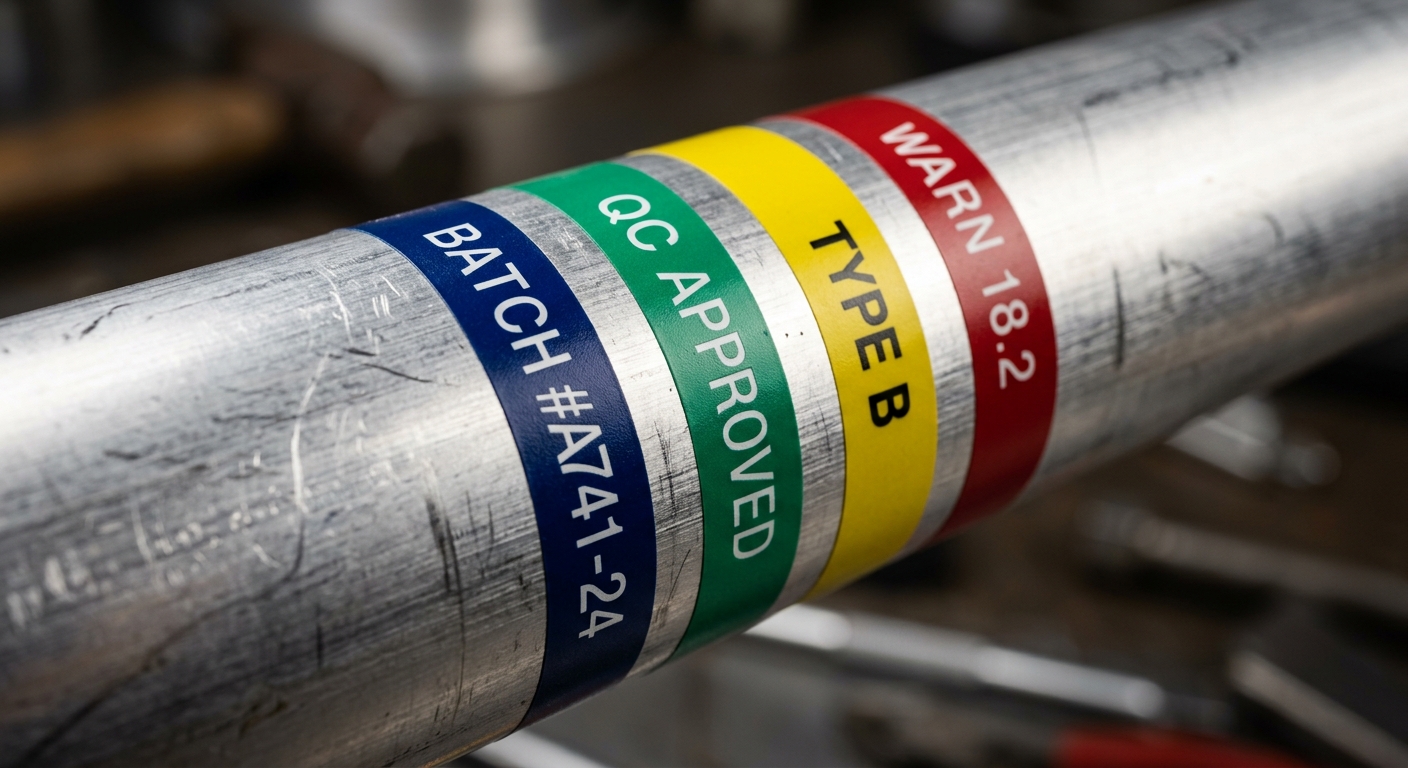
Offset Printing: The Gold Standard for Complex, Colorful Artwork
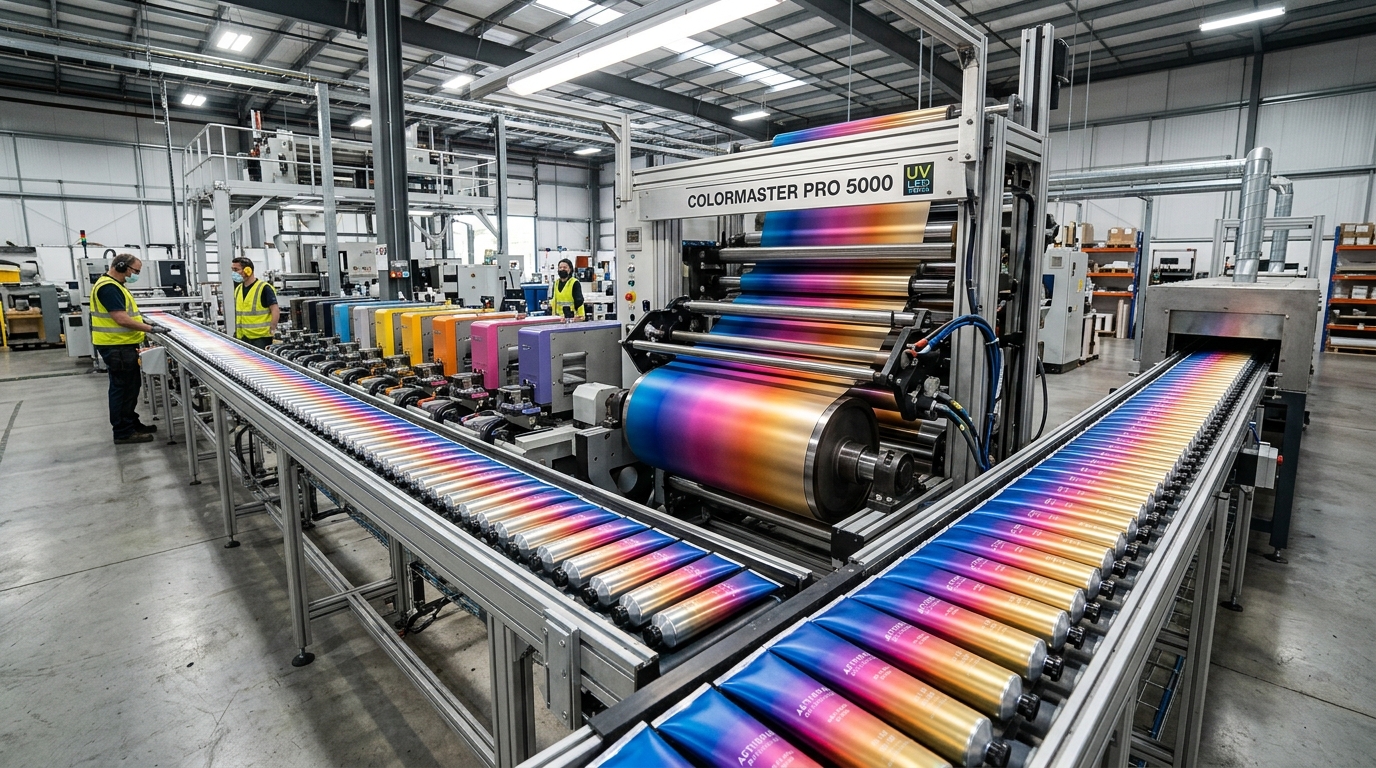
Offset printing transfers ink from a plate to a rubber blanket and then onto the tube — a process capable of reproducing fine gradients, photographic imagery, and subtle color transitions that other methods simply can’t match on metal. This is why nearly every premium skincare and cosmetic brand with detailed packaging artwork uses offset.
Where offset shines
- Multi-color designs (4+ colors) with smooth blending
- Photo-realistic textures — marble, botanical illustrations, metallic gradients
- Large production runs where per-unit cost drops significantly with volume
The trade-off
Offset requires dedicated plates for each color and precise color-matching setup, which means higher upfront tooling costs and MOQs that typically start around 10,000 to 50,000 pieces depending on tube diameter. For a brand doing a single hero SKU at scale, that’s a non-issue. For a startup testing three shade variants, it’s a real constraint.
For instance, a mid-size skincare brand launching a hero anti-aging cream with a soft rose-gold gradient and layered typography went with offset printing specifically because screen printing couldn’t reproduce the gradient cleanly — the visual impact on shelf was worth the higher MOQ commitment.
Screen Printing: Rugged, Affordable, and Underrated
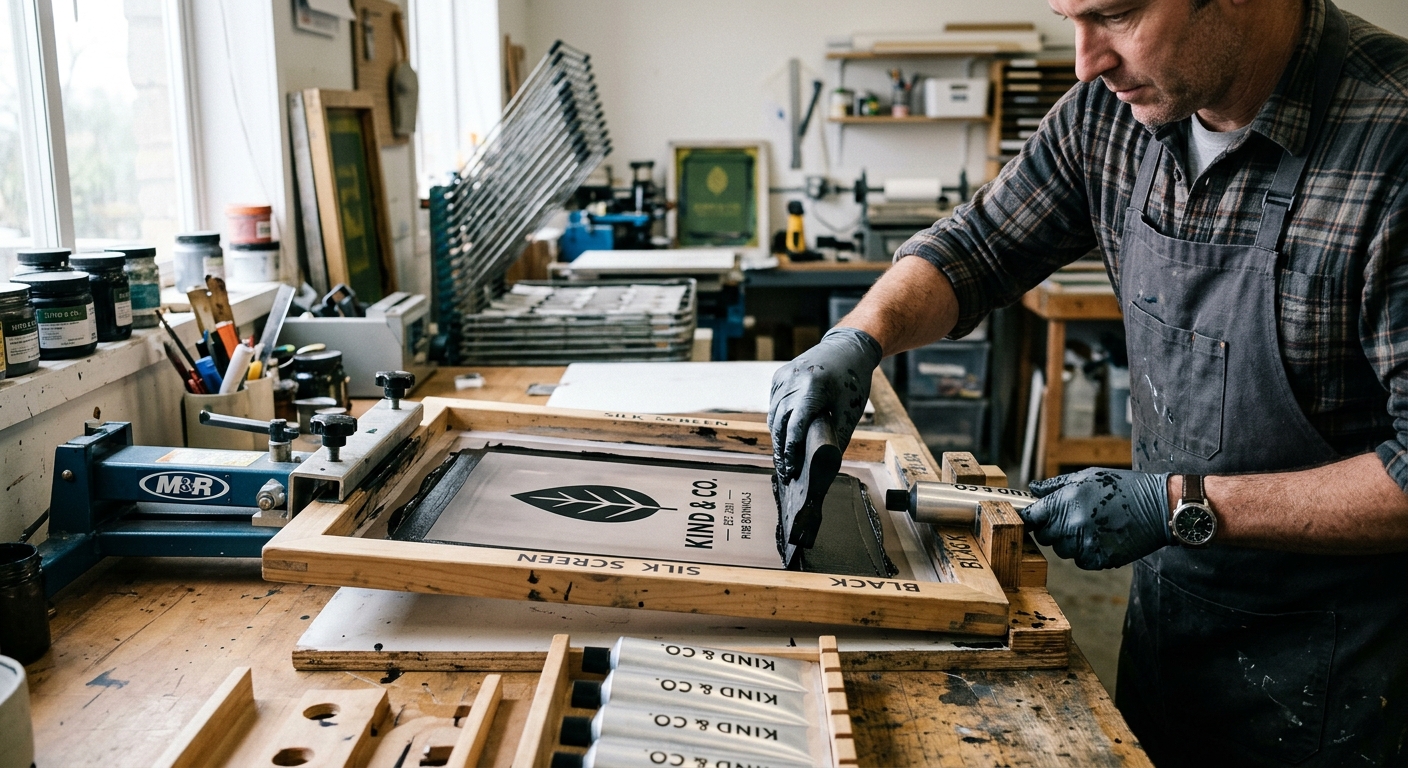
Screen printing pushes thick layers of ink through a mesh stencil directly onto the tube surface, and that thickness is exactly why the technique has stuck around for decades — it’s incredibly durable. Ink applied via screen printing resists scratching, fading, and abrasion far better than thin-layer methods, which matters a lot for tubes that get tossed in gym bags or bathroom cabinets for months.
Best suited for
- Simple logos, wordmarks, or one-to-three solid colors
- Toothpaste tubes and hand cream tubes where durability outranks visual complexity
- Brands wanting a lower MOQ than offset without sacrificing print robustness
Screen printing MOQs commonly run in the 3,000 to 5,000 unit range — meaningfully more accessible than offset. This is a big reason it remains popular for toothpaste tube packaging and everyday personal care products where the brand mark needs to survive daily handling, not necessarily impress with gradient artwork.
The limitation is obvious once you try to push it: screen printing struggles with fine detail and gradients. Ask for a soft blended background and you’ll usually get visible color banding instead of a smooth transition.
Digital Printing: Speed and Flexibility for Small Runs
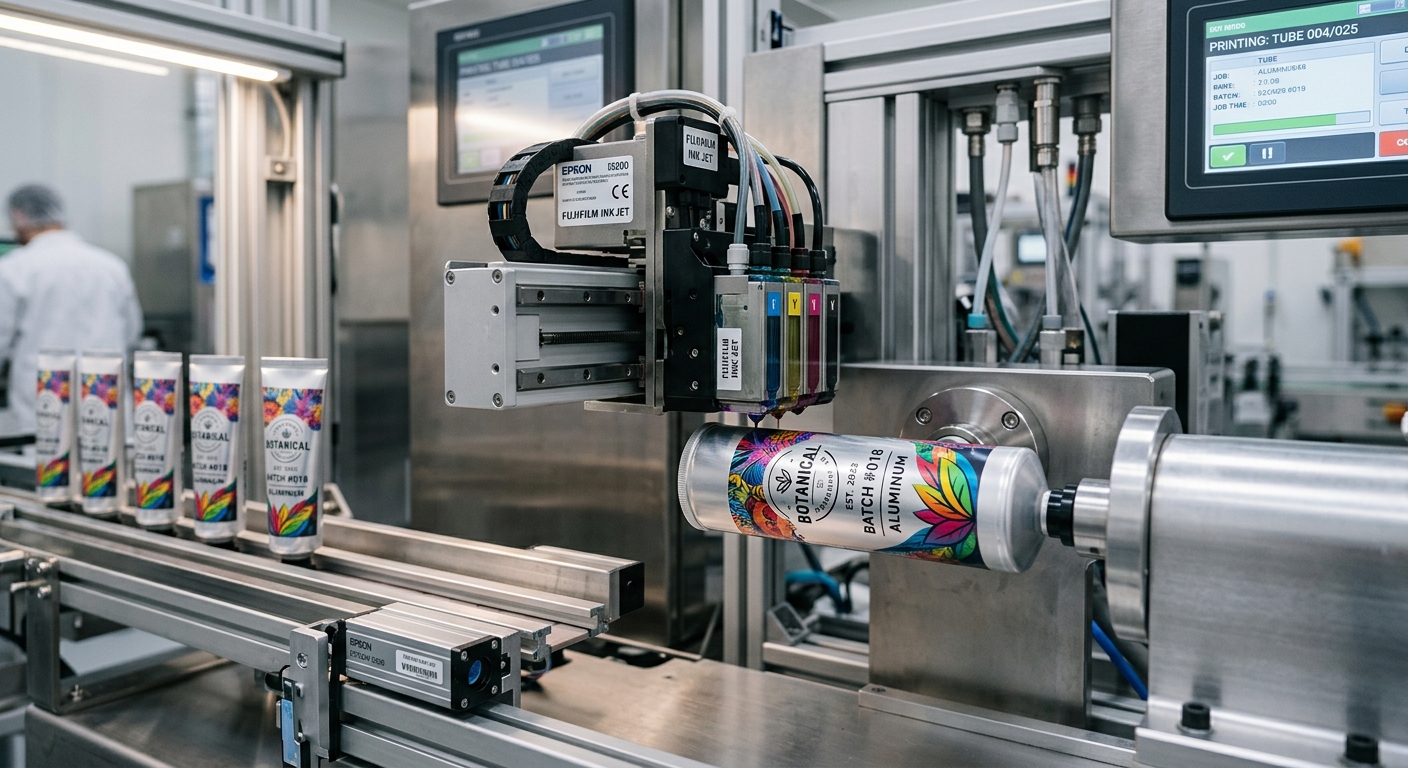
Digital printing skips plates and screens entirely, applying ink directly via inkjet technology controlled from a digital file — which means near-zero setup time and the ability to change artwork between batches without retooling. That flexibility is exactly what small and mid-size brands need when they’re testing the market.
Why digital makes sense right now
MOQs for digitally printed aluminum tubes can drop as low as 500 to 2,000 pieces, a fraction of what offset or even screen printing requires. That opens the door for limited-edition drops, seasonal collections, and private label brands who want to test multiple SKUs before committing to a full production run. It’s also the fastest method to get from artwork approval to finished tubes — useful when you’re fighting a tight launch window, a scenario we cover in more depth in our piece on fixing packaging lead times.
Where digital falls short
Print durability is the honest weak spot. Digital ink sits in a thinner layer than screen printing and typically needs a protective topcoat to hold up against handling and moisture over the product’s shelf life. For high-volume, long-shelf-life products, digital printing usually isn’t the most cost-efficient long-term choice — but for validating a concept before scaling, it’s hard to beat.
Matching Printing Method to Product Category
Different product categories have different real-world demands on print performance, and that should drive your decision as much as budget does.
Cosmetic and skincare tubes
Brands prioritizing shelf appeal and premium positioning — think metal squeeze tubes for a luxury hand cream — usually lean offset for the visual quality, unless order volume doesn’t justify it, in which case digital fills the gap.
Pharmaceutical tubes
Regulatory text, batch codes, and dosage information demand sharp, legible small-point printing every single time. Offset and high-resolution digital both handle this well; screen printing can struggle with very fine text at small sizes. This ties directly into the compliance concerns discussed in pharmaceutical tube packaging compliance.
Toothpaste and daily-use tubes
Here, durability under daily wear beats visual complexity almost every time — which is exactly why screen printing remains the default for this category.
Lip gloss and beauty accessory tubes
Smaller tube diameters and higher SKU counts (multiple shades) often favor digital printing’s low MOQ and fast changeover, a point worth reviewing alongside our custom lip gloss tubes manufacturer guide.
Cost Isn’t Just Per-Unit Price — Factor in Setup and Minimums
A common budgeting mistake is comparing per-unit printing cost without accounting for setup fees and MOQ commitment. Offset might look expensive per unit at low volume, but at 30,000 units it often becomes the cheapest option per piece. Digital looks cheap upfront but doesn’t scale down its per-unit cost the way offset does at high volume.
Run the math against your actual order size, not a generic comparison chart. If you’re unsure how MOQ tiers affect your total landed cost, our breakdown on MOQ and wholesale pricing walks through exactly where suppliers build in margin at each volume tier.
Color Matching and Proofing: Don’t Skip This Step
Every printing method interprets your Pantone or CMYK file slightly differently on a curved aluminum substrate versus flat paper. What looks correct on your monitor can shift once printed — metallic inks especially behave unpredictably on aluminum’s reflective base.
Always request a physical proof or pre-production sample before greenlighting a full run, regardless of method. A reliable cosmetic tube manufacturer will build color proofing into their standard workflow, not treat it as an optional upcharge. Skipping this step is one of the most expensive mistakes a buyer can make — and it’s entirely avoidable.


