
For most hand cream brands, the right tube packaging lands in three sweet spots: 30-50ml for travel and gifting, 75-100ml for everyday retail, and 150ml+ for salon or value lines — paired with a flip-top or octagonal screw cap and either a matte, glossy, or brushed metallic finish. Aluminum squeeze tubes outperform plastic on barrier protection, premium feel, and recyclability, which is why most prestige hand creams are migrating back to metal. The rest of this guide walks through how to pick each spec without overpaying or compromising shelf appeal.
Why aluminum still wins for hand cream
Hand creams are emulsion-heavy, often loaded with shea butter, glycerin, urea, and active ingredients like retinol or niacinamide. Those formulas don’t love oxygen, light, or temperature swings — which is exactly where aluminum earns its keep.
A properly lined aluminum tube blocks essentially 100% of light and oxygen transfer. Plastic LDPE tubes, by comparison, allow gradual oxygen permeation that can oxidize sensitive actives within 6-12 months. If your hand cream contains retinol, vitamin C, or natural plant extracts, the formula’s stated shelf life is only honest if the packaging supports it.
There’s also the premium-feel argument. Pick up a 75ml aluminum tube and a 75ml plastic one side by side — the metal version feels cooler, denser, and more substantial. That tactile cue translates directly into perceived value at retail. For a deeper dive, see our breakdown on aluminum vs. plastic tubes for formula protection.
Picking the right tube size: 15ml to 200ml decoded
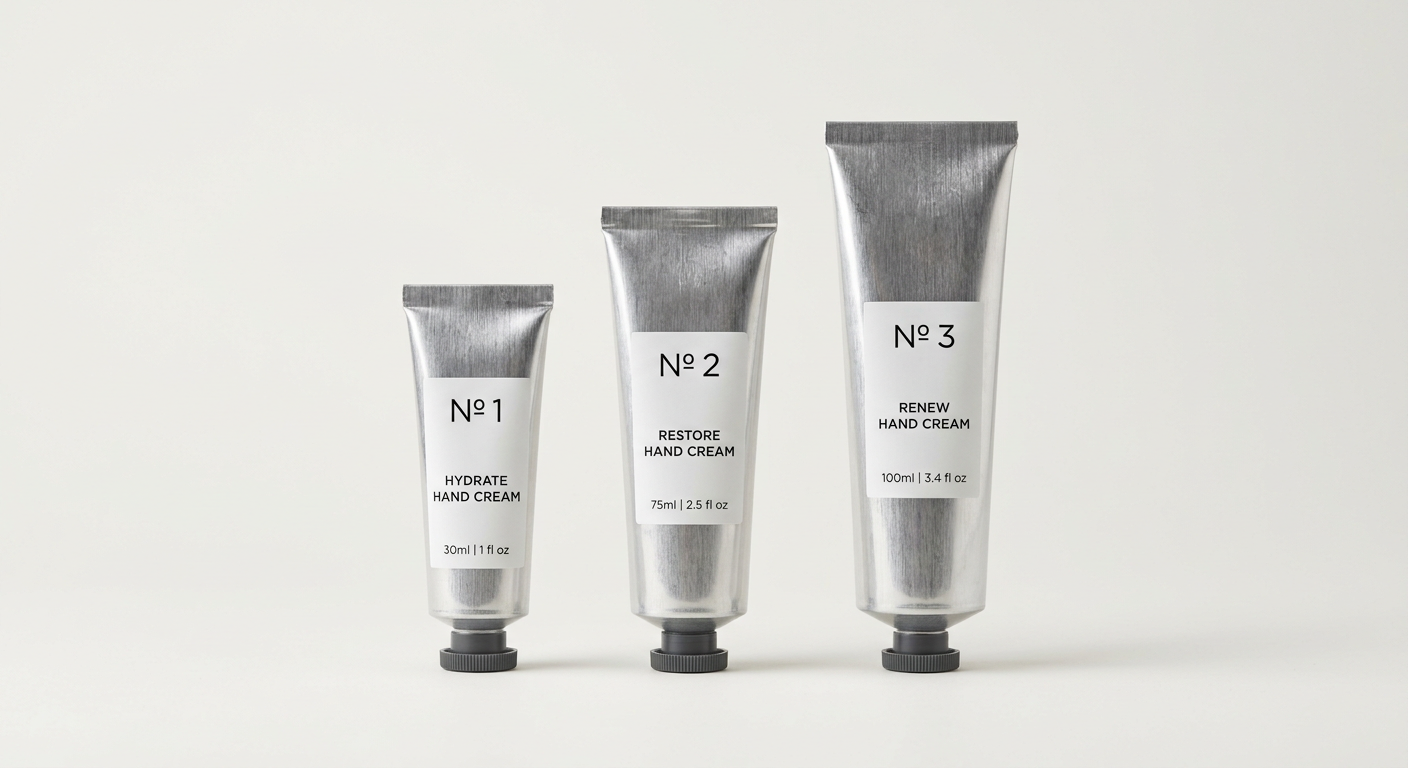
Hand cream tubes typically run from 15ml mini sizes up to 200ml family packs. The size you pick should reflect how — and how often — the consumer uses the product.
15-30ml: travel, sampling, gifting
Tiny tubes are workhorses for GWP (gift with purchase) campaigns, hotel amenities, and TSA-friendly retail. A 20ml tube typically holds 4-6 weeks of light use. Diameter usually sits at 19-22mm.
50-75ml: the retail sweet spot
This is where most mainstream hand creams live. A 75ml tube fits comfortably in a handbag, lasts roughly 6-8 weeks of daily use, and supports a retail price point that justifies premium packaging upgrades like specialty inks and metallic finishes.
100-150ml: the everyday hero
Bedside, kitchen counter, office desk — this is the “don’t run out” size. Pharmacy brands and dermocosmetic lines tend to favor 100ml because it pairs well with claims-heavy labeling and clinical positioning.
150-200ml: professional and value
Salon, spa, and professional skincare brands often go bigger. A nail technician using 30ml a week wants a 200ml tube on the workstation, not a tiny tube they replace constantly.
For example, a Korean indie brand we worked with launched a single hero hand cream in three sizes simultaneously — a 20ml “pocket”, a 50ml “daily”, and a 100ml “home” — and let the price-per-ml gap (about 35% cheaper in the largest size) drive trade-up behavior.
Closure choices: which cap fits your formula and brand
The cap is the most-touched part of your packaging. Get it wrong and the experience feels cheap no matter how good the tube looks.
Flip-top (snap-top) caps
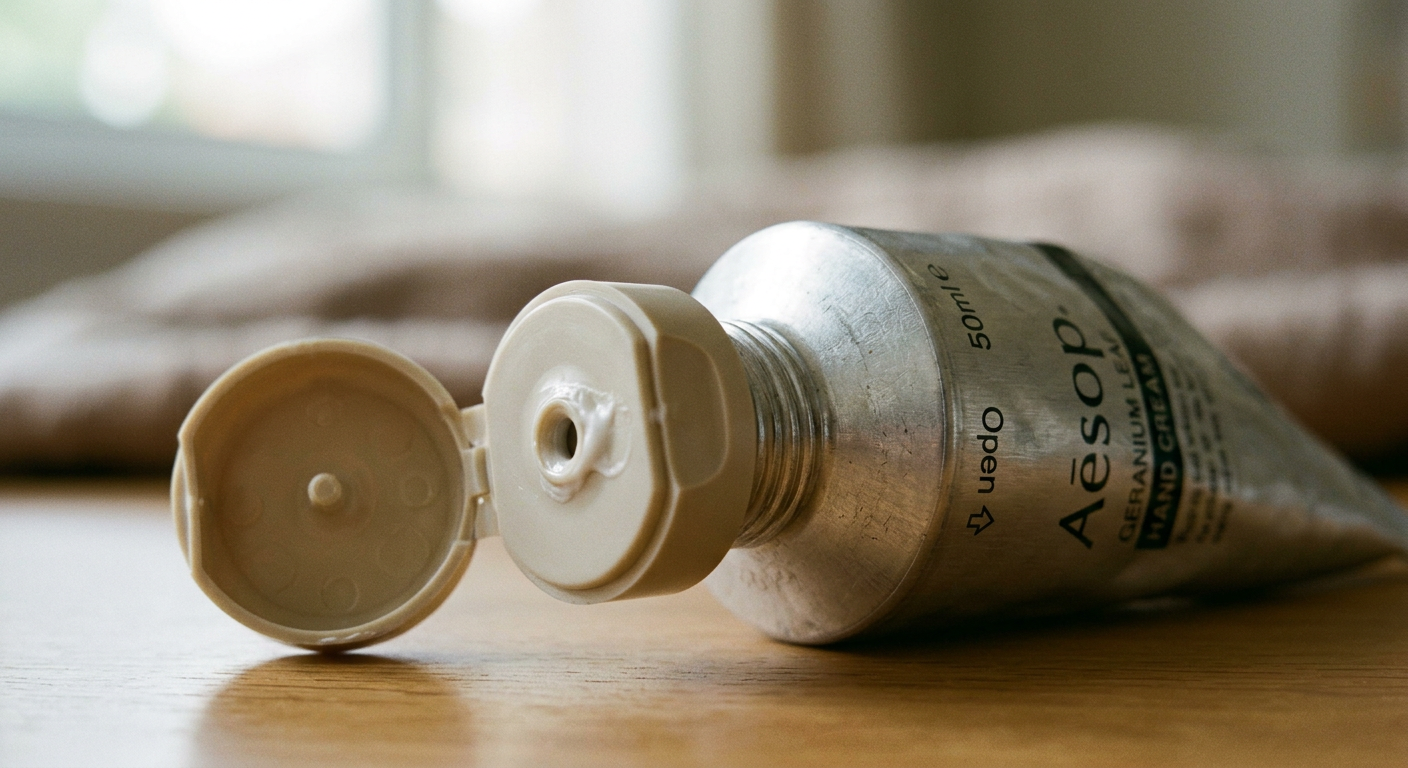
One-handed open, satisfying click, fast dispensing — flip-tops are the default for hand creams under 100ml. They work best with thin-to-medium viscosity formulas. Watch out for cheap hinges that fatigue after a few hundred opens; ask your supplier about minimum hinge cycle ratings (good ones survive 3,000+ cycles).
Screw caps (standard and octagonal)
Screw caps suit thicker creams and larger tubes where a slower, more deliberate dispense feels right. Octagonal caps add grip and a more premium silhouette — they read as “apothecary” or “dermocosmetic” on shelf.
Long-nozzle and precision tips
If your hand cream doubles as a cuticle treatment, nail oil, or targeted balm, a long-nozzle closure (often 15-25mm) gives controlled application. These are popular in pharmacy and Japanese skincare formats.
Orifice size matters more than you think
For hand cream, an orifice of 3-5mm works for most viscosities. Go bigger (6-8mm) for thick balms and shea butter formulas. Too small and the consumer squeezes harder, which deforms the tube and looks ugly after a few uses. Too big and you get over-dispensing and product waste.
Surface finishes that build shelf presence
Finish is where aluminum tubes really separate from plastic. You have options plastic simply can’t match.
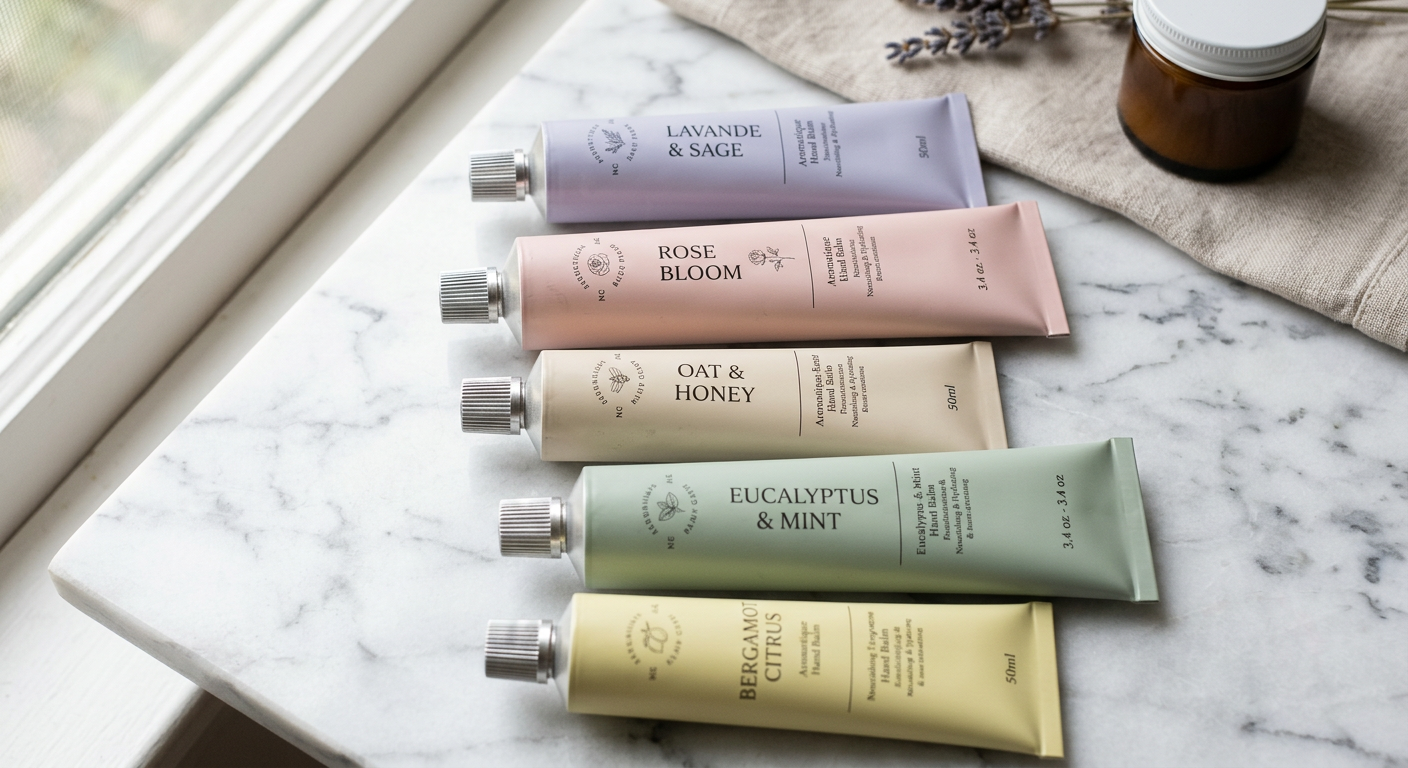
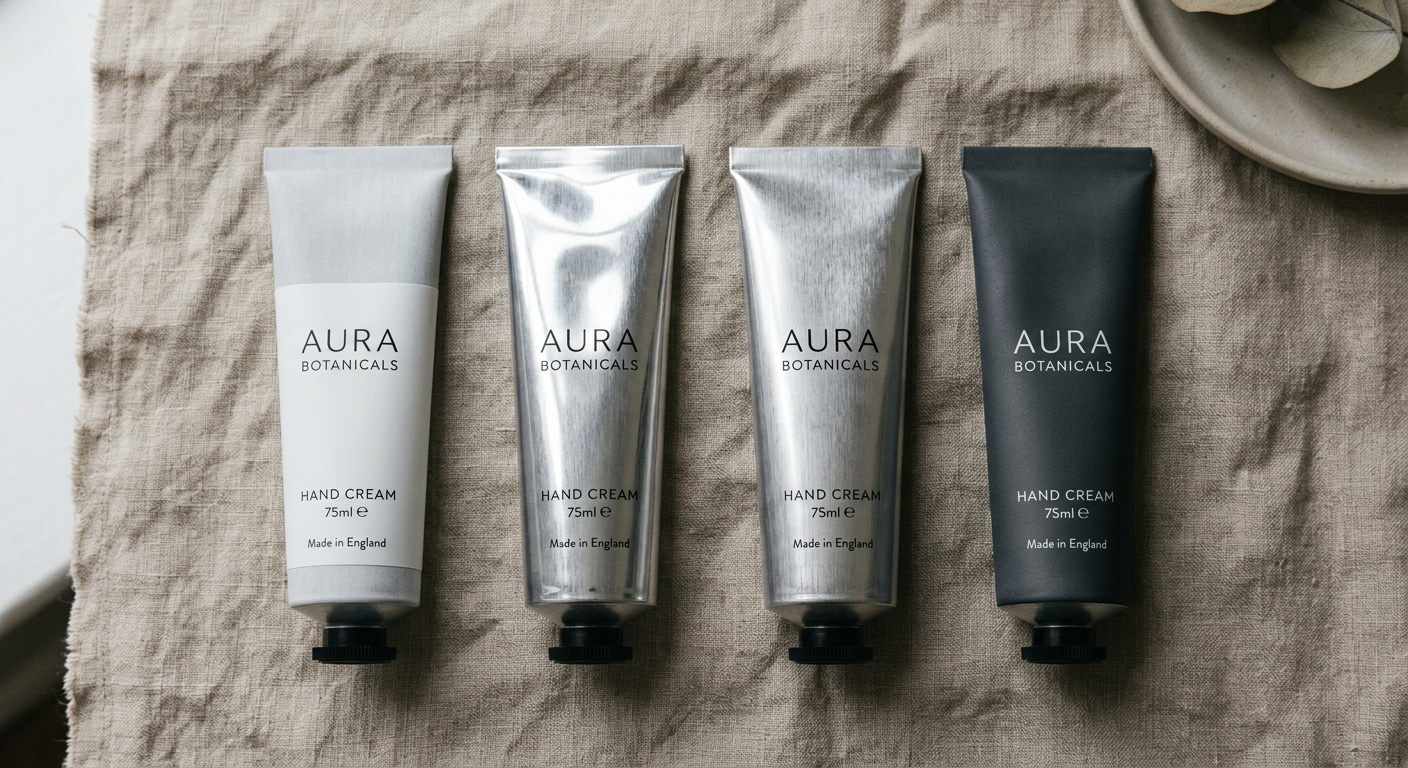
- Matte coating — soft, modern, fingerprint-resistant. Ideal for minimalist or clinical brand aesthetics. Pairs beautifully with hot stamping.
- Glossy lacquer — bright, candy-like, great for color-forward youth brands.
- Brushed metallic — the raw aluminum texture shows through, signaling authenticity and sustainability. Increasingly popular for clean-beauty positioning.
- Soft-touch coating — rubbery, velvety, expensive-feeling. Common on luxury hand creams above the $30 price point.
- Pearlescent or metallic ink overlays — useful for limited editions and gift sets.
Decoration methods stack on top of the finish: offset printing for full-color artwork (up to 8 colors), silk screen for bold blocks of opaque color, hot stamping for foil accents (gold, silver, rose gold, holographic), and embossing or debossing for tactile logos. A typical premium hand cream tube might combine a matte base coat, 4-color offset print, and gold hot-stamp logo — adding roughly 8-15% to unit cost over a plain printed tube.
For more on how decoration choices shape perception, our piece on cosmetic packaging psychology goes deeper.
Tube wall thickness, neck specs, and other things suppliers gloss over
Two tubes can look identical and behave completely differently in production. The technical specs that matter most:
Wall thickness
Pure aluminum collapsible tubes typically run 0.10-0.16mm wall thickness. Thinner walls (0.10-0.12mm) collapse cleanly and give that satisfying “won’t spring back” behavior consumers love about premium tubes. Thicker walls (0.14-0.16mm) are sturdier in transit but feel less premium when squeezed.
Internal lacquer
The inside of the tube needs a chemically inert lacquer to keep your formula from reacting with the aluminum. Epoxy phenolic lacquers are standard. For sensitive or acidic formulas (vitamin C serums, AHA-containing creams), ask for double-coated internal lacquer and request compatibility test reports.
Neck and shoulder geometry
Neck diameters are standardized — common sizes are 11mm, 13mm, 15mm, and 19mm. The neck must match your chosen closure exactly, so confirm the closure first, then the tube. The shoulder angle (the slope between body and neck) affects how cleanly the last 10% of product dispenses.
Filling compatibility
Aluminum collapsible tubes are filled from the open bottom end and then crimped shut. If your filling line is set up for plastic tubes (heat-sealed), you’ll need either a different line or a co-packer with aluminum-tube capability. This catches many first-time buyers off guard.
Sustainability and recyclability — where aluminum has a real edge
Aluminum is infinitely recyclable without quality loss. Roughly 75% of all aluminum ever produced is still in use today. For a hand cream brand chasing genuine sustainability claims (rather than vague “eco-friendly” language), aluminum tubes are one of the strongest material stories in personal care.
That said, the cap matters. A plastic cap on an aluminum tube creates a mixed-material disposal problem — though most curbside programs now accept the whole tube as long as the cap is plastic-light. Brands going fully circular are starting to specify aluminum caps too, or PCR (post-consumer recycled) plastic caps with clear recycling instructions.
For procurement teams trying to separate real sustainability gains from marketing fluff, our guide to sustainable packaging in 2026 and the deeper piece on sustainable aluminum packaging for cosmetics are worth bookmarking.
MOQ, lead times, and what to ask your tube supplier
Custom aluminum hand cream tubes typically come with MOQs between 10,000 and 30,000 units per SKU. That sounds high to small brands, but remember each “SKU” is a unique artwork — if you launch one product in three sizes, that’s three SKUs and three MOQs.
Lead times generally run 35-60 days from artwork approval, depending on decoration complexity and whether the supplier needs to source matching caps from a sub-vendor. Hot stamping and embossing each add about a week.
When evaluating a cosmetic tube manufacturer, push for clear answers on:
- Internal lacquer chemistry and compatibility testing — request actual test reports for formulas similar to yours
- Hinge cycle ratings on flip-top caps
- Color matching capability — Pantone match within Delta E 2.0 is reasonable to expect
- QC sampling rates on print registration and crimp seal integrity
- Sample lead time before mass production (good suppliers deliver pre-production samples in 10-14 days)
- Whether MOQs can be split across sizes if you’re launching a range
For a real-world example: a US-based natural skincare brand launching their first hand cream line ordered 15,000 units of a 75ml matte aluminum tube with octagonal cap, 4-color offset print, and gold hot-stamp logo. Total lead time from artwork lock to delivered cargo was 52 days, with pre-production samples approved on day 18.

Putting it all together: a quick decision framework
If you’re staring at a spec sheet wondering where to start, work in this order:
- Define the use case — travel, daily, pro? That fixes your size range.
- Match the closure to formula viscosity — flip-top for light creams, screw cap for thick balms, long nozzle for targeted use.
- Pick a finish that matches your price tier — matte for clinical/clean, glossy for playful, soft-touch for luxury.
- Layer decoration thoughtfully — start with one accent (hot stamp or emboss), not three.
- Validate compatibility — confirm internal lacquer suits your formula before locking artwork.
- Plan for cap-tube recyclability if sustainability is part of your story.
Hand cream packaging rewards brands that obsess over the details — the click of a cap, the weight in the hand, the way a matte finish picks up shop lighting. Those small touches compound into the perceived value that justifies a premium price.
If you’re sourcing metal squeeze tubes for a new launch or refreshing an existing line, the DOLYPACK team can walk you through size options, closure sourcing, finish samples, and custom decoration — usually with pre-production samples in your hands within two weeks. Send us your formula details and shelf concept, and we’ll come back with a spec sheet that fits both your brand and your budget.


