
Your packaging lead times keep slipping because procurement is reacting to demand instead of forecasting it — and because the three things that actually drive a supplier's schedule (tooling status, decoration complexity, and raw material allocation) are usually treated as afterthoughts. Fix those, and a 12-week order shrinks to 7. Ignore them, and Q4 2026 will look exactly like Q4 2025 did: air freight invoices, missed launch dates, and angry calls to your packaging supplier at midnight.
The good news? Most of the fixes are operational, not financial. You don't need a bigger budget. You need a tighter process — and you need to start it by July, not October.
The Real Reason Lead Times Slip (It's Not Your Supplier)
Here's an uncomfortable truth: in roughly 70% of late-delivery cases we see, the original PO had something missing. A pending Pantone approval. An unsigned artwork proof. A spec change that was emailed but never confirmed. The factory clock didn't start when you thought it did.
Suppliers will quote you a lead time from order confirmation — meaning all approvals locked, deposit received, artwork production-ready. Buyers, meanwhile, count from the day they sent the PO. That gap is usually 2–3 weeks of silent slippage that nobody flags until it's too late.
What actually consumes those weeks
- Artwork ping-pong: average 4–7 days per round, and most jobs go 2–3 rounds
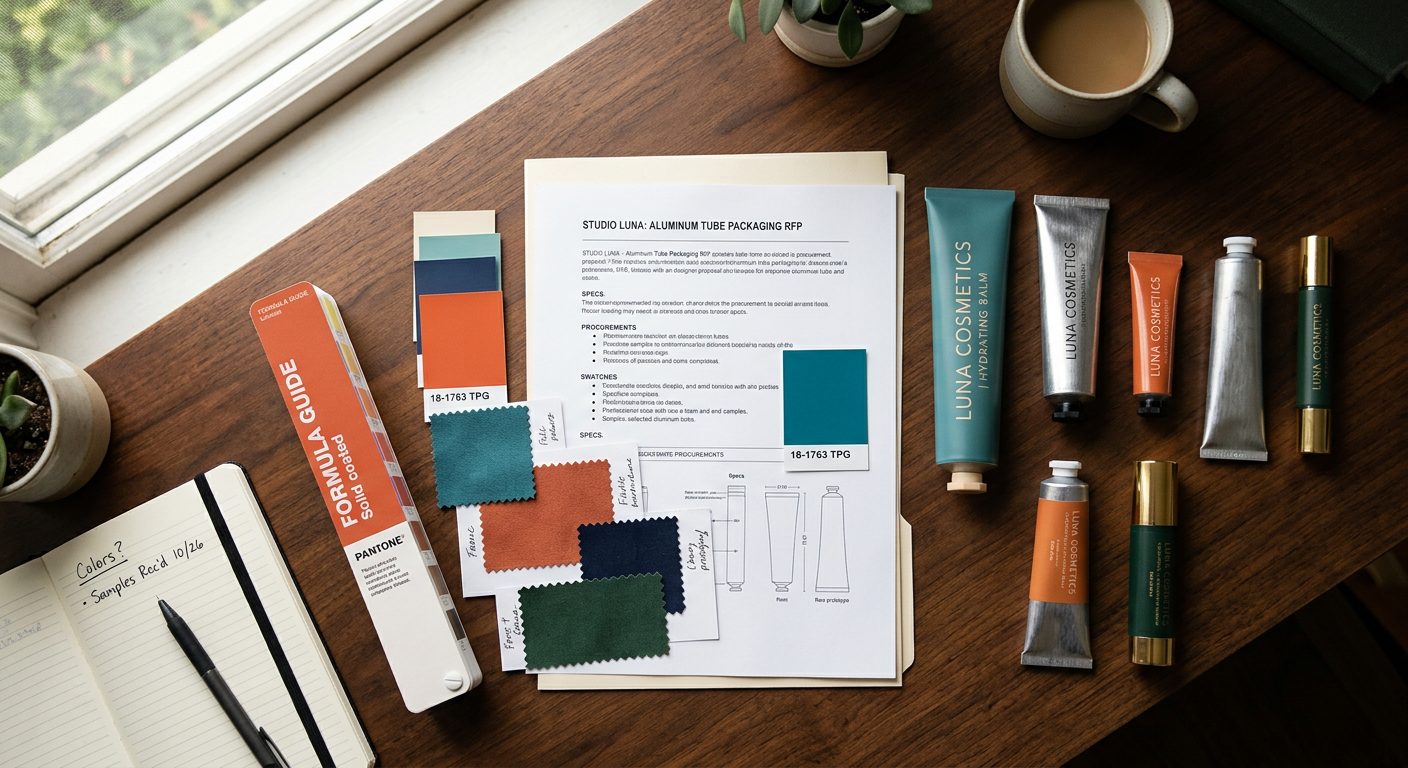
- Color matching: 5–10 days if you're matching a Pantone on metallic substrate
- Tooling verification: 3–5 days to confirm existing molds are still in spec
- Raw material allocation: 1–4 weeks for specialty aluminum, recycled resins, or certified barrier films
Add those up and you've burned a month before a single tube gets extruded.
Why Q4 2026 Will Be Worse Than You Think
Two trends are colliding this year. First, aluminum and tinplate suppliers in Asia are consolidating — fewer mills, longer allocation queues, and tighter MOQs on specialty alloys. Second, the shift toward sustainable aluminum packaging for cosmetics has pulled a meaningful chunk of capacity into recycled-content production, which runs slower than virgin material.
Layer on the usual Q4 chaos — Singles' Day, Black Friday, holiday gifting, January resets — and factory capacity from late September through mid-November is already being booked now, in May and June. If you wait until August to place Q4 orders, you'll be quoted lead times of 12–16 weeks against a window of 8.
For instance, a mid-size skincare brand we worked with last year placed their holiday gift set order on August 14. The quoted lead time was 9 weeks. Actual delivery? Twelve weeks plus air freight, because three of their decorated tubes had to be re-run after a print defect. They missed the Sephora set-down date by 11 days. The expediting bill was higher than the entire packaging cost of the original PO.
Audit Your Tooling Before You Need It
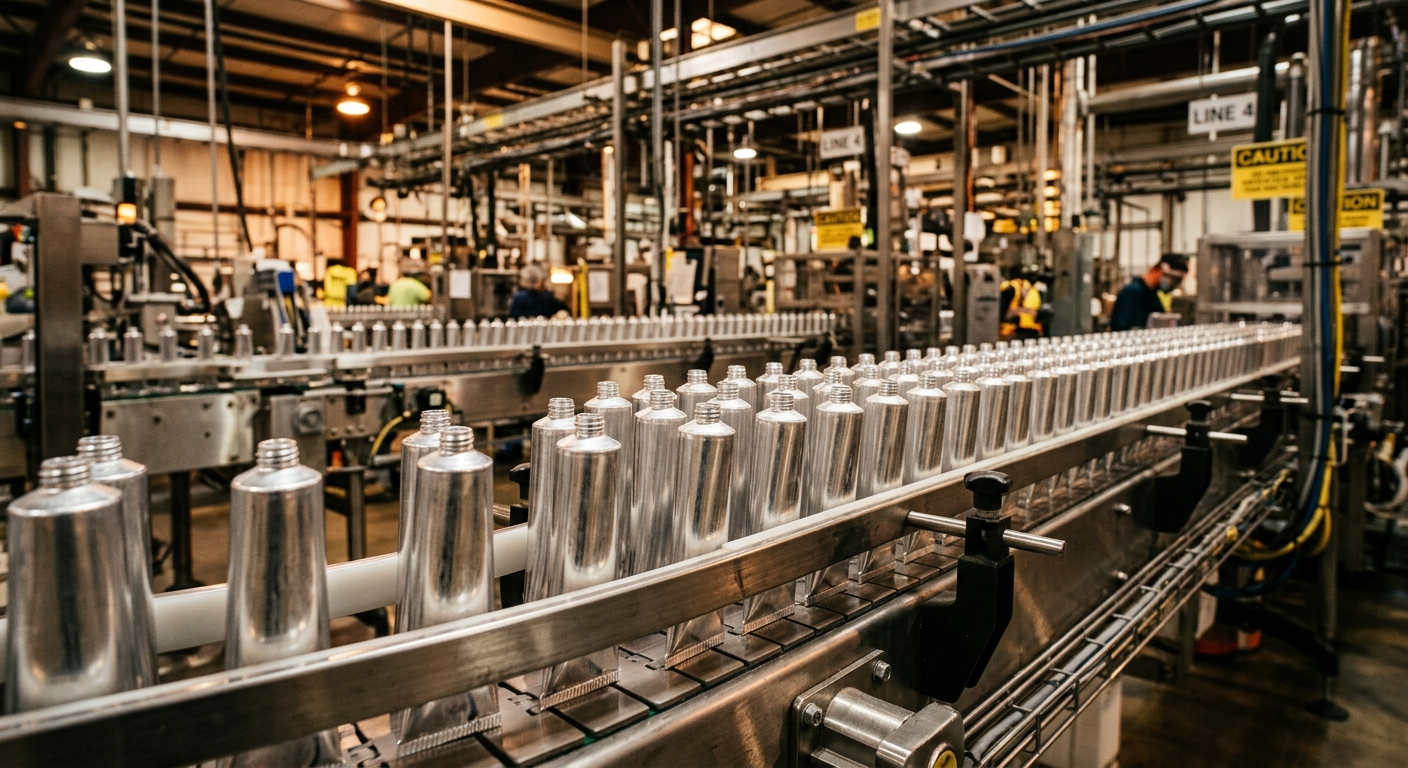
This is the single highest-leverage fix and almost nobody does it. Every existing mold, embossing die, and printing plate at your supplier has a finite life — typically 200,000 to 1 million cycles depending on the substrate. When tooling degrades, the factory either slows down to maintain quality or quietly produces marginal parts that show up as a QC failure six weeks later.
Run a tooling audit every quarter
Ask your supplier for: cycle count to date, last maintenance date, projected refurbishment window, and confirmation that the tool can hit your next forecast volume without intervention. If a mold is 80% through its life and you have a 500,000-unit Q4 order coming, you need a refurbishment plan now — not a panic call in September.
This is especially critical for collapsible tube packaging and any decorated metal component, where tooling wear shows up visibly on the finished part.
Forecast in 12-Week Rolling Windows, Not Quarters
Quarterly forecasting is a habit from finance, not from supply chain. Factories don't think in quarters — they think in weekly production slots. If you give a supplier a quarterly number and say “split it however,” you've handed them permission to slot you in wherever they have gaps, which usually means later than you want.
Switch to a 12-week rolling forecast updated every two weeks. Lock the first 6 weeks (no changes), allow ±15% flex in weeks 7–9, and treat weeks 10–12 as planning-only. This gives your supplier real visibility and gives you the right to demand priority on the locked window.
What this looks like in practice
A boutique fragrance brand using aluminum perfume bottles moved from quarterly POs to a 12-week rolling plan last March. Their on-time delivery jumped from 71% to 94% within two cycles — same supplier, same MOQs, just better information flow.

Stop Treating Decoration as a Trim Decision
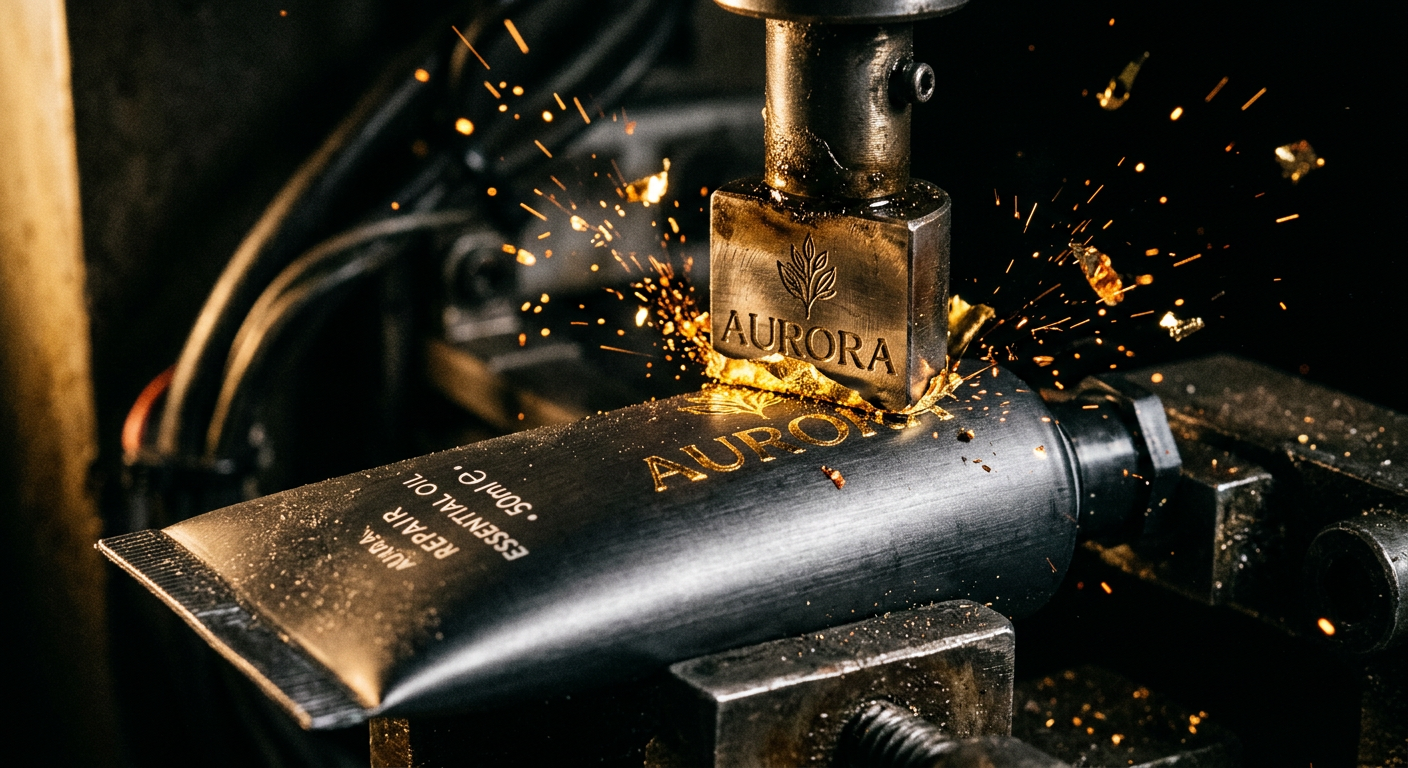
Decoration — printing, hot stamping, embossing, metallization — is where 60% of late-stage delays happen. A four-color offset print on an aluminum tube is one production line. Add a hot foil pass and you're on two lines, often in two different parts of the factory. Add an embossed logo and you're on three.
Each pass adds 2–5 days to the schedule and introduces a new failure point. Buyers routinely sign off on decoration specs without realizing they've just doubled the production runtime.
Three questions to ask before approving any decoration spec
- How many production passes does this require, and can any be combined?
- What's the historical first-pass yield on this exact decoration combination?
- If we drop the hot foil and use a metallic ink instead, what does the lead time become?
The psychology of premium packaging matters — we've written about cosmetic packaging psychology at length — but premium doesn't always mean more passes. Sometimes a single beautifully executed pass beats three mediocre ones, both visually and operationally.
Pre-Position Raw Materials, Not Finished Goods
Holding finished packaging inventory is expensive and risky — formulations change, brands rebrand, SKUs get cut. Holding raw materials is cheaper, more flexible, and dramatically shortens lead times when you finally need to pull the trigger.
Work with your supplier to pre-allocate aluminum slugs, base resin, or substrate stock against your forecast. You're not buying inventory — you're reserving capacity. Most suppliers will do this for committed forecast volume with a small holding fee (usually 1–2% of material cost per month). In exchange, your effective lead time drops by 3–5 weeks because the slowest part of the chain is already done.
This is particularly powerful for aluminum collapsible tubes, where slug availability is the most common bottleneck during peak season.
Build a Two-Supplier Strategy for Your Top 3 SKUs
Single-sourcing your hero SKUs is the procurement equivalent of skipping insurance. It works fine until it doesn't, and when it doesn't, the cost is catastrophic — not just the expediting bill, but the brand damage from empty shelves.
You don't need to split 50/50. A 70/30 or 80/20 split keeps your primary supplier honest, keeps the secondary qualified and warm, and gives you a real fallback when the primary hits a capacity wall. The secondary supplier needs to have working tooling for your spec, not just a quote — qualification typically takes 8–12 weeks, so this is a Q2/Q3 project, not a Q4 fire drill.
The hidden benefit
Two-supplier strategies also give you genuine pricing leverage. Suppliers know when they're the only option, and they price accordingly. Two qualified sources typically shaves 4–7% off unit cost over 12 months without any aggressive negotiation.
The Procurement Calendar That Actually Works for Q4
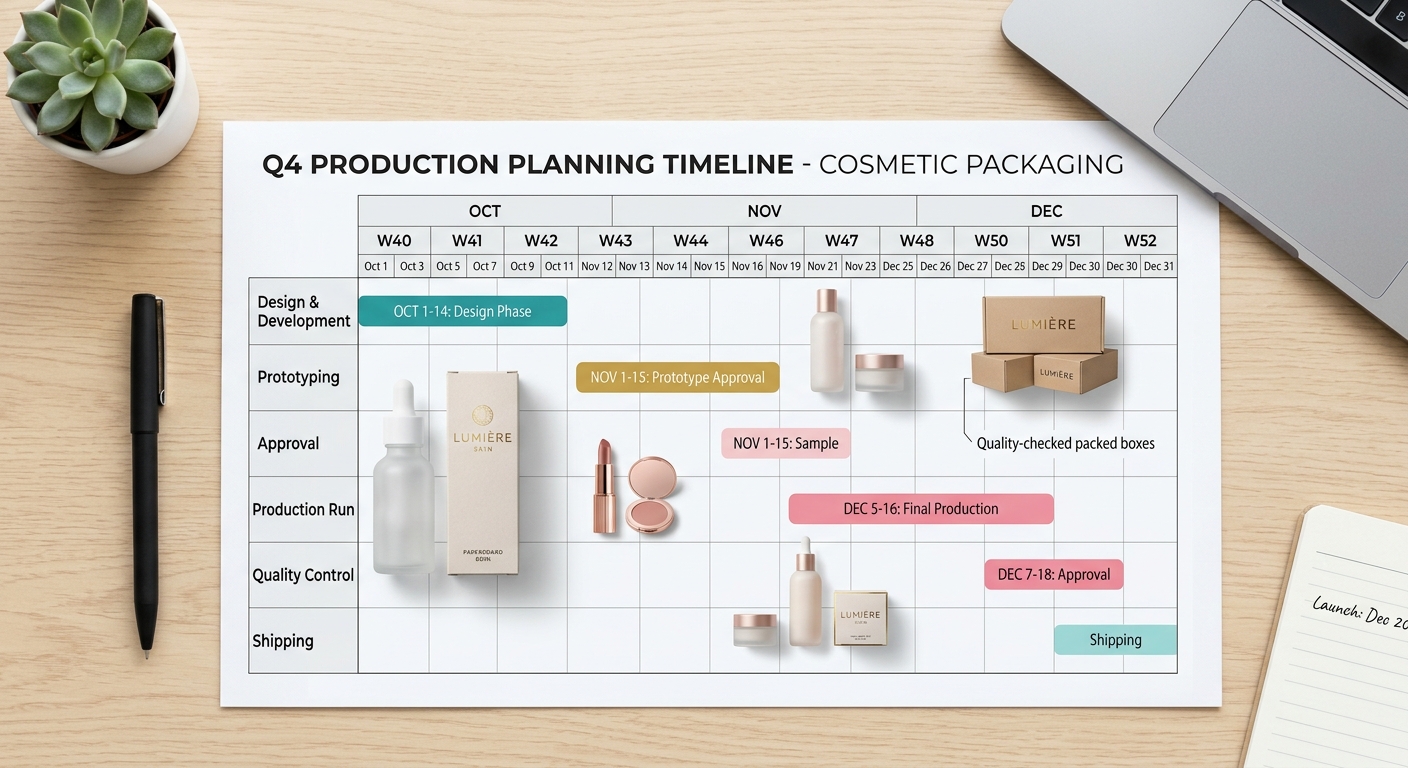
If you take nothing else from this article, take the calendar. Here's what a Q4 2026 launch should look like, working backward from a target ship date of October 15:
- May–June: Lock 12-week rolling forecast, audit tooling, qualify backup supplier
- Early July: Pre-allocate raw materials, finalize decoration specs, approve final artwork
- Mid-July: Place confirmed PO with full approvals — this is your real order date
- August: First-article approval, line trials, production start
- Mid-September: Bulk production complete, QC, packing
- Late September: Sea freight departure (allow 4 weeks transit + 1 week buffer)
- October 15: On shelf, on time, no air freight invoice
Notice the PO date: mid-July, for an October ship. That's three months ahead. Every week you slip that PO date eats into your sea freight window, and once you're on air freight, you've already lost the cost battle.
Where to Start This Week
Pick the one fix with the highest leverage for your situation. If you've had repeated artwork delays, fix the approval process first. If you've been single-sourcing, start qualification on a backup. If you don't know the cycle count on your existing tooling, send that email today.
The brands that hit Q4 2026 cleanly won't be the ones with the biggest budgets — they'll be the ones who started fixing procurement in May. If you're rethinking your supplier mix or evaluating new packaging formats, our team at dolypackage works with cosmetic, pharma, and personal care brands on exactly this kind of lead-time planning. Browse our current packaging solutions or get in touch — the earlier the conversation, the more options you'll have when Q4 actually arrives.


