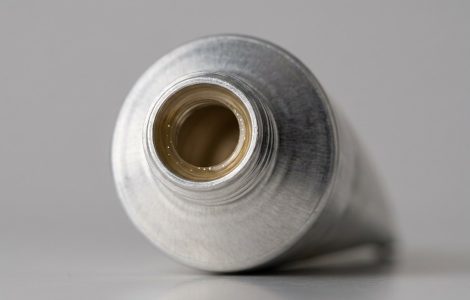
Dented tubes in transit are a packing-spec problem far more often than a tube problem. The usual culprits are too many layers per carton, tubes packed on their side with nothing supporting the middle of the body, an under-filled carton that lets tubes rattle, and pallets stacked past the compression strength of the board. Fix the spec, not the supplier, and most of the claims disappear.
Key takeaways
- Dent location identifies the load path: shoulder and cap-skirt dents mean compression from stacking, a single dent beside a crushed carton corner means impact, and abrasion with out-of-round bodies means rattle in an under-filled carton.
- Wall thickness is the biggest tube-side lever on dent resistance and belongs on the drawing as a stated specification, never as a supplier default.
- A fixed layer count, partition dividers and a carton sized to the packed tube footprint remove the rattle path entirely instead of cushioning it after the fact.
- A dent is rejectable for function or for cosmetics, not for depth alone, and a signed boundary sample plus a sampling plan with an acceptance number ends most arrival arguments.
- Put a named drop and compression standard on the purchase order and ship a pilot on the real route before committing to a bulk run.
Where Dents Really Come From: Four Load Paths Inside a Shipped Carton
Rough handling is the laziest explanation in a packaging claim. A carton never experiences handling in general; it experiences four specific load paths, and each one leaves a different signature on the tube inside.
Compression: weight travelling down through caps and shoulders
Every layer of cartons above the bottom of a pallet, and every pallet above the bottom of a container, pushes load through the cap and shoulder of the tube below. That is why compression dents land on the shoulder or the cap skirt and almost never on the middle of the body. A row of shoulder dents all facing the same way in the bottom two layers is not evidence that someone dropped something. It is evidence that something was stacked on it.
Impact: a point load from a drop or a corner strike
One localized dent, one scuffed or crushed carton corner, everything else in the carton intact. Impact leaves a witness mark on the box. If the carton is clean and square, impact is the wrong diagnosis no matter how convincing the dent looks.
Vibration and rattle: tubes grinding against each other
A carton that is too large for its contents lets tubes rotate and rub for hundreds of kilometres. You will not see a clean dent. You will see a band of abrasion and bodies that are visibly out of round, and that pattern points straight back at the fill ratio in your own spec.
Creep: slow deformation under a load that never lets up
A carton sitting eight high in a warehouse for six weeks deforms at a rate that depends on time as much as on force. This is why the bottom two layers of a pallet can fail inspection while every carton above them is perfect, and why a shipment that passed a drop test can still be rejected after a long storage dwell.
Board moisture: the amplifier nobody budgets for
Corrugated board loses compression strength as its moisture content rises, and container air on a long sea leg is humid by default. A board grade that performed in a dry warehouse can fold in a container, and the tubes inside inherit the load.
The practical rule: dent location tells you the load path, and the load path tells you which line of the packing spec to change.
Which Tube Specs Make a Dent More Likely (and Which Just Hide It)
Wall thickness is the first number traded away when a quote has to come down, and it is the single biggest lever on dent resistance. Ask for it as a stated specification on the drawing rather than accepting a supplier default, because it is set during the forming stage, long before printing begins, and cannot be added later.
Length-to-diameter ratio: long tubes behave like beams
A slim 13mm tube at 180mm flexes across its middle under a carton design that leaves a short, wide tube untouched, because the long one bends like a beam instead of carrying load like a column. Dolipack lists customizable aluminum tubes from D11.5 to D40 with a custom length of Max. 200mm and a capacity of 4-200ml, which is wide enough that two tubes on the same order can need two different packing layouts. Treat diameter and length as packing variables, not only as filling variables.
Cap choice changes where the load lands
A tall nozzle cap absorbs compression itself and protects the orifice. A low-profile cap passes stack load straight into the shoulder. Neither is wrong, but the layer count that works with one may not work with the other, so the cap belongs on the packing spec as well as the artwork sheet.
Aluminum and plastic composite fail differently
Dolipack supplies aluminum collapsible squeeze tubes and also lists plastic composite tubes, and the two behave differently under the same impact. An aluminum tube can often be rounded back out by hand, but the crease stays as a stress riser. A composite tube creases permanently or splits along the fold. Same drop, two different complaints: the aluminum one becomes a leak on the filling line later, the composite one is rejected on arrival. Dolipack’s own production centres on pure aluminum collapsible tubes alongside bottles, boxes and aerosol cans, so the aluminum side of that comparison is where thickness and alloy control are easiest to specify.
Finish and print decide what your inspector sees
A brushed or embossed finish and a busy print scatter reflected light and mask shallow deformation. A mirror gloss or soft touch under raking light shows every ripple. If your QC station uses a fixed lamp, the finish you choose sets the cosmetic reject rate before a single tube ships. Decide deliberately whether you want a surface that hides dents or one that reveals them early.
Carton Configuration: Layer Count, Orientation, and Dividers Do the Real Work
Most packing specs are copied from a previous supplier and never rewritten, which is how a carton designed for one tube ends up carrying another. Here is what each line should actually say.
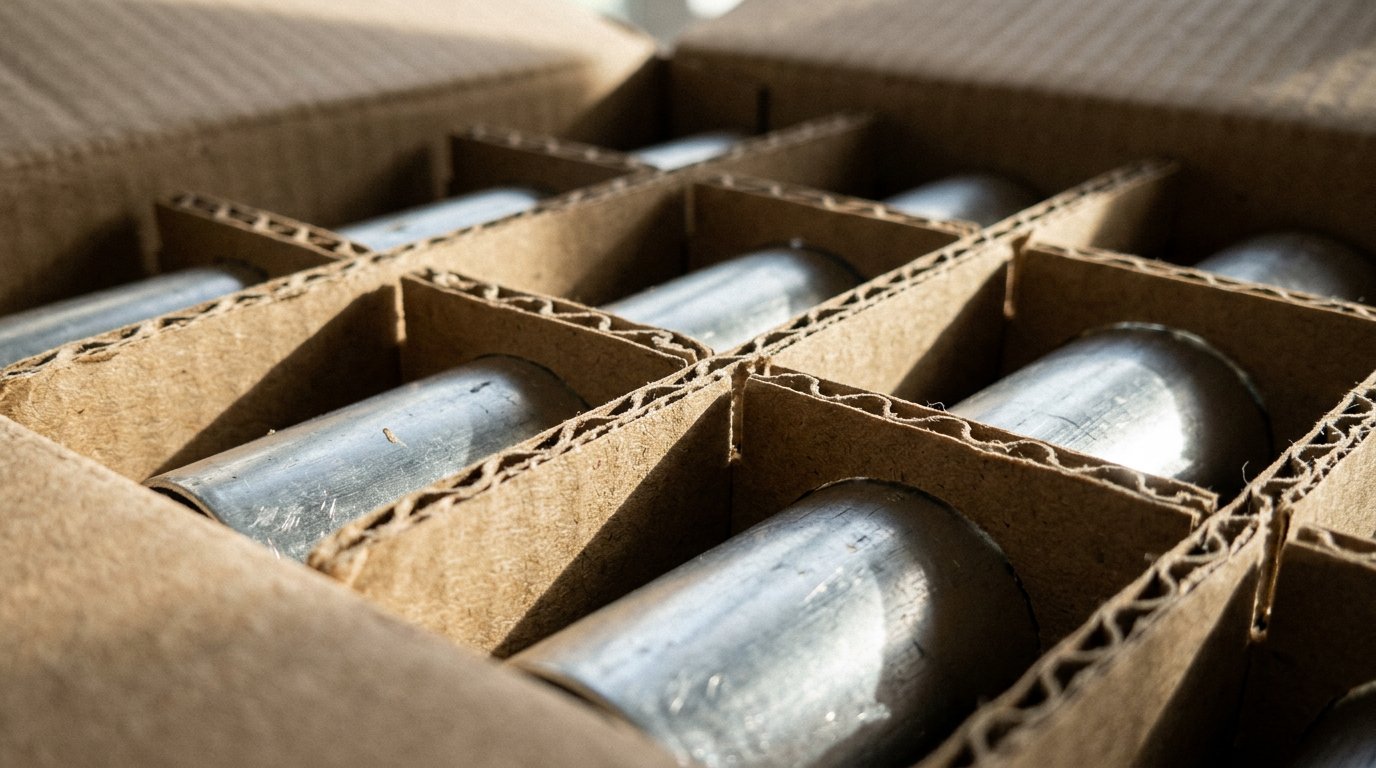
- Orientation is a structural decision. Tubes standing cap-up transfer compression down the caps and shoulders, which are the stiff parts. Tubes lying flat with nothing beneath the middle of the body become beams, and every layer above bends them a little further.
- Layer count and carton height are one decision. Each extra layer multiplies the load on the bottom row, and the board has a finite compression strength. Fix the layer count first, then size the carton to it, not the other way round.
- Partition grids, dividers and layer pads delete the rattle path. Tubes that cannot touch cannot grind. Cushioning after the fact only softens a collision that should never have been possible.
- Size the carton to the packed footprint. Derive carton dimensions from the packed tube footprint instead of selecting the nearest standard box size.
- A poly bag solves one problem and creates another. An inner liner stops surface scuffing but lets the whole load slide as a single block, which concentrates impact energy in one spot. Pair it with dividers or leave it out.
- Board grade and taping pattern hold the shape. Edge crush strength and an H-tape or full wrap seam decide whether the carton keeps its geometry long enough to protect anything. A single centre seam is a hinge.
- Pack tubes cool and relaxed. Tubes packed warm off the line, or still holding residual internal pressure, deform more easily in the first hours of the journey.
Pallet Build, Stretch Wrap, and Container Conditions: The Half of the Spec Nobody Writes
The carton is only the inner layer of protection. Pallet geometry and container environment decide whether the carton ever gets to do its job.
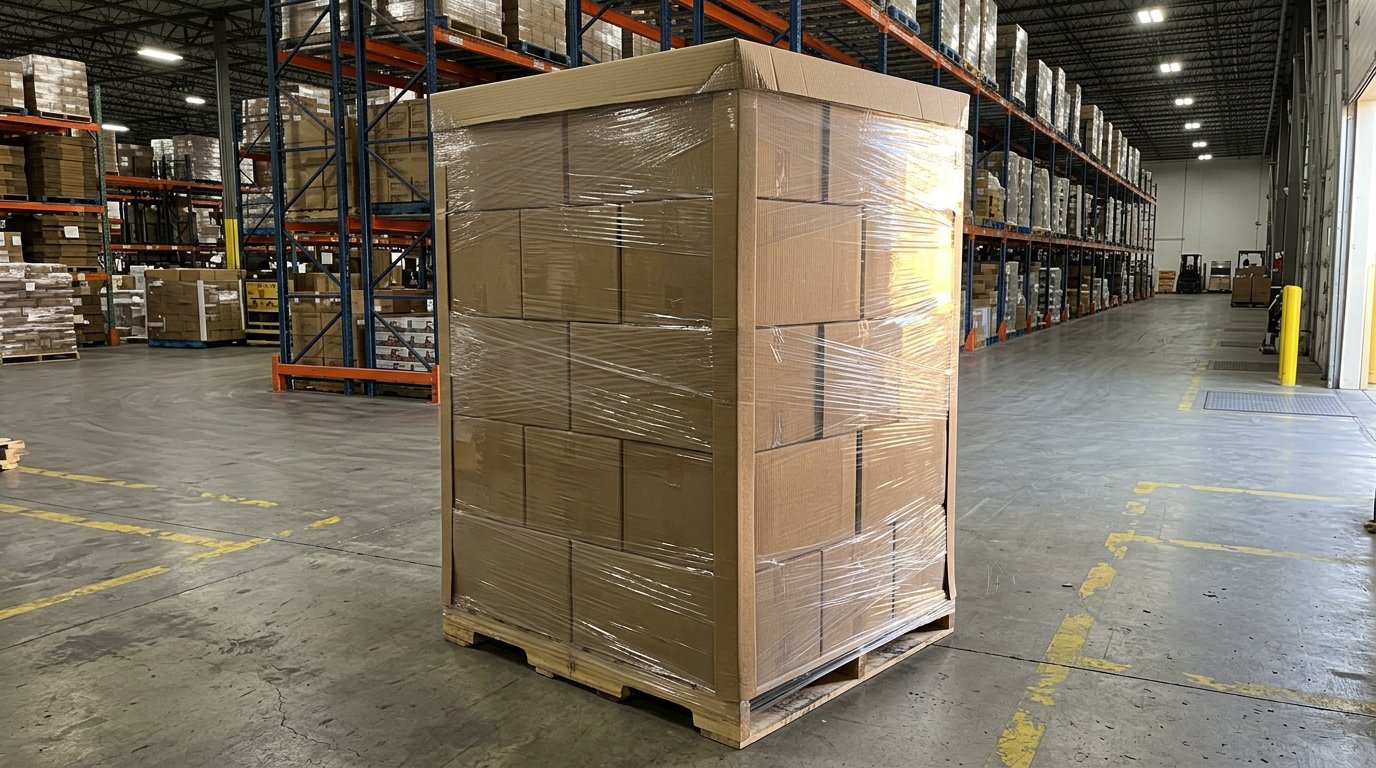
- State a maximum stack height and weight, on the pallet and in the container. A forwarder who is not given a number will fill the space available, and that is the default rather than malice.
- Specify the stacking pattern with a drawing. Column stacking carries load straight down through carton corners. Interlocking patterns shift load into the faces, which are far weaker in compression. Both are legitimate; only one is right for your board grade.
- Corner boards and a top cap sheet are cheap insurance. They earn their cost on the bottom and top layers, where load or the absence of load concentrates.
- Stretch wrap has a correct tension. Enough turns and overlap to hold the load as one unit, not so much that the wrap bows cartons inward and pre-loads the tubes before the truck moves.
- No overhang past the deck. An overhanging carton edge loses the corner support the whole stack depends on. Measure it, do not eyeball it.
- Budget for moisture on long ocean legs. Condensation and floor moisture soften board over weeks, so a barrier liner or desiccant belongs in the spec whenever the route is tropical or multi-week.
- Ask who loads the container and whether pallets are double-stacked. The answer changes the required carton compression strength entirely, and it is usually the last question anyone asks.
Take a brand that ships the same carton to a domestic distributor and to a humid overseas market. The domestic leg passes every time; the container arrives with bowed cartons and shoulder dents, and nothing about the tube changed. Buying at volume without a written pallet clause is the usual version of that story, and the commercial side is covered further in navigating the wholesale cosmetic squeeze tubes market.
How to Define a Rejectable Dent So Nobody Argues at Arrival
Minor and acceptable are the two most expensive words in a packing spec, because neither can be measured. Replace both with a definition that survives an argument.
- Define the functional defect first. A dent is rejectable when it deforms the shoulder or the cap seating area, interferes with the crimp seal path, stops the cap threading or seating, or distorts print register. Those four conditions are objective and photographable.
- Then define the cosmetic class separately. A dent that affects nothing functional can still keep a tube off the shelf. Two classes, two outcomes, two acceptance numbers. Blending them is how a cosmetic reject turns into a full-lot return.
- Build a boundary sample and get it signed. A dent card showing pass, borderline and reject tubes, photographed and signed by both sides and kept at the supplier’s QC station and at your dock, settles more disputes than a page of prose.
- Reject any sharp crease regardless of depth. A creased wall is a stress riser, and the crack that starts there surfaces as a leak on the filling line weeks after the tube was accepted. Depth alone is the wrong criterion.
- Fix the sampling plan in the order. An attribute plan from the ISO 2859-1 family, with the inspection level and acceptance number written on the purchase order, beats inspecting everything and then arguing about what counted.
- Name the remedy before you need it. Credit, replacement or sort-and-rework, and who pays freight in each case. A claim with no stated remedy sits in email for weeks while the goods sit in quarantine.
Validate the Spec Before You Ship: Drop, Compression, and Vibration Testing
You cannot inspect your way out of a bad carton design. Test the layout before the bulk run is committed.
- Name a standard instead of inventing a test. An ISTA series protocol for parcel or pallet distribution, or ASTM D4169 for a defined distribution cycle, with the drop height taken from the standard’s table for the package weight. Once the number has a name, it belongs in the purchase order.
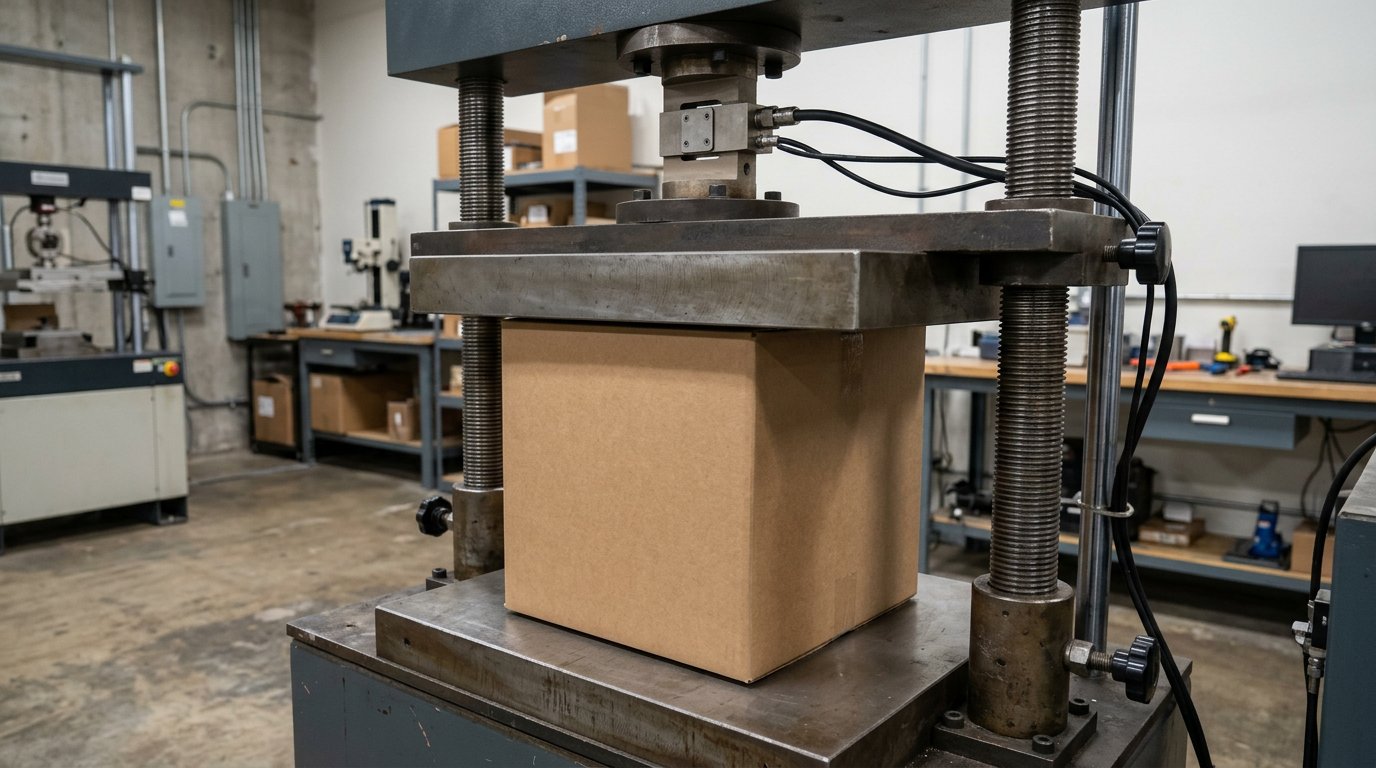
- Run a compression test. ASTM D642 answers the stacking question directly. It is the only test that catches a carton destined to fail at the bottom of a container stack rather than on the road.
- Run a vibration test. ASTM D999 reproduces the rattle path that drop testing never touches, so a spec that passes drops can still fail a long road leg.
- Test filled tubes, not empty ones. Mass, wall behaviour and cap load all differ, and the filling line will notice. Line these trials up with the filling line checks you run before placing the order so both programmes use the same product.
- Ship a pilot on the real route. Real transshipment points, real dwell time, then inspect by pallet position instead of as one lot. That is how you learn whether failures sit in the bottom layer, the top layer or the door end of the container.
- Ask for the paperwork. A packing validation report and a carton specification sheet should exist. Their absence is a signal during supplier vetting that costs nothing to check.
Dents Have Arrived: Read the Pattern, Then Claim
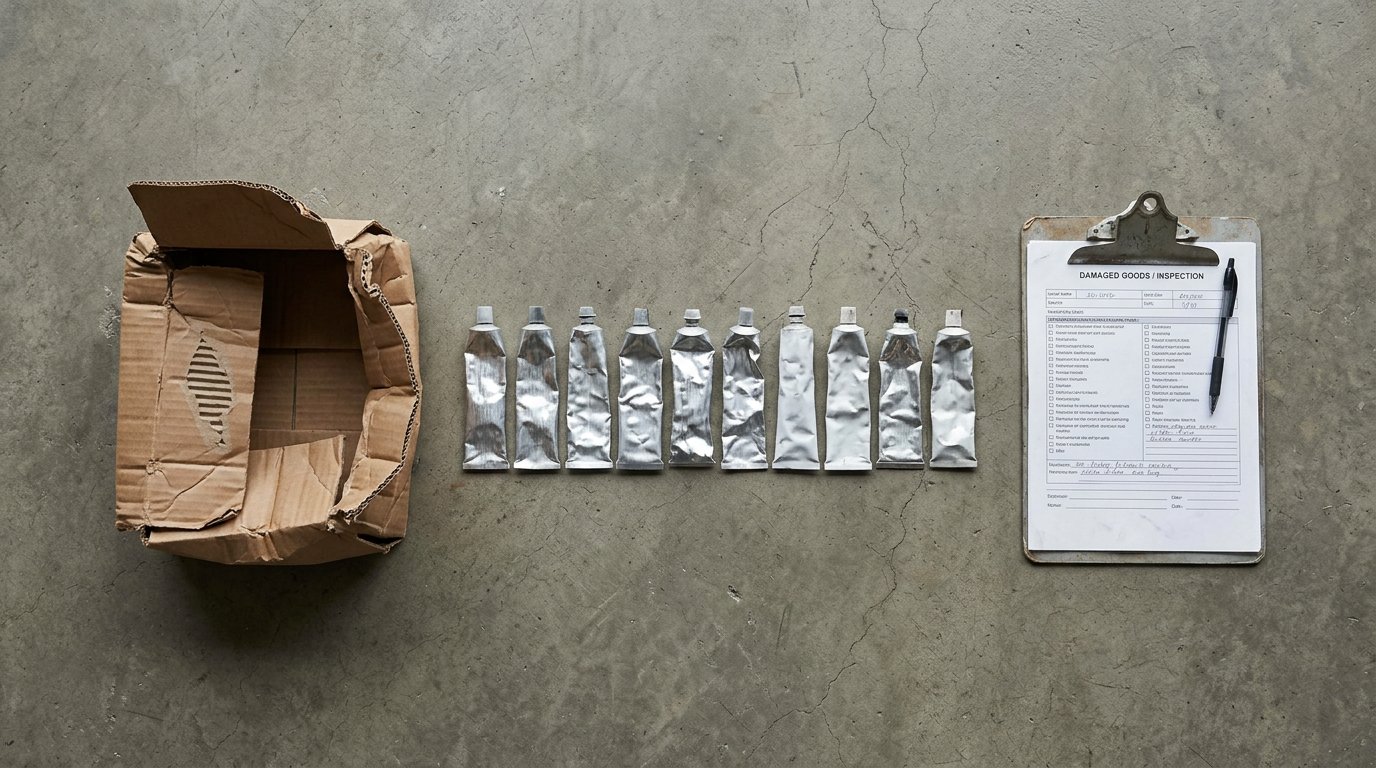
Once the cartons are open, the evidence starts degrading. Photograph in a fixed order: pallet wrap and pallet condition first, then carton condition and column position, then the tubes. Keep carton numbering consistent across every photo so a reviewer can cross-reference a single tube back to a specific box and layer.
The most useful discriminator is the carton itself. A dented tube inside a clean, square box was almost certainly damaged before it was packed or during packing. A dented tube inside a crushed, wet or deformed box points outward, to stacking or handling. The table below maps the common patterns to the load path and to the first party worth contacting.
Distribution matters as much as severity. Dents clustered in the bottom layer across many cartons are a compression and pallet-building story. Scattered dents across mixed positions are an impact story. Out-of-round bodies with abrasion and no impact point are your own fill ratio, which means the claim is against your spec, not the forwarder.
Then the paperwork. Count by carton rather than by estimated tube count, quarantine the affected cartons intact, and never discard the packaging until the claim is settled. A flattened box in a skip has no value to anyone except the party you are claiming against. Check the notice window and the Incoterms term on the order before you call anyone, because responsibility transfers at a defined point and the deadline for notice is usually short.
The Five Spec Lines That Kill Most Dent Complaints
If you change nothing else this quarter, add these five lines and attach the same document to the purchase order.
- Tube orientation and layer count per carton, shown as a drawing.
- Dividers or a partition grid plus a layer pad, by type and thickness.
- Maximum pallet stack height and weight.
- A signed boundary sample for dents and a named sampling plan with an acceptance number.
- A named drop and compression test standard with pass criteria.
Send them before artwork approval. Packing configuration gets settled at the same moment as tube dimensions and finish, not after the tubes exist, and a spec that arrives after the print proof usually arrives too late to change anything.
Dolipack works from OEM, ODM and bulk briefs, accepts low quantity orders and samples, and provides free design of the package according to the customer’s needs, so a packing layout can be tested on a sample run before a bulk commitment. A 22-person R&D team and more than 260 standard and non-standard molds mean tube dimensions and packing layout can be adjusted together across the D11.5-D40 diameter range and a maximum 200mm length, rather than being forced into a fixed format. With production centred on pure aluminum collapsible tubes alongside aluminum bottles, boxes and aerosol cans, the tube spec and the packing layout come out of the same production brief.
Send your current packing spec and a photo of a damaged carton before the next production run. We will read the layout against your tube dimensions and tell you which lines to change first.
Frequently asked questions
Can dented aluminum tubes still be filled and sold?
Sometimes, but only when the dent is purely cosmetic. A tube stays fillable if the shoulder, the cap seating area and the wall around the crimp are undistorted, because a collapsible tube is closed by crimping the open end. Any dent that reaches the shoulder, breaks print register or leaves a sharp crease should be rejected rather than reworked.
Should the tube supplier or the filler own the packing spec?
The brand owns it. Tube manufacturers pack to the brief they are handed, and contract fillers rarely question an incoming carton that matches the purchase order. Write the packing clause yourself, attach it to the order, and send the same document to both the tube supplier and the filler so neither can assume the other covered it.