
In 2026, genuinely sustainable packaging comes down to three things: mono-material design that recyclers actually accept, verified post-consumer recycled (PCR) content, and refill systems that extend the life of the primary package. Everything else — vague “eco” labels, compostable plastics with nowhere to compost them, and kraft wraps hiding plastic liners — is mostly greenwashing. This guide shows you how to tell the difference before you commit a purchase order.
The Fast Answer: What Separates Real Sustainability From Marketing Fluff
A packaging claim is credible when it names a measurable number, a material, and an end-of-life pathway. “Made with 50% PCR PET, recyclable in curbside programs covering 85% of the U.S.” is real. “Eco-conscious design” is not.
The 2026 regulatory environment has made this split sharper. The EU’s Packaging and Packaging Waste Regulation (PPWR), California’s SB 54, and the FTC’s updated Green Guides all now demand substantiation for environmental claims. If your supplier can’t hand you a spec sheet with certifications, recycled content percentages, and a life-cycle assessment, assume the claim won’t survive an audit.
Here’s the blunt rule: if a sustainability feature can’t be verified by a third party or measured in grams, percentages, or tonnes of CO2, treat it as marketing.
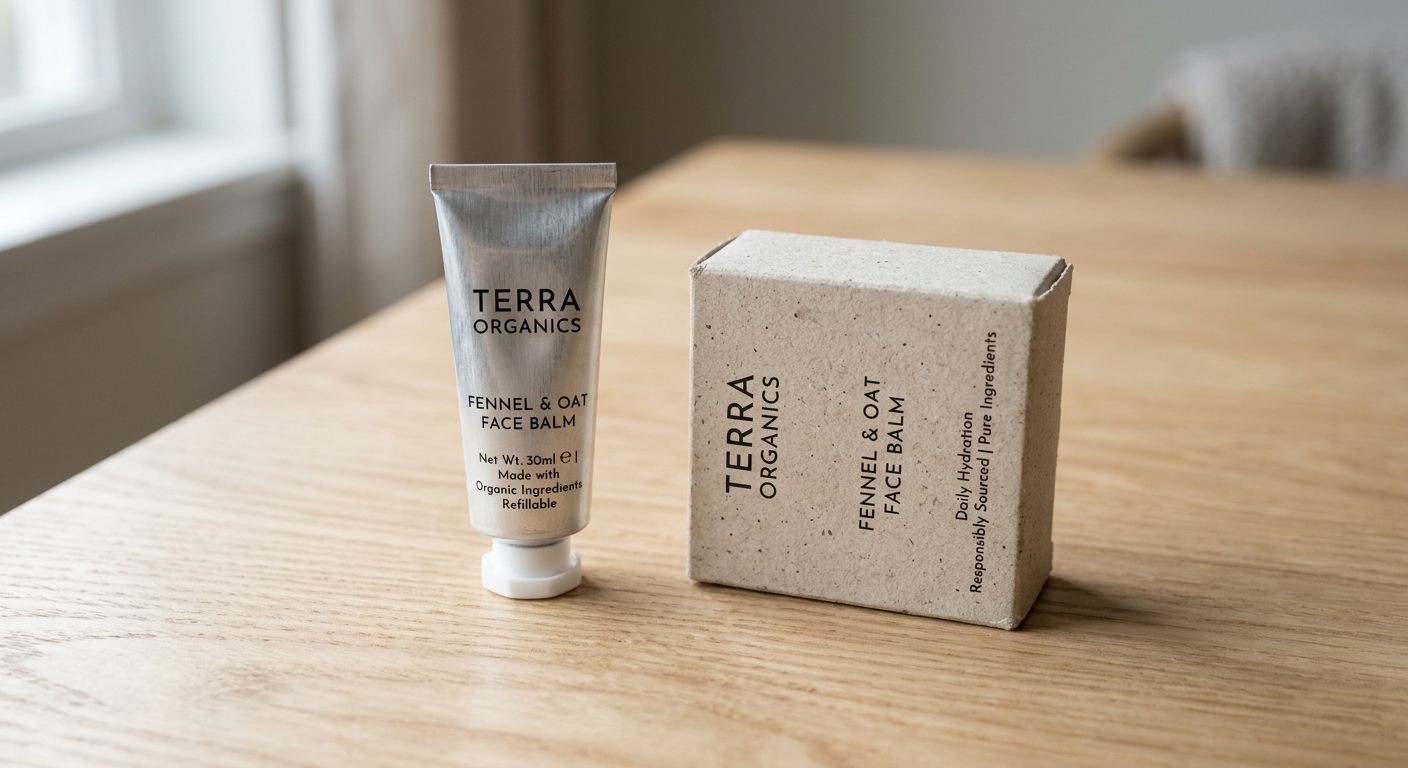
Greenwashing Red Flags You’ll See on Supplier Decks
Suppliers have gotten clever. The bad claims aren’t always obvious — they’re buried in language that sounds technical but means nothing.
Six phrases that should make you ask follow-up questions
- “Plant-based” — often means 20% bio-content mixed with conventional plastic, still non-recyclable.
- “Biodegradable” — without a timeframe and environment (marine? industrial compost? landfill?), it’s meaningless.
- “Compostable” — usually industrial compost only, which fewer than 5% of U.S. consumers have access to.
- “Recyclable” — ask “accepted in what percentage of municipal programs?”
- “Ocean-bound plastic” — can mean plastic collected up to 50 km from any coastline. Not the same as recovered marine plastic.
- “Reduced plastic” — reduced from what baseline? Last year’s model? An industry average?
The fix is simple: ask for the numerator and denominator. A claim without a baseline isn’t a claim — it’s a feeling.
What Actually Works: The Short List for 2026
After stripping out the noise, the packaging strategies with credible data behind them fall into a tight group. None are perfect, but each one has a measurable impact that survives scrutiny.
1. Mono-material designs
A tube, cap, and label all made from the same polymer family (or all aluminum) can be recycled as a single stream. Mixed-material pumps and laminated tubes usually can’t. If you’re comparing laminated vs. extruded tube packaging, mono-PE extruded wins on recyclability almost every time.
2. High PCR content
Post-consumer recycled resin keeps plastic in circulation. 30% PCR is common and meets most 2026 regulatory minimums; 100% PCR PET bottles are now produced at industrial scale.
3. Aluminum and glass with recovery infrastructure
Aluminum has a ~75% global recycling rate and infinite recyclability. Our breakdown of aluminum tubes for cosmetics covers why this material continues to lead on lifecycle metrics.
4. Refillable systems done right
A refillable compact only helps if consumers actually buy refills. Brands hitting 40%+ refill attach rates design the refill to be 30–50% cheaper and just as easy to use as the original.
5. Right-sizing and lightweighting
The most boring win is often the biggest: a 15% reduction in wall thickness can cut material use and freight emissions simultaneously. No marketing story needed.

Real vs Greenwashing: Side-by-Side Comparison
Put the two approaches next to each other and the gap is obvious. Use this as a screening checklist during supplier calls.
| Criteria | Actually Sustainable | Often Greenwashing |
|---|---|---|
| Claim specificity | Third-party certified (FSC, PCR %) | Vague words like “eco” or “green” |
| Recyclability | Mono-material, accepted curbside | Technically recyclable, rarely accepted |
| Material example | Aluminum, PCR PET, FSC paper | Bio-plastic blends, PLA in mixed streams |
| End-of-life proof | Documented recovery rate | “Compostable” with no facility access |
| Carbon data | Published LCA report | “Low carbon” with no numbers |
| Refill strategy | Durable outer + replaceable inner | “Refillable” but sold once |
| Cost reality | 10–25% premium, declining | Cheap swap + premium pricing |
| Long-term value | Brand trust, compliance-ready | Regulatory and PR risk |
If a supplier’s offer lands mostly in the right column, walk away — or at least renegotiate until they can document the claims.
Case Study: How a Mid-Size Skincare Brand Cut Waste by 38%
A European skincare brand we worked with in 2025 wanted to relaunch their bestselling moisturizer with “sustainable” packaging. Their first instinct was to switch from plastic jars to “compostable” PLA jars — a move that would have been a classic greenwashing trap. PLA in their market ends up in landfill 90%+ of the time because industrial composters reject cosmetic packaging for contamination reasons.
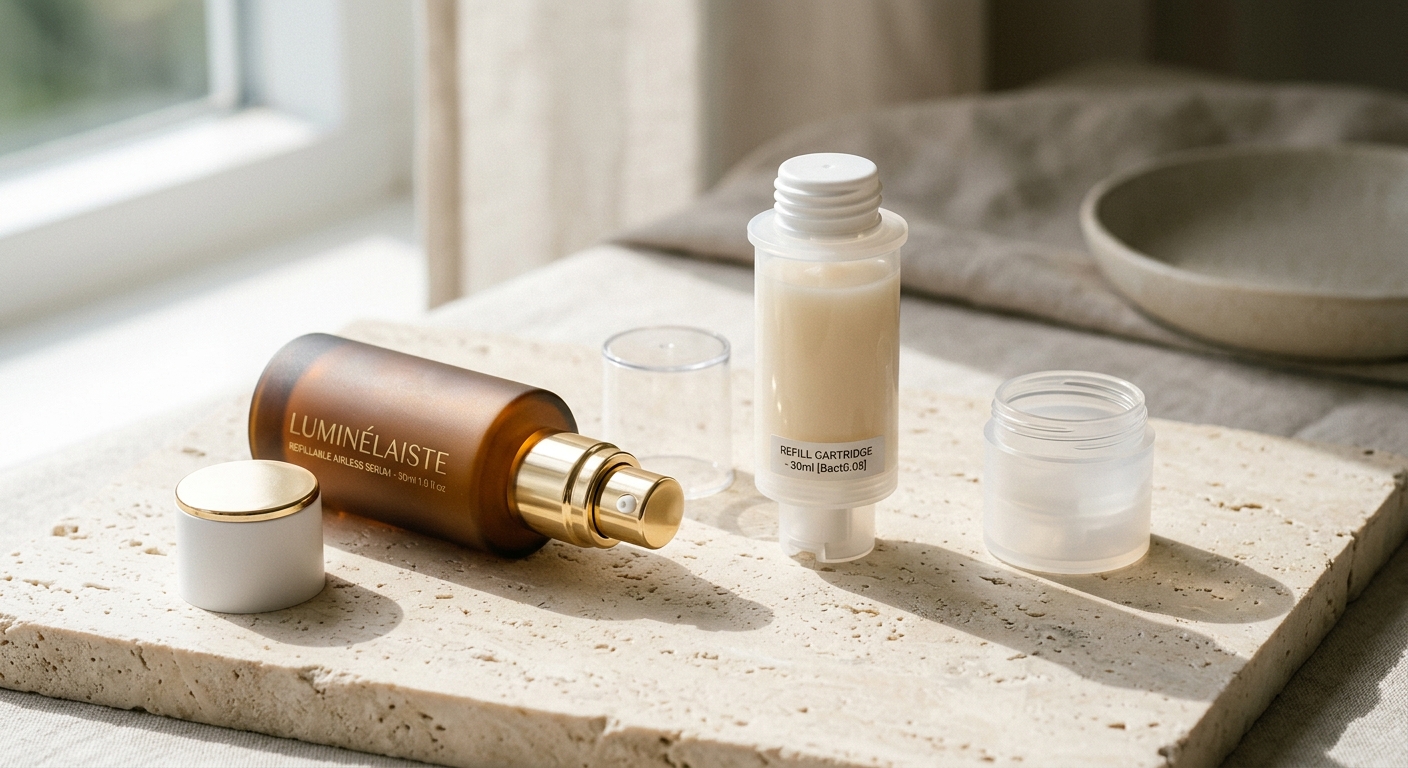
We pushed them toward a different stack: an airless aluminum-bodied package with a replaceable inner cartridge. The outer shell was designed for 50+ refills. The cartridge used 70% PCR PP, mono-material, recyclable in their top three markets.
Results after 14 months:
- Material use per dose dropped 38% once refill attach rate hit 52%.
- Unit cost including refills came in 8% lower than the original jar over the customer lifetime.
- They earned a legitimate “refillable” claim — backed by sales data, not just a design feature.
The lesson: the sustainable option wasn’t the one that sounded greenest on paper. It was the one with the verifiable numbers.
The Cost Conversation Nobody Wants to Have
Let’s be honest: sustainable packaging usually costs more upfront. Anyone telling you it’s automatically cheaper is selling something.
Typical 2026 premiums we see on orders:
- 30% PCR PET bottle: 8–15% over virgin
- 100% PCR PET: 20–35% over virgin (supply-constrained)
- Aluminum tube vs plastic laminate: 25–40% higher unit cost, lower freight weight
- Refillable system tooling: 2–4x standard tooling, amortized over 3–5 years
- FSC-certified paperboard: 5–12% over standard
But look at the full P&L. PCR content offsets EU plastic taxes (currently €800/tonne on non-recycled plastic). Lightweighting reduces freight. Refillable systems drive repeat purchases with lower customer acquisition cost. A honest LCA against your actual business — not against industry averages — usually shows a 2–4 year payback on the sustainability premium.
How to Audit a Supplier’s Sustainability Claims in 15 Minutes
You don’t need a sustainability consultant to separate real from fake. You need a short list of questions and the discipline to not accept hand-waving answers.
Ask these seven questions on every sustainability call
- What percentage of PCR content, verified by which certification? (Look for GRS, RecyClass, or ISCC PLUS.)
- Is this mono-material? If not, what’s the separation plan at end of life?
- In what percentage of our target markets is this accepted in curbside recycling?
- Can you share the LCA or at least the cradle-to-gate CO2 per unit?
- What’s the source of your “bio-based” content, and does it compete with food crops?
- For compostable claims: certified to EN 13432 or ASTM D6400? Home or industrial?
- What’s your documented response if regulators audit the claim?
If the rep can’t answer four out of seven without checking with someone, the claims aren’t integrated into the product — they’re bolted onto the marketing. For a deeper primer, see our guide on sustainable cosmetic packaging in the beauty industry.
Refillable Packaging: The Most Over-Promised Category
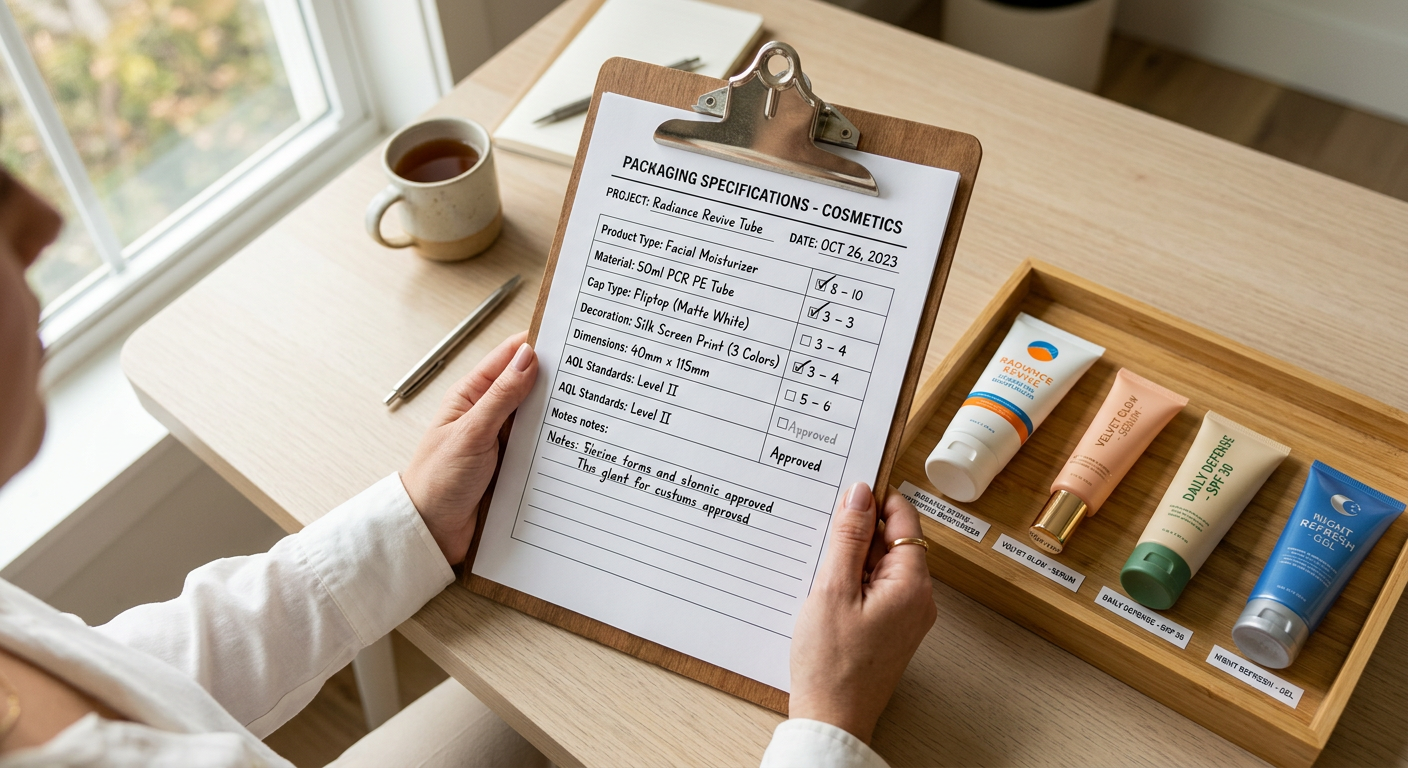
Refillable is the hottest buzzword in 2026 and also the most abused. A package isn’t refillable because it technically can be refilled — it’s refillable because customers actually refill it.
The data gap is huge. Brands launching refill systems report attach rates ranging from 4% to 60%. The difference isn’t the package — it’s the system around it: refill pricing, availability in the same aisle, clear instructions, and a refill that feels like an upgrade rather than a compromise.
If you’re evaluating a refillable format, read our deep-dive on refillable packaging systems and materials before committing to tooling. The wrong refill mechanism can lock you into years of low attach rates.
Regulatory Pressure: Why 2026 Is the Year Greenwashing Gets Expensive
Three regulatory shifts are turning loose sustainability claims into real legal and financial risk.
- EU PPWR: By 2030, all packaging must be recyclable. Interim 2026 targets require minimum recycled content in plastic packaging — 30% for contact-sensitive PET, 10% for other formats.
- EU Green Claims Directive: In force this year, requires pre-verification of any environmental marketing claim. Fines up to 4% of annual turnover.
- California SB 54 and similar U.S. state laws: EPR fees scale based on recyclability and recycled content.
The practical consequence: a vague “eco-friendly” claim that was marketing fluff in 2022 can now trigger an investigation. Brands with documented compliance-backed packaging are moving faster than competitors still arguing with regulators over substantiation.
Your Next Move: A Practical Takeaway
Start with a brutal audit of your current packaging claims. Line up every sustainability word on your carton and website against the seven questions above. Kill anything you can’t substantiate with a number or a certification. You’ll lose a few marketing talking points and gain regulatory defensibility — a good trade in 2026.
Then pick one real move: increase PCR content on your highest-volume SKU, switch a laminate to a mono-material format, or pilot a refill program on a hero product. One measurable change beats ten vague claims.
If you want a straight answer on which sustainable formats fit your product, volumes, and markets — without the marketing gloss — talk to the dolypackage team. We’ll tell you what the numbers actually say, including when the “sustainable” option isn’t the right one for your product yet.


