Premium cosmetics brands in 2026 engineer packaging in three layers: a barrier layer that protects the formula, a sensory layer that signals luxury at first touch, and a sustainability layer that satisfies regulators and consumers. The brands winning shelf space are picking materials like aluminum collapsible tubes, airless dispensers, and refillable architectures because each solves all three layers at once — not just one. The rest of this article breaks down how those decisions are actually made inside R&D and procurement teams.
Why Packaging Is Now a Formula-Level Decision
Ten years ago, packaging was picked after the formula was locked. Today, premium brands reverse that order. Why? Because a vitamin C serum oxidizes inside the wrong container before it ever reaches a customer’s bathroom shelf.
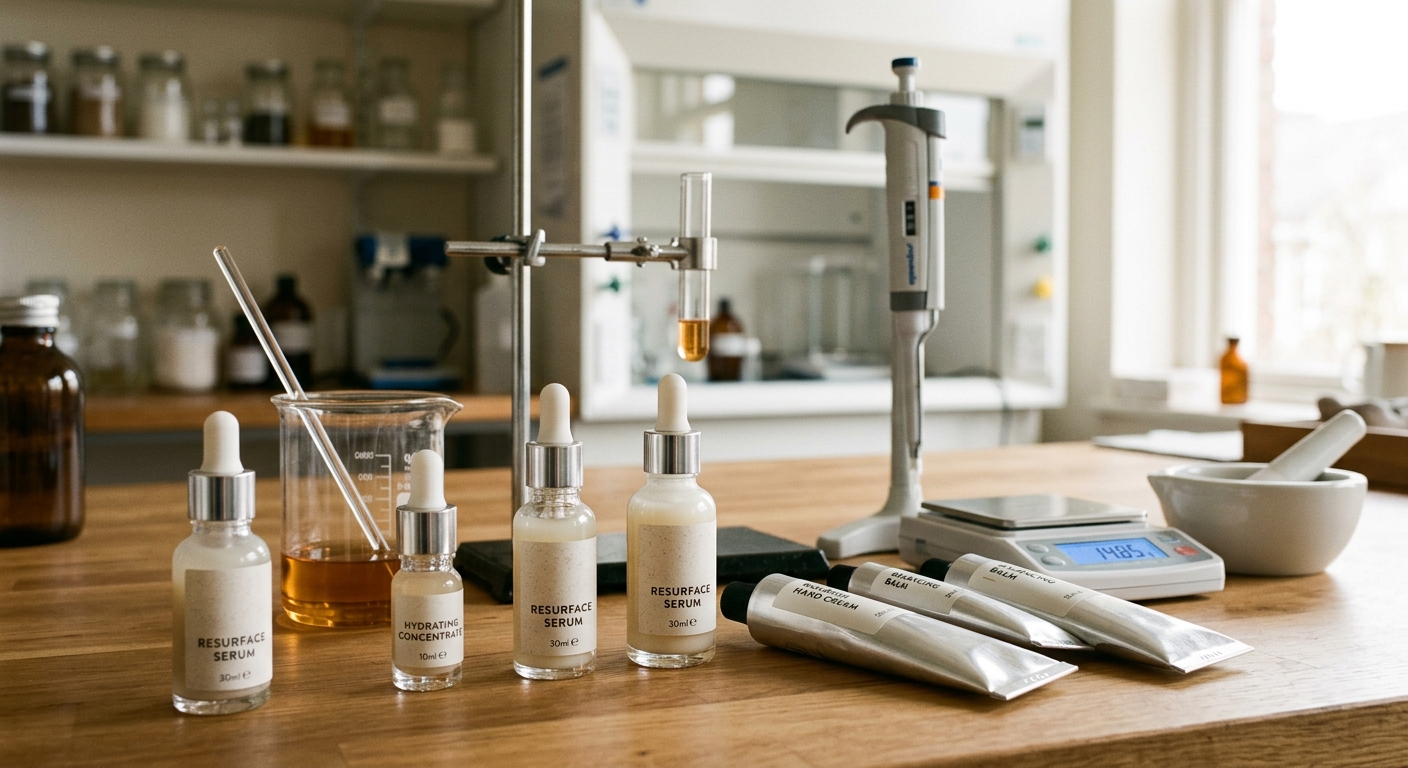
Active ingredients like retinol, ascorbic acid, peptides, and benzoyl peroxide are notoriously sensitive to light, oxygen, and metal contact. A formulator working on a 15% L-ascorbic acid serum will specify packaging requirements before the lab even mixes the first batch — typically opaque, low-permeability, and airless. The wrong choice can shorten stability from 24 months to under 6.
This is why premium R&D teams now bring packaging engineers into the formulation room. Anchoring the container choice to the chemistry — not the marketing brief — is the single biggest shift we’ve seen in the industry over the last five years.
The Material Hierarchy Premium Brands Actually Use
Walk into any prestige beauty buyer’s office and you’ll see a clear material hierarchy on their reference board. Aluminum sits at the top for tube-format products. Not because it’s trendy — because it works.
Why aluminum keeps winning
Pure aluminum collapsible tubes deliver an absolute barrier. No oxygen migration, no UV penetration, no flavor or scent transfer. The metal wall doesn’t spring back after squeezing, which means no air rushes back in to oxidize the remaining product. For a $120 retinol cream, that single property can extend usable shelf life by 40% or more.
Where laminated and PE tubes still fit
Laminated tubes (ABL/PBL) are the workhorse for mass-market toothpaste and mid-tier creams. PE extruded tubes are cheaper still and fine for short-shelf-life products like basic body lotion. Premium brands typically reserve these for secondary lines or travel sizes. For a deeper dive, see our breakdown of laminated vs extruded tube packaging.
For brands undecided on tube format, our guide to choosing the right cosmetic tubes walks through the decision tree.
Engineering the First Touch: Finishes, Closures, and Tactile Cues
Consumers decide in under three seconds whether a tube feels premium. That judgment is mostly tactile, not visual.
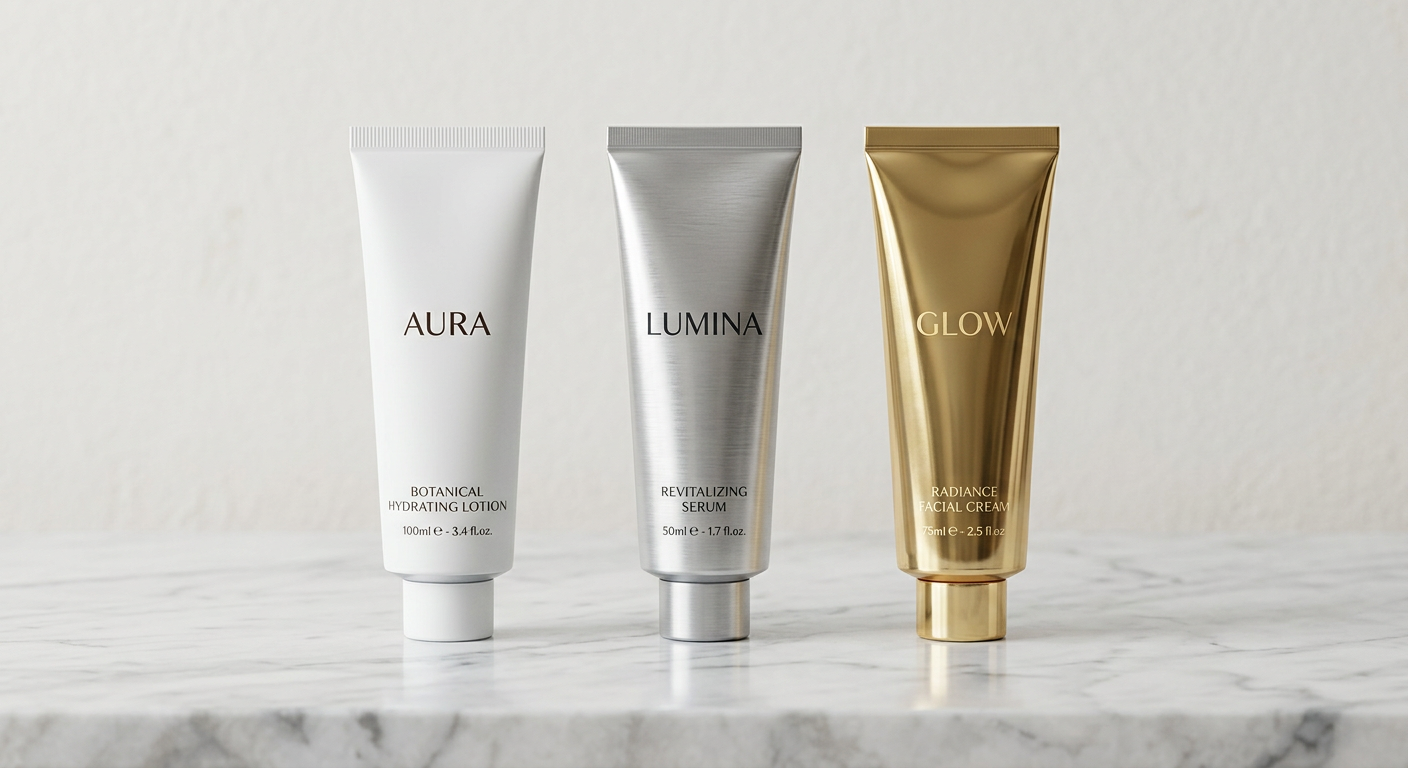
Premium brands engineer this deliberately. A matte soft-touch coating costs roughly 8–15% more than gloss but increases perceived value by an estimated 25–40% in consumer panels. Brushed aluminum finishes communicate “clinical” and “efficacious” — ideal for dermatological brands. High-gloss with hot-stamped foil reads “classic luxury” — think heritage skincare houses.
Closure choices matter more than you think
- Screw-on caps with metal inserts — premium weight, satisfying click, used by most luxury skincare
- Flip-top closures — convenience-driven, common in suncare and hand cream
- Nozzle applicators — for eye creams, lip treatments, targeted serums
- Orifice reducers — control dosage, prevent waste, signal “precious formula”
For example, a French luxury skincare brand we worked with switched from a standard flip-top to a weighted zamac screw cap on their $95 hand cream — sales per door rose 18% in the following quarter without any formula change. The cap added roughly $0.40 to unit cost.
Read more on the role of finishes in our piece on how metal squeeze tubes elevate cosmetic packaging.
Sustainability Engineering: What Premium Brands Specify in 2026
By 2026, sustainability is no longer marketing — it’s a procurement spec sheet. EU PPWR (Packaging and Packaging Waste Regulation) requirements are pushing every brand selling in Europe to document recyclability rates, recycled content percentages, and refill compatibility.
What the spec sheets now require
- Minimum 30% post-consumer recycled (PCR) content where structurally possible
- Mono-material construction — easier to recycle than mixed plastics
- Documented end-of-life pathway for each component
- Refill or reuse system within 24 months of launch
Aluminum hits most of these boxes natively. It’s infinitely recyclable without quality loss, and roughly 75% of all aluminum ever produced is still in circulation. Our deep-dive on the recyclability of aluminum tube containers covers the numbers in detail.
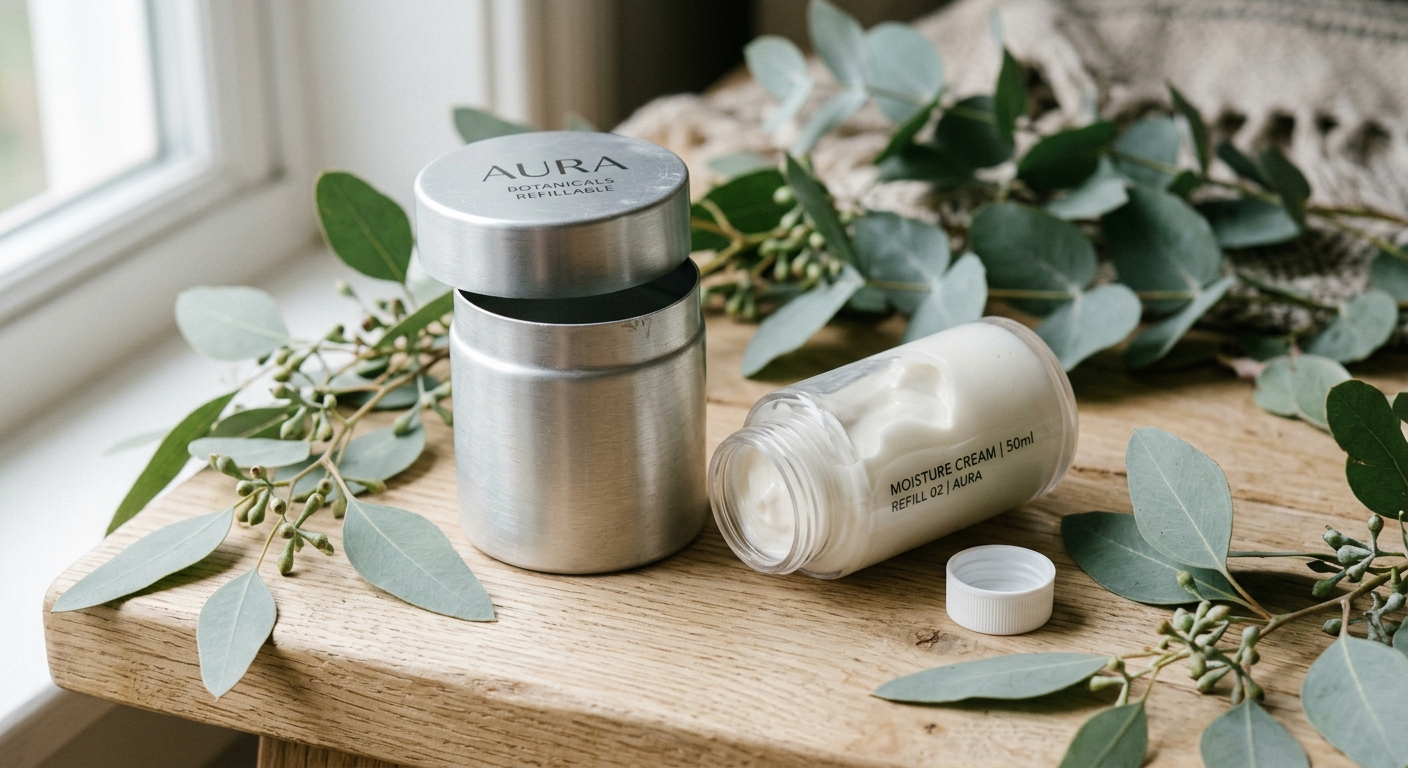
Refillable systems are the other major shift. A Korean K-beauty brand recently launched a $78 night cream in an aluminum outer shell with a replaceable inner pod — the outer is kept for life, the pod refill costs 40% less than the original purchase. Repurchase rates jumped from 22% to 51%. For more on this format, see our guide to refillable packaging systems.
How Procurement Teams Evaluate Tube Suppliers
The brief that lands on a packaging supplier’s desk in 2026 looks nothing like the brief from five years ago. Premium brand procurement teams now evaluate suppliers across six criteria, weighted roughly as follows:
- Material quality and consistency (25%) — wall thickness tolerance, internal lacquer integrity, no pinholes
- Print and decoration capabilities (20%) — offset, silk-screen, hot-stamp, embossing in one facility
- Regulatory compliance (15%) — REACH, FDA, ISO 15378 for pharma-grade
- Sustainability documentation (15%) — recycled content certificates, LCA data
- MOQ flexibility (15%) — ability to handle 5,000-unit limited editions
- Lead time reliability (10%) — increasingly weighted after the 2024–2025 supply shocks
For instance, an indie clean-beauty brand launching a 12-SKU range will often start at 5,000 units per SKU to test market response. Suppliers who can run that volume profitably — without compromising decoration quality — become long-term partners as those SKUs scale to 100,000+ units. This is the model we built our wholesale cosmetic squeeze tubes program around.
Category-Specific Engineering Choices
Premium brands don’t use one packaging philosophy across the whole portfolio. Each category has its own engineering logic.
Skincare creams and treatments
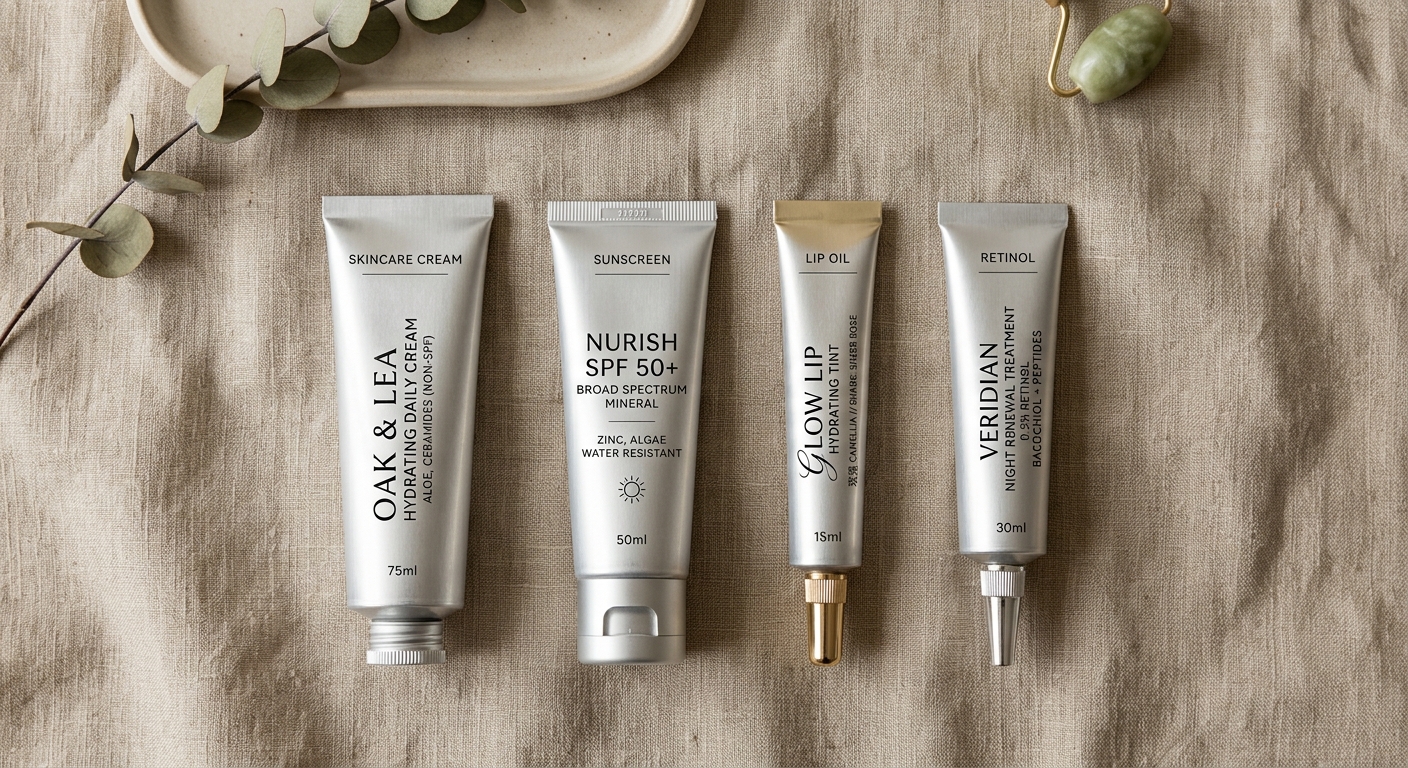
Aluminum collapsible tubes dominate the $50+ price tier. The metal wall prevents the formula degradation that kills repeat purchase. Typical sizes: 30ml, 50ml, 75ml. Matte finishes with minimalist single-color printing read “clinical luxury.”
Color cosmetics — lip and cheek
Slim aluminum tubes with precision nozzles are now standard for premium lip oils, glosses, and tinted balms. The metal feels weighty and cool against the lips. Brands launching here should review our guide for custom lip gloss tubes.
Suncare
UV protection demands maximum barrier. Aluminum tubes prevent the active ingredient breakdown that plagues PE-packaged sunscreens after a few months on a sunny shelf. European premium suncare brands have shifted almost entirely to aluminum since 2023.
Pharma-adjacent skincare (cosmeceutical)
Brands selling retinoids, acids, and peptides at pharmacy counters need pharma-grade documentation. Aluminum tubes with internal epoxy phenolic lacquer meet both cosmetic and pharma standards, simplifying regulatory paths. See our overview of international standards for aluminum tube packaging.
The Cost Math Behind Premium Packaging Decisions
Here’s the part most articles skip: the actual numbers.
A 50ml aluminum collapsible tube with custom printing, matte coating, and a quality screw cap typically lands at $0.55–$0.95 per unit at 10,000-unit MOQ. The same volume in a PE extruded tube runs $0.25–$0.40. So aluminum costs roughly 2x more.
But premium brands look at the math differently. On a $80 retail cream, packaging moves from 0.5% of retail (PE) to 1% of retail (aluminum). The cost difference is functionally invisible to the consumer — but the perceived value lift, formula protection extension, and sustainability story are all material. That’s why the ROI math overwhelmingly favors aluminum for any product retailing above roughly $35.
Below that threshold, laminated tubes usually win on cost-to-perception ratio. Below $15 retail, PE is often the only viable option.
Where brands waste money
- Over-specifying secondary packaging (heavy outer boxes that get thrown away)
- Multi-component caps that fail recyclability tests and now require redesign for EU markets
- Custom colors that require minimum ink purchases the brand can’t use up
- Ordering across too many SKUs at low volumes instead of consolidating decoration runs
What Brands Should Specify in Their Next RFQ
If you’re briefing suppliers in the next quarter, here’s the short list of what to include in your RFQ to avoid the most common surprises later.
- Exact tube diameter and length — not just “50ml capacity”
- Wall thickness preference — premium typically specifies 0.10–0.15mm
- Internal lacquer type — epoxy phenolic, modified epoxy, or BPA-NI on request
- Printing method and color count — offset for fine detail, silk-screen for solid blocks
- Decoration extras — hot-stamp, embossing, matte/gloss varnish zones
- Cap material and finish — PP, ABS, zamac; matching color or contrasting
- Required certifications — ISO, FDA, REACH, food-contact if applicable
- Sustainability documentation needed — PCR percentage, recyclability statement
- Annual volume forecast and reorder cadence — affects tooling amortization
A clear RFQ shortens quotation cycles from three weeks to under five days, and produces quotes you can actually compare apples-to-apples.
Building Packaging That Outlasts the Trend Cycle
The brands engineering packaging well in 2026 aren’t chasing trends. They’re building modular systems: a refillable aluminum architecture they can re-skin every two years with new colorways and decoration. The structural choice — material, dispensing mechanism, closure type — gets locked once. The aesthetic layer gets refreshed seasonally.
This decoupling is what lets premium brands maintain consistency while still feeling new. It also dramatically reduces tooling costs over a five-year horizon — a single tube body might serve four product launches with only the print artwork changing.
If you’re developing a new line and want to talk through whether aluminum tubes, refillable systems, or a hybrid format makes sense for your formula and price point, our packaging engineers can review your brief and quote within a few business days. Start with a look at the case for aluminum tubes in cosmetics, or reach out to us directly through the contact page to discuss custom specifications, MOQs, and decoration options for your next launch.