A collapsible aluminum tube starts life as a small, solid slug of pure aluminum — not a sheet, not a coil, but a coin-sized disc that gets punched into a hollow tube shape through impact extrusion. From there it’s annealed, internally lacquered, printed, necked, and capped in a sequence that typically takes seven to nine distinct steps before it ever reaches a filling line. Understanding this sequence matters because every shortcut a factory takes shows up later — as leakage, cracked shoulders, or ink that rubs off in a customer’s bathroom cabinet.
Step One: Impact Extrusion — Where the Tube Is Actually Born
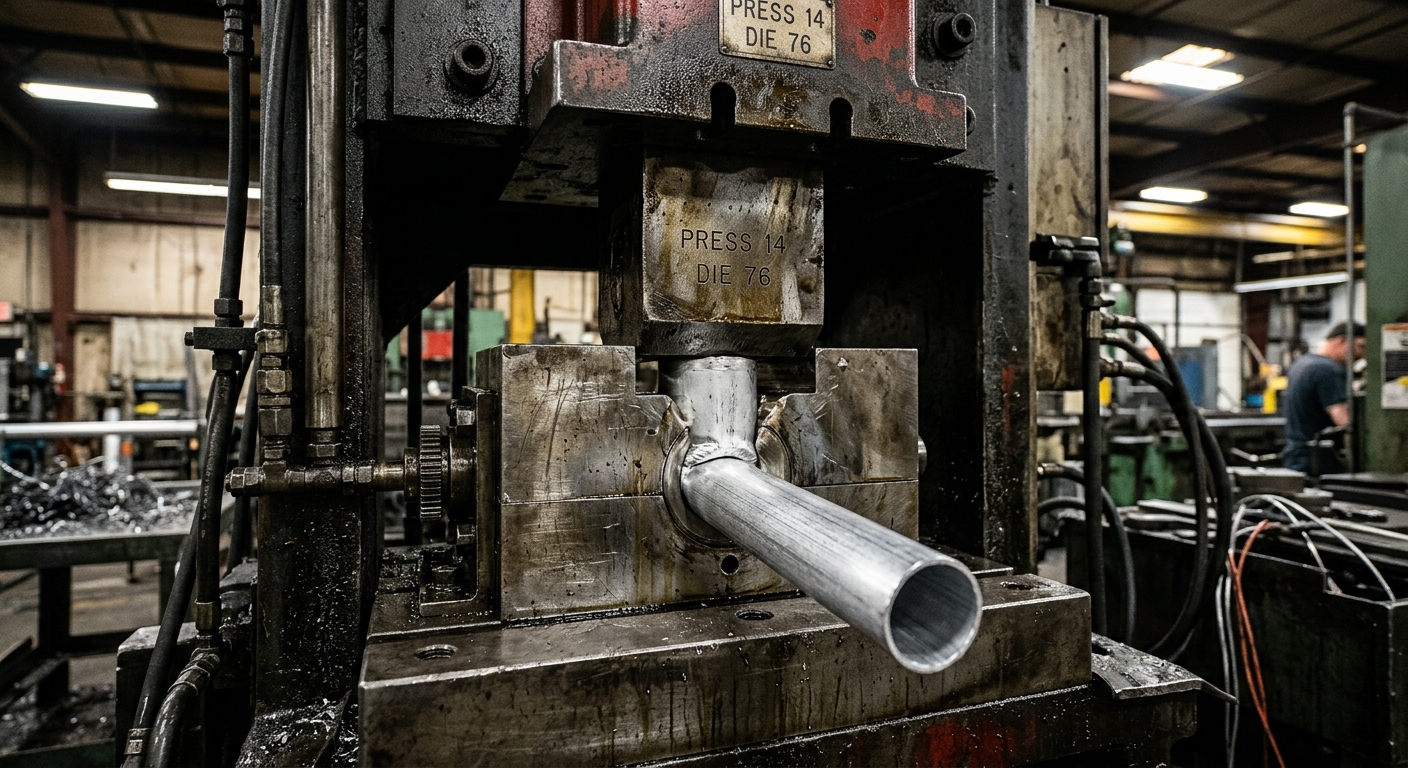
Here’s the part most buyers never picture: an aluminum collapsible tube doesn’t start as a tube at all. It starts as a flat, punched-out disc of 99%+ pure aluminum, roughly the size of a large coin. That disc — called a slug — gets dropped into a die and struck by a punch under several hundred tons of pressure. The metal flows upward around the punch and forms a hollow cylinder in a fraction of a second.
This is impact extrusion, and it’s why aluminum tubes have that seamless, one-piece body with no side welds. A weld line would be a weak point and a formula pathway for leakage — which is exactly why aluminum tube packaging protects formulas so effectively compared to multi-layer laminate alternatives. The alloy matters here too. Most cosmetic and pharmaceutical tubes use 1070 or 1050 grade aluminum, chosen specifically for how evenly it flows during extrusion without cracking at the shoulder.
Trimming and Annealing: The Step Buyers Never Ask About
Straight out of the press, a tube is too hard and brittle to squeeze without cracking. That’s the problem annealing solves. The tube gets heated to a controlled temperature — usually in the 400–500°C range — then cooled to soften the metal’s grain structure back to a workable state.
Skip or rush this step and you get tubes that split at the shoulder the first time a customer squeezes them hard. It’s an invisible defect at the factory — the tube looks perfect — but it fails in the field. This is one reason MOQ and price shouldn’t be the only factors when evaluating suppliers; a factory cutting corners on annealing time can quote lower but ship a batch that fails during your first production run. We’ve covered this dynamic in detail in our breakdown of what aluminum tube suppliers don’t tell you about wholesale pricing.
Trimming the Open End
After annealing, the open end of the tube (still rough from extrusion) gets trimmed to a precise, even length. Inconsistent trimming here throws off filling-line calibration downstream — a detail that sounds minor until your filler jams on inch-off-spec tubes.
Internal Lacquering: The Layer You Never See But Always Depend On
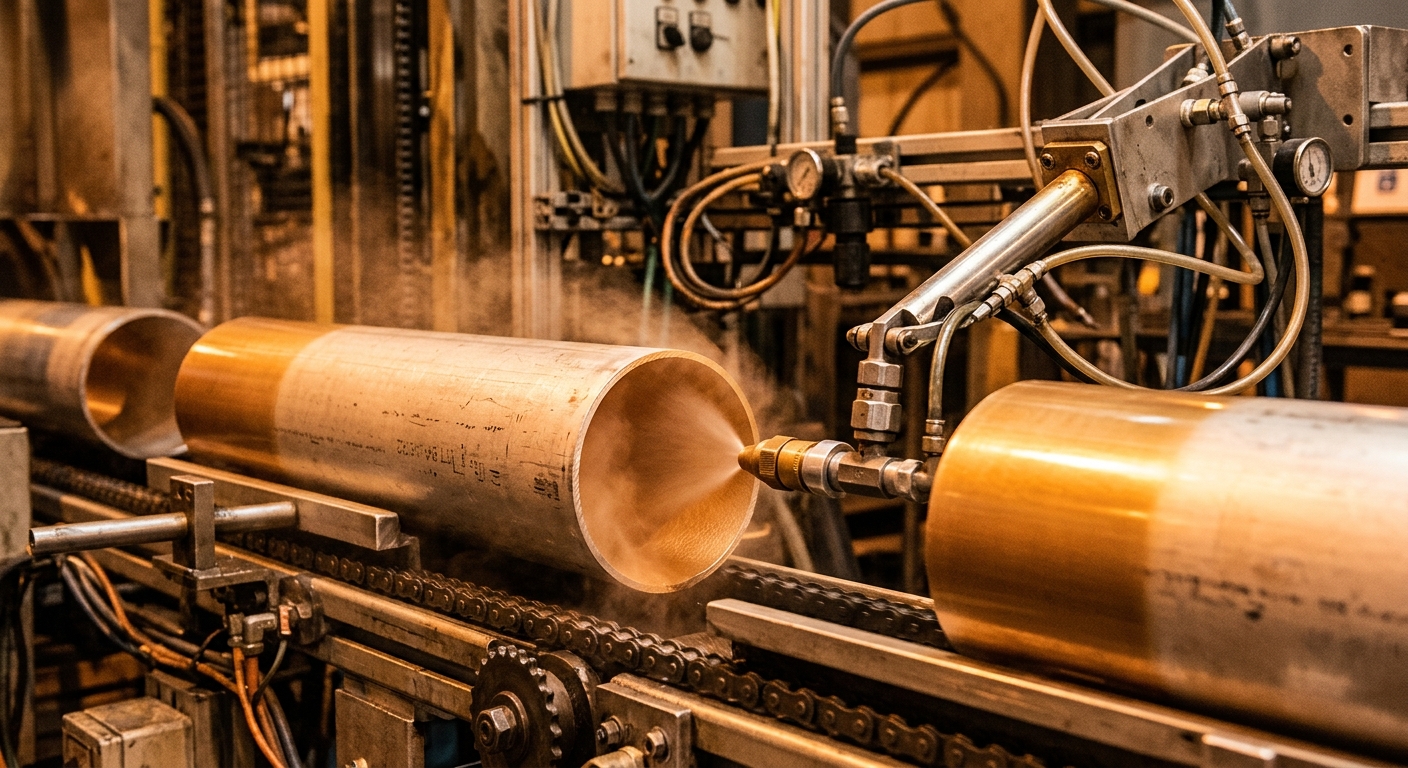
Every aluminum tube destined for a cosmetic, pharmaceutical, or food formula gets an internal coating — usually an epoxy-phenolic or acrylic lacquer sprayed onto the interior wall and cured at high heat. Without it, active ingredients like acids, essential oils, or preservatives can react directly with the raw aluminum, causing pinhole corrosion, discoloration, or metallic taste transfer.
Choosing the wrong lacquer for a given formula is one of the most common — and expensive — mistakes brands make. A vitamin C serum, for instance, is far more chemically aggressive than a basic hand cream base, and it needs a more resistant internal coating to avoid degrading the tube from the inside out over a 12–18 month shelf life. For a deeper formula-compatibility comparison, see our guide on aluminum versus plastic tubes and which actually protects your formula better.
Real-World Example: The Toothpaste Reformulation Problem
One toothpaste brand we’ve seen in the market switched active ingredients and started noticing subtle interior corrosion within months. The fix wasn’t a new tube supplier — it was matching the lacquer spec to the new formula’s pH. This is exactly the kind of detail worth confirming before a production run, and it’s covered further in our piece on why aluminum toothpaste tube packaging is making a comeback.
Printing: Offset, Screen, and Why Color Matching Is Harder Than It Looks
Decoration happens on the tube’s exterior after lacquering, using either offset printing (for photographic detail and gradients) or screen printing (for bold, opaque colors and metallic effects). Offset can lay down 6-8 colors in one pass, which is why premium skincare and cosmetic brands lean toward it for detailed branding.
Here’s the catch buyers often miss: aluminum’s natural silver base means every ink color prints slightly differently than it would on white plastic. A brand’s exact Pantone match on a plastic mockup can shift subtly on metal unless the factory runs a proper color-matching trial first. Reputable manufacturers always insist on a physical proof approval — not a digital rendering — before committing to a full production run. This step alone prevents a large share of the reprint disputes that eat into margins and delay launches.
Shoulder Forming, Necking, and Capping: Where Leaks Actually Start
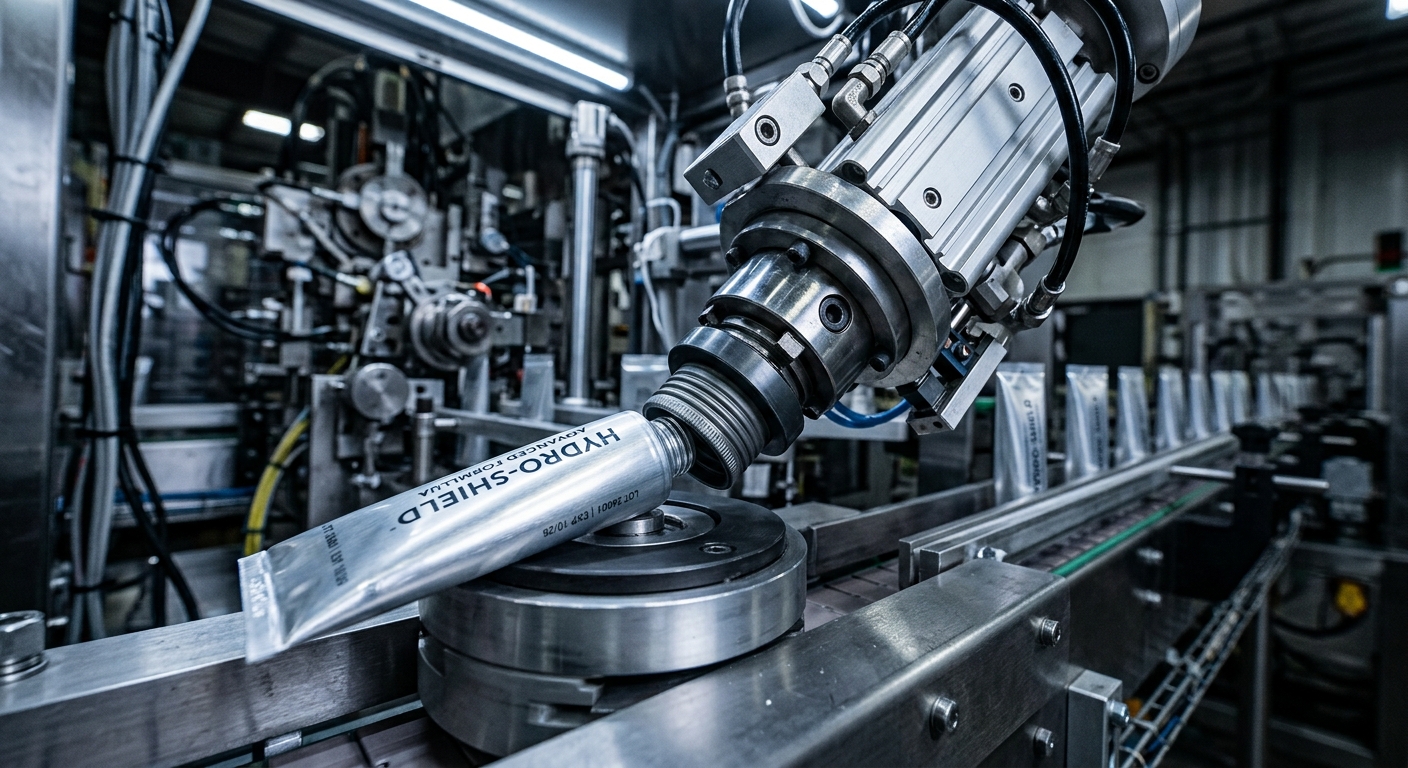
The open end of the tube gets necked down and threaded to accept a cap — and this is the single most leak-prone zone on the entire tube. Threads that are cut a fraction of a millimeter off spec cause cross-threading, which looks fine on the shelf but fails during shipping vibration or temperature swings.
Nozzle diameter, thread pitch, and cap torque all have to be engineered together, not chosen independently. A factory that manufactures its own caps in-house — rather than sourcing generic ones — can hold tighter tolerances across a full production batch. If you’ve ever dealt with a batch of tubes that leaked only after reaching the customer, the root cause is almost always traceable to this stage. We go deeper into diagnosing that exact failure point in our guide on why aluminum tubes leak and how to fix it before the next production run.
Surface Finishing: Matte, Glossy, and Soft-Touch Coatings
Once printed, tubes often get a final clear overcoat — matte, gloss, or soft-touch — that does more than affect appearance. It also determines scratch resistance during transit and how the tube feels in a customer’s hand at the point of sale.
Matte finishes hide fingerprints and minor scuffs better, which matters for high-touch retail products like hand cream tube packaging that get picked up and put down repeatedly by shoppers. Soft-touch coatings, meanwhile, are increasingly requested for premium skincare lines because the tactile finish signals quality before the customer even reads the label. This is the kind of packaging psychology explored further in our piece on how metal squeeze tubes elevate cosmetic packaging.
Quality Control: What a Serious Factory Actually Tests For
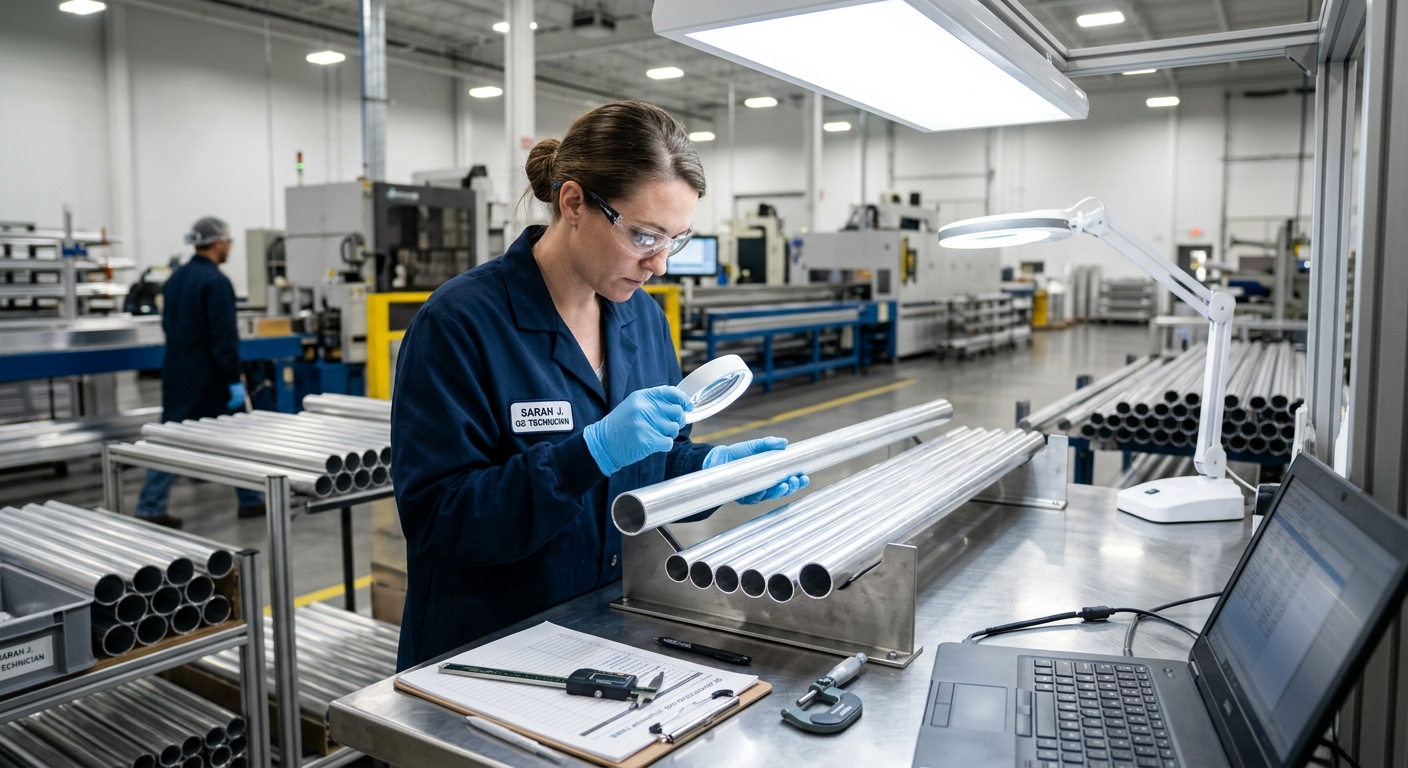
A reliable cosmetic tube manufacturer doesn’t just eyeball finished tubes — they run batch testing at multiple points. Common checks include:
- Squeeze and burst testing to confirm the tube holds pressure without cracking
- Lacquer adhesion testing using tape-pull methods
- Cap torque testing to verify consistent closure force across a batch
- Print adhesion and rub-resistance testing
- Dimensional checks on neck diameter and thread pitch against tolerance specs
If a supplier can’t walk you through their QC checkpoints when asked directly, that’s a red flag worth pausing on — regulatory expectations, especially for pharmaceutical tube packaging, only add more layers to this. See our guide on meeting pharmaceutical packaging compliance without sacrificing design and international regulations for aluminum tube packaging for more on what’s actually required.