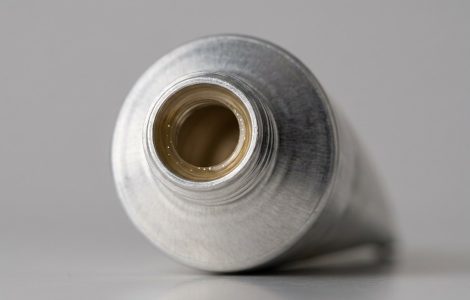
An aluminum squeeze tube is specified by three numbers, not one: body diameter, body length, and orifice. Diameter and length produce the fill capacity, which is always smaller than the tube’s raw geometric volume because the shoulder, headspace, and crimp consume space. DOLIPACK’s standard range runs from D11.5 to D40 in diameter, up to 200 mm in custom length, and 4 ml to 200 ml in capacity, and the right combination is the one that matches your dose, your formula’s viscosity, and your filling line.
Key takeaways
- Diameter and body length are the inputs you choose; fill capacity is the output you get, so read any size chart from diameter outward instead of shopping by millilitre.
- A quoted nominal capacity is always smaller than the tube’s geometric volume, because the shoulder, the headspace above the fill, and the flattened crimp take their share before product does.
- Specify the orifice from formula viscosity and dose first, then confirm the chosen diameter runs on your filler’s change parts, since those two constraints decide whether the spec is buildable at all.
- Ask every supplier for usable fill length, the basis of their quoted capacity, and the mold number they would run; without those three answers, two quotes at the same nominal size are not comparable.
Diameter, Length, Capacity: Which Number You Choose and Which One You Get
Start with the two dimensions you control and let the third one follow. Diameter is the outer diameter of the tube body, measured across the cylinder, not across the shoulder and not across the cap. Body length runs from the base of the shoulder to the open tail before crimping. Fill capacity is what those two produce once shoulder shape and wall thickness are applied, which is why it never appears first on a well-built spec.
Diameter cascades into everything else
The body diameter fixes cap size, print circumference, filling nozzle size, carton cavity, and how the tube reads in a photograph. Change it and every one of those changes with it. That is the practical reason to lock diameter early and treat it as the anchor of the design.
Body length is not usable length
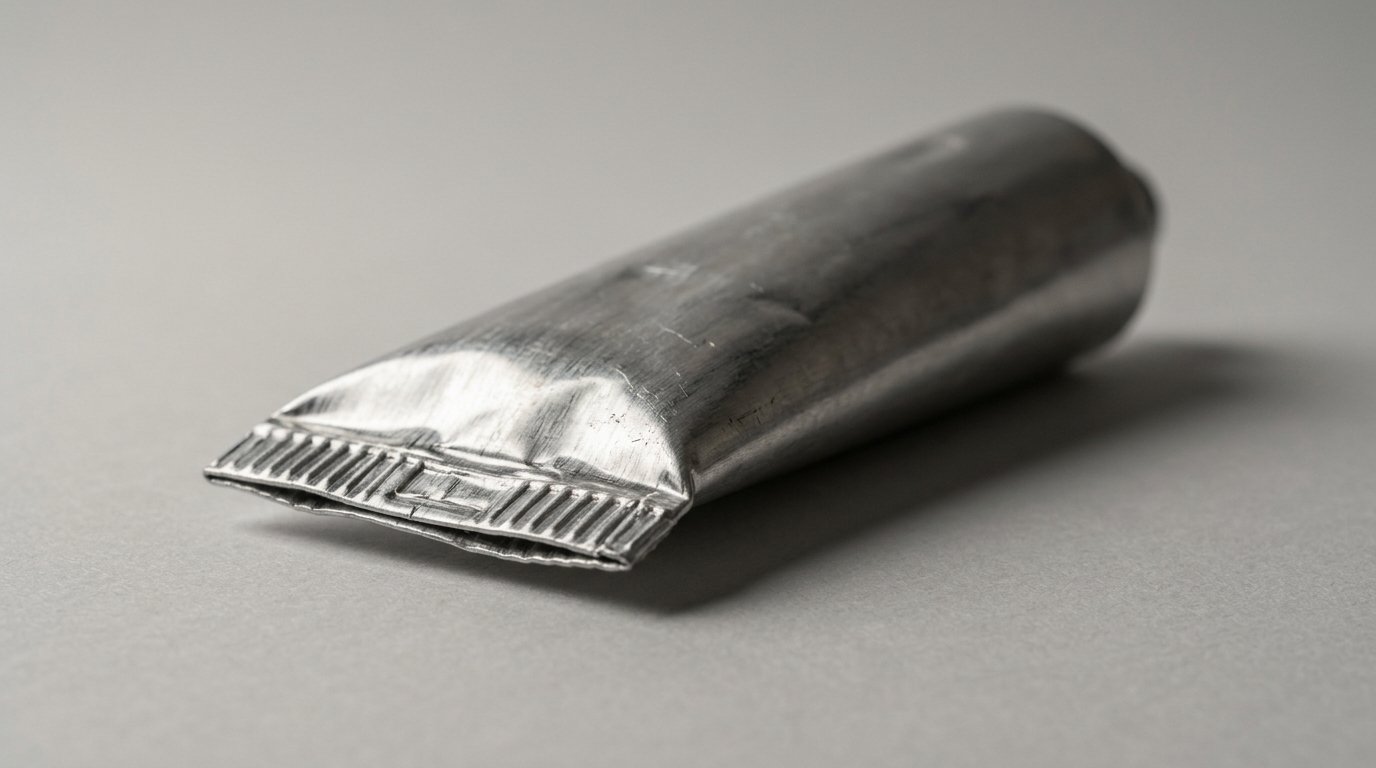
Crimping folds and compresses the tail, so a 200 mm tube gives back noticeably less than 200 mm of product space at the seam. The number that matters for capacity is the usable fill length: shoulder base to the start of the crimp zone. Ask for it explicitly, because overall length is the easier number to quote and the less useful one.
Fill capacity is derived, never chosen
Two tubes with the same quoted diameter and length can hold different amounts. A domed or long shoulder pushes the neck forward and steals body length. A thicker wall reduces internal volume at the same outer dimension. Nominal capacity is the result of those decisions, and treating it as an input is how specs end up 15 percent short at the filling line.
The consequence is blunt: do not shop by millilitre alone. A 100 ml requirement can be met by a short, wide tube or a long, slim one. Those two read completely differently on shelf, sit differently in the hand, and fill at different speeds.
DOLIPACK’s aluminum tube range spans D11.5 to D40 in diameter, custom length up to 200 mm, and 4 ml to 200 ml in capacity, which covers a sample-size serum through to a full-size toothpaste or body product. Diameter and length are still constrained by what is tooled: the company states over 260 standard and non-standard molds, and a dimension outside that library is a new-tooling conversation rather than a catalog pick.
Diameter Is the Spec That Sets Your Whole Product Line
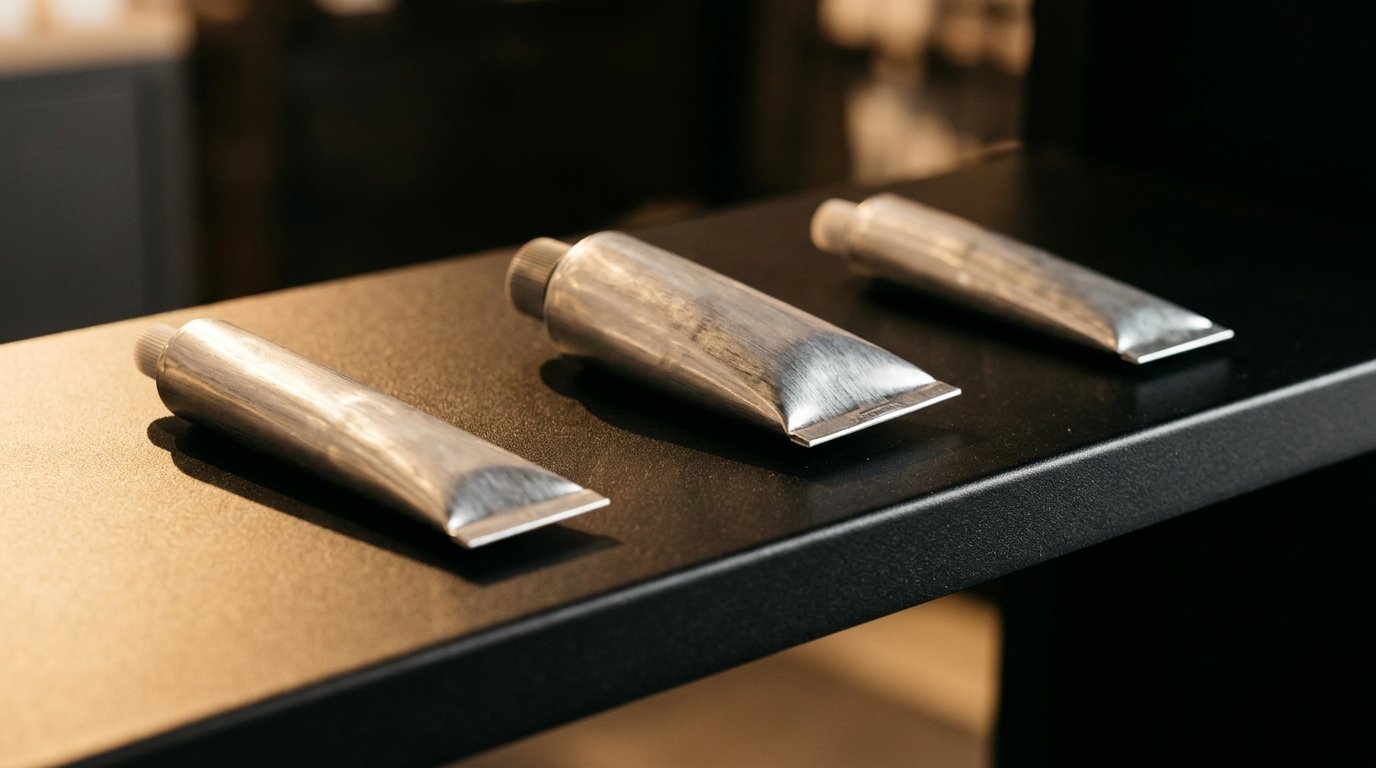
Pick a diameter band by product type before you pick a volume, because the band dictates how the tube reads in the hand and how much decoration space you get. The bands below are the working logic, not a rulebook.
- D11.5 to D16: eye creams, spot treatments, lip products, pharmaceutical ointments, samples and travel sizes. Slim tubes give dose control and read as precision, but they are harder to decorate legibly and slower to fill, since each unit carries a small volume through the same handling steps.
- D19 to D25: the workhorse zone. Hand cream, sunscreen, cleanser, hair gel, personal care. Wide enough for a readable brand block, small enough to squeeze one-handed.
- D30 to D40: toothpaste, body lotion, pharmacy gels, high-volume daily-use products. A broad surface for regulatory and ingredient copy, but it needs a stiffer wall or the tube feels flimsy when full.
Diameter is also a printing decision
Decoration wraps a cylinder, so a larger diameter gives more linear print width at the same tube length. A fine serif logo that reads beautifully across a 35 mm tube can turn to mush at 13 mm. If your identity depends on a wordmark with thin strokes, test the artwork at final size before choosing the slim option.
Diameter is also a closure decision
The cap or nozzle is tooled to a neck finish, and the neck is tied to the shoulder and therefore to the body diameter. Change diameter mid-project and you may be buying a new cap tool as well as new artwork. Settle diameter first, then fittings, then decoration. For broader guidance on matching a tube format to a product line, see choosing the right cosmetic tubes for your brand.
A brand launching a 30 ml serum might default to a 25 mm tube by reflex. A 19 mm tube at greater length holds the same fill with a more elongated, more premium silhouette, and often prints a cleaner logo because the artwork is no longer fighting a wide cylinder.
Why the Label Never Matches the Geometry: Nominal vs. Actual Fill
Geometric volume is pi times radius squared times usable body length. It is an upper bound on what a tube could hold if product filled the shoulder and the cap too, and no product ever does.
Three things eat the volume first
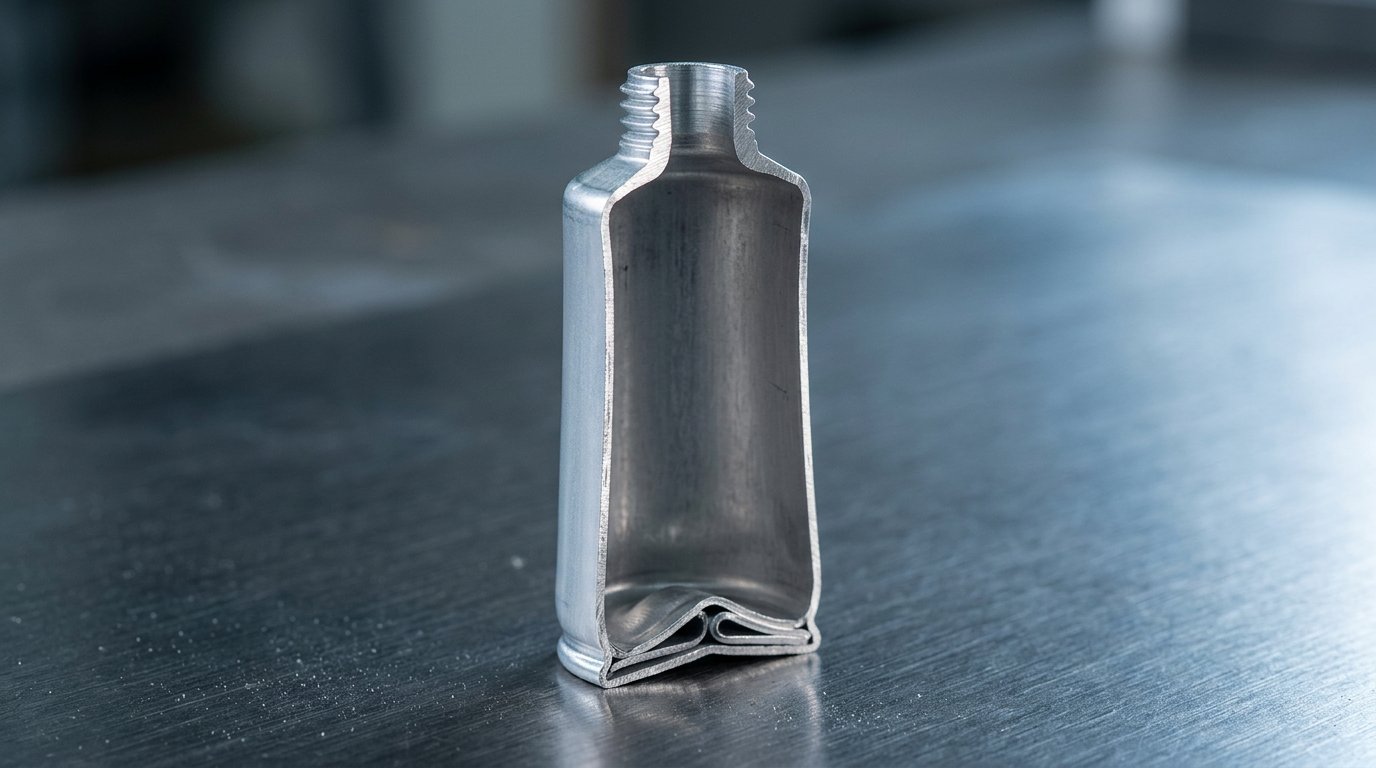
The shoulder and neck region is dead space that product cannot occupy without leaking. The headspace at the crimp exists so the seal is not contaminated with product, which is a leakage risk you should not trade away for a few millilitres. And the flattened crimp tail itself occupies tail length without holding anything. Add them up and a tube that measures 64 ml geometrically is realistically a 50 ml package.
Nominal capacity is a convention
The figure on a spec sheet is a marketing and filling convention, not a physical maximum. Ask a supplier directly whether their quoted number is a fill volume, a brim-full volume, or a labelled net content. Three different suppliers can all say 50 ml and mean three different things, and that is how comparable-looking quotes diverge.
Grams versus millilitres
Most cosmetic formulas are filled by weight. A tube specified at 100 ml holds fewer grams when the formula is less dense than water and more when it is denser. The declared net weight on pack must be set in whichever unit your market’s labelling rules require, and that figure, not the millilitre capacity, is what your filler will chase.
Overfill allowance is the practical tool
Fill slightly above the declared net content so the declared weight is still met at the bottom of your filler’s accuracy band, and so the tube does not look half empty on shelf. Quantify the allowance with your filler and against your own regulatory obligations. Do not lift a percentage from an article, including this one.
A worked example
Take a 25 mm diameter tube. Radius is 12.5 mm, so cross-section is roughly 491 mm squared. With 130 mm of usable body length, geometric volume is about 63,800 mm cubed, or roughly 64 ml. Deduct shoulder, headspace, and crimp and the same tube is realistically a 50 ml nominal package. Shelf appearance matters as much as compliance here: a tube filled to roughly 80 percent of geometric volume looks correctly full, while one filled to 60 percent looks like a returned item.
The Size Reference Table: Diameter, Typical Length, Fill Range, and What Goes In It
The table below maps diameter bands to realistic length and capacity pairings and to the products that actually ship in them. Treat it as a starting brief you can hand to a colleague, not as a fixed physical law.
| Diameter band | Typical body length | Typical nominal fill | Common products | Decoration space | Orifice tendency |
|---|---|---|---|---|---|
| D11.5 to D16 | 60 to 95 mm | 4 to 15 ml | Eye cream, spot treatment, lip product, ointment, sample | Tight: one short wordmark or a symbol | Fine |
| D16 to D19 | 80 to 120 mm | 12 to 30 ml | Serum, BB cream, travel-size hand cream, sunscreen | Moderate: short ingredient block | Fine to standard |
| D19 to D25 | 100 to 150 mm | 25 to 60 ml | Hand cream, cleanser, hair gel, personal care | Good: full brand block plus short copy | Standard |
| D25 to D30 | 120 to 175 mm | 50 to 100 ml | Body lotion, thick cream, pharmacy gel, hair mask | Generous | Standard to wide |
| D30 to D40 | 140 to 200 mm | 90 to 200 ml | Toothpaste, body lotion, pharmacy gel, high-volume daily use | Widest: room for regulatory copy | Wide |
How to read it honestly
Every pairing above must be confirmed against a specific supplier’s mold list and current capacity chart. Two manufacturers can both quote a D25 tube at 150 mm and land on different nominal fills, because their shoulder geometry and crimp width differ. The table gives you the shape of the decision, not the answer to it.
The extremes are worth calling out. 4 ml and 200 ml are the ends of DOLIPACK’s stated aluminum tube range, spanning D11.5 to D40 and custom lengths up to 200 mm. Anything outside that is a tooling conversation, and with over 260 standard and non-standard molds on the floor, it is a conversation worth having early rather than after the artwork is signed off.
Carton and freight footnote
Smaller diameters pack more units per master carton, which shifts per-unit freight cost and matters most on export and e-commerce volumes. A 13 mm tube and a 25 mm tube are not just different products, they are different shipping economics.
The Orifice: The Smallest Spec on the Drawing, the Biggest Effect on the Fill Line
The orifice is the opening at the tube head through which product exits, formed by the neck and the nozzle or insert fitted to it. It is a separate spec from the neck finish, which is what the cap threads onto or snaps over. Confusing the two is the most common reason a buyer specifies a closure that will not accept the nozzle they need.
Selection runs from viscosity to orifice
Never the other way around. Thin lotions and serums need a restricted opening to prevent a rush of product and uncontrolled dosing. Thick creams, gels, and toothpaste need a wider opening or the customer has to work to get anything out. A formula reformulation from cream to lotion is therefore an orifice event, not just a marketing event. The same formula-compatibility thinking applies to internal tube coatings that protect the formula, and both belong in the spec before the first run.
Dose control is the second variable
A product sold on a measured dose, such as a treatment gel or a pharmaceutical ointment, needs an orifice and nozzle geometry that delivers repeatably. That usually means a longer or tapered nozzle rather than a plain open end, because a taper gives the user a visible stopping point.
What goes wrong at both ends
Too wide and the product surges, strings, or drips onto the cap, which reads as cheap. Too narrow and the tube backs up, the customer over-squeezes, and the crimp and wall take the strain. That is one route into the denting and leakage problems covered in dented tubes in transit.
The filling-line effect nobody mentions
A narrow orifice slows fill and can trap air in the headspace. A wide one can splash product into the seal area before crimping, which is a sealing failure waiting to happen. Orifice choice is a joint decision between the formula chemist and the filling engineer, and it belongs on the drawing before production, not in a change request after it.
Nozzle and insert options
The common families are a plain open end, a tapered or long nozzle for targeted application, and applicator inserts for eye and lip formats. Which of those actually exists in a supplier’s tool library is a question to ask, not to assume. Do not accept a millimetre orifice figure from anyone who has not confirmed it against the mold.
Consider a brand that reformulates a lotion to a thinner viscosity and keeps its tube unchanged. At fill, nothing looks wrong. In the customer’s hand, the same orifice now dispenses roughly twice the dose per squeeze.
What Silently Eats Your Capacity: Shoulder Shape, Wall Thickness, and Crimp
Two tubes can carry identical quoted diameter and length and still hold different amounts, feel different in the hand, and print differently. Three variables explain almost all of that gap.
Shoulder geometry is the biggest hidden variable
A domed or long shoulder pushes the neck forward and steals body length. A flat or short shoulder returns that space to the fill. Neither is better in the abstract: a longer shoulder gives a more sculpted, premium silhouette, and a flat one maximises volume per millimetre of tube. Decide which you are buying.
Wall thickness trades against two things at once
A thicker wall resists denting in transit and holds a crisp shape on shelf. It also reduces internal volume at the same outer diameter and makes the tube stiffer to squeeze, which matters for pharmacy and care products used by people with weak grip. Pure aluminum collapsible tube behaviour is the reason this trade-off exists at all: the metal deforms and stays deformed, which is exactly what makes a collapsible tube work, but it also means the tube will not spring back and re-inflate. Wall thickness sets how controllable that collapse feels. For the forming side of this, see how collapsible tubes are actually made.
Crimp width is part of the size calculation
A wider crimp is more robust against leakage but consumes tail length that could have held product. Treat it as a capacity variable, not a finishing detail. A 2 mm difference in crimp zone across a production run is real volume.
Decoration coverage shrinks with these choices
A long shoulder and a wide crimp both reduce the flat printable band, and that can force artwork changes late in a project when the label copy no longer fits the panel. If your pack carries regulatory or ingredient text, protect that band early.
There is one rule that solves most of this: ask for usable fill length, not overall tube length, and compare quotes on that basis. Two quotes at the same nominal size are not comparable if their usable lengths differ by five millimetres. DOLIPACK’s aluminum tube range runs D11.5 to D40 in diameter, up to 200 mm in custom length, and 4 ml to 200 ml in capacity, and the collapsible squeeze tube construction means every one of those millimetres is a decision rather than a default.
Sizing for the Filling Line and the Shipping Carton, Not Just the Shelf
A size decision is a line-fit and freight decision as much as a design one. Get these wrong and the packaging cost quietly moves from the tube budget into the operations budget.
- Fillers are tooled for a range. A line set up for 25 mm and 35 mm tubes may have no change parts for a 13 mm tube, so the smallest and prettiest option can be the most expensive to run. Ask for the filler’s supported diameter and length window before finalising, then read whether your tubes will run on your filling line.
- Nozzle reach matters. A long narrow tube can put the fill nozzle too deep or cause product to bridge. A short wide tube may need a different nozzle set entirely.
- Unscrambling is sized to diameter. Tube orientation equipment and loading chutes are built around a diameter, so a new size can mean new change parts or manual loading on the line.
- Decoration tooling is per size. Print cylinders, screen frames, and hot-stamping tooling are all cut for a specific tube, so a size change late in the project carries tooling cost, not just artwork cost.
- Freight moves with diameter. Units per master carton, carton dimensions, and pallet yield all shift. A slimmer tube packs more units per carton, which cuts per-unit freight on export volumes. Model it with your own carton and pallet data rather than assuming a saving.
- Samples are the cheap test. Run the candidate size on the actual filling line with the actual formula before committing to a production quantity. DOLIPACK states that it offers OEM, ODM and bulk purchasing options as well as low quantity orders and samples, which is the right stage to use that.
Picture a brand that saves a few percent on tube cost by moving to a smaller diameter. Slower fills and a set of new change parts can absorb that saving in the first production run and keep absorbing it on every run after.

The Size Brief: What to Send a Supplier So the Quote Is Comparable
Most slow quotes are the buyer’s fault, not the supplier’s. A brief that states only a volume forces the supplier to guess your formula, your line, and your closure, so the reply is a guess too. Here is what to send.
The seven lines of a complete size brief
- Body diameter, or the target diameter range if you are open.
- Usable body length, or the overall length you are designing to.
- Declared nominal fill, in millilitres.
- Formula density, or the fill weight in grams per unit.
- Formula viscosity or product category, described in plain terms.
- Orifice and nozzle type required, plus any applicator insert.
- Closure type and neck finish expectation.
The commercial lines that change the answer
Add target order quantity, decoration method and number of colours, surface finish, and whether a stock mold is acceptable or a new tool is in scope. Those lines decide whether the quote you receive is buildable or aspirational.
Why viscosity earns its own line
Stating viscosity or product category lets the supplier propose an orifice and a wall thickness instead of quoting a bare tube back at you. It also surfaces the questions you would rather answer now: does this formula need an internal liner, and will this diameter fill at a sensible rate.
Three answers that make two quotes comparable
Ask every supplier for usable fill length, the basis of their quoted capacity, and the mold number they would run. With those three, quotes stop being a price comparison and become a spec comparison.
Where DOLIPACK fits
DOLIPACK manufactures customizable aluminum tubes from D11.5 to D40 in diameter, with custom lengths up to 200 mm and capacity from 4 ml to 200 ml. The company states over 260 standard and non-standard molds, an R&D team of over 22 people, free package design based on the customer’s needs, and OEM, ODM, bulk, low-quantity and sample options, backed by 10+ years of experience and physical factories in Yuyao, Wuxi, Yangzhou and other locations.
Send the seven-line brief plus a reference sample, and ask for a size recommendation with a sample in the proposed size before you commit to tooling. That last step is the whole article in one action.
Frequently asked questions
What does D25 mean on an aluminum tube specification?
D25 means the tube body measures 25 mm across its outer diameter, taken on the cylinder rather than the shoulder or the cap. That single figure drives cap size, print circumference, filling nozzle, and carton cavity. Suppliers write it with a D prefix, and D19 to D25 is the middle band used for hand cream, cleanser, and similar personal care products.
Can I get a 100 ml aluminum squeeze tube in a slim diameter?
Usually yes, by lengthening the body. A 100 ml nominal fill can come from a wide short tube or a slim long one, and both sit inside DOLIPACK’s stated D11.5 to D40 diameter range with lengths up to 200 mm. Confirm usable fill length with the supplier, because shoulder shape and crimp width decide whether your 100 ml actually fits.
Do I need a different orifice for a thick cream than for a serum?
Yes, and the choice follows viscosity and dose rather than tube size. A thick cream or toothpaste needs a wider opening so the customer is not fighting the tube, while a thin serum needs restriction to stop product rushing out. Ask which orifice dimensions and nozzle types are already tooled before you commit to artwork or a production run.