
The five packaging mistakes that drain the most money are over-engineering materials, ignoring minimum order quantity (MOQ) strategy, choosing the wrong packaging format for your product, neglecting sustainability as a cost lever, and skipping prototype testing before full production runs. Collectively, these errors can inflate your per-unit packaging cost by 25–50% — and most brands don’t catch them until thousands of units are already on shelves. Below, we break down each mistake with real numbers and actionable fixes so your next packaging order actually protects your margins.
Mistake #1: Over-Engineering Your Packaging Materials
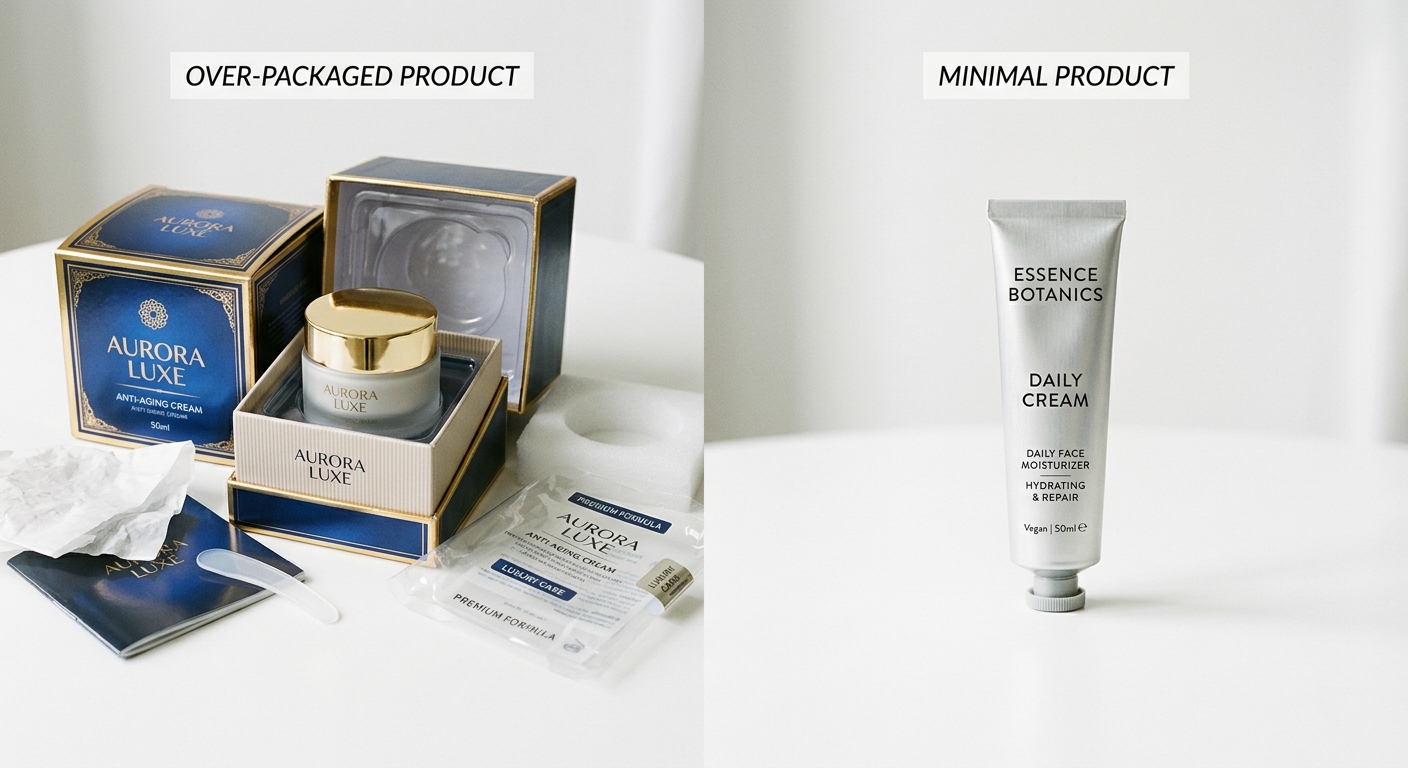
Here’s a pattern we see constantly: a skincare brand launches a 30ml eye cream and packages it in a rigid, triple-layered box with a magnetic closure, a foam insert, and a heavy-gauge glass jar. The product retails for $28. The packaging costs $1.20 per unit. That’s over 4% of revenue eaten by packaging alone — before you factor in shipping weight.
Why It Happens
Brands conflate premium perception with material excess. There’s a belief that heavier = more luxurious. But research from Ipsos and packaging trade studies consistently shows that consumers rank design coherence and unboxing experience above raw material weight. A beautifully printed aluminum tube with clean branding can feel more premium than a clunky box-within-a-box setup.
The Fix
Audit every layer of your packaging and ask: does this layer protect the product, communicate the brand, or improve the user experience? If the answer is none of the above, cut it. Switch from rigid boxes to well-designed tubes or lightweight containers that still look sharp. For a 30ml cream, an aluminum tube with direct printing can drop your packaging cost to $0.25–$0.40 per unit while actually improving shelf appeal.
One cosmetics startup we worked with replaced a glass jar + carton combo with a custom aluminum squeeze tube. Their packaging cost dropped 52%, shipping weight fell by 38%, and — here’s the kicker — their customer satisfaction scores on “packaging quality” actually went up because the tube was easier to use and dispensed product more cleanly.
Mistake #2: Ignoring MOQ Strategy and Ordering Blind
Minimum order quantities exist for a reason — tooling, setup, and material batch economics. But too many brands either order way too few units (paying steep per-unit premiums) or way too many (sitting on dead inventory that ties up cash for months).
The Math Most Brands Skip
Let’s say a supplier quotes you $0.30/unit at 50,000 pieces and $0.52/unit at 10,000 pieces. That’s a 73% premium for the smaller run. Sounds like you should order 50,000, right? Not necessarily. If you only sell 15,000 units in six months, you’ve got 35,000 tubes warehoused. At $0.30 each, that’s $10,500 in idle inventory — plus storage fees, potential design obsolescence, and cash you can’t deploy elsewhere.
The Fix
Calculate your true cost per unit including warehousing, capital cost, and obsolescence risk — not just the supplier’s quoted price. A good rule of thumb: order 3–4 months of projected sales volume, then negotiate tiered pricing with your supplier for scheduled reorders. Many manufacturers, including dolypackage, offer flexible MOQ structures specifically designed for growing brands that need to scale without overcommitting.
Also, consolidate SKUs where possible. If you have three products that can share the same tube diameter and cap, you can pool your order volume across SKUs to hit a better price tier. This is especially effective with wholesale cosmetic squeeze tubes where tooling is shared.
Mistake #3: Choosing the Wrong Packaging Format for Your Product
A hair serum in a wide-mouth jar. A thick body butter in a narrow-neck bottle that requires a spatula to extract. A toothpaste in a pouch that can’t stand upright on a bathroom shelf. These aren’t hypotheticals — they’re real products we’ve seen brands struggle with.
Format Mismatch = Hidden Costs
When your packaging format doesn’t match your product’s viscosity, use case, or retail environment, the costs multiply in ways that don’t show up on a line-item quote:
- Higher return rates — customers get frustrated when they can’t dispense product easily
- Product waste — 10–15% of product left in the container means your effective cost-per-use rises
- Shelf rejection — retailers won’t reorder packaging that doesn’t fit their planogram or falls over
- Shortened shelf life — wrong barrier properties lead to oxidation, separation, or contamination
The Fix
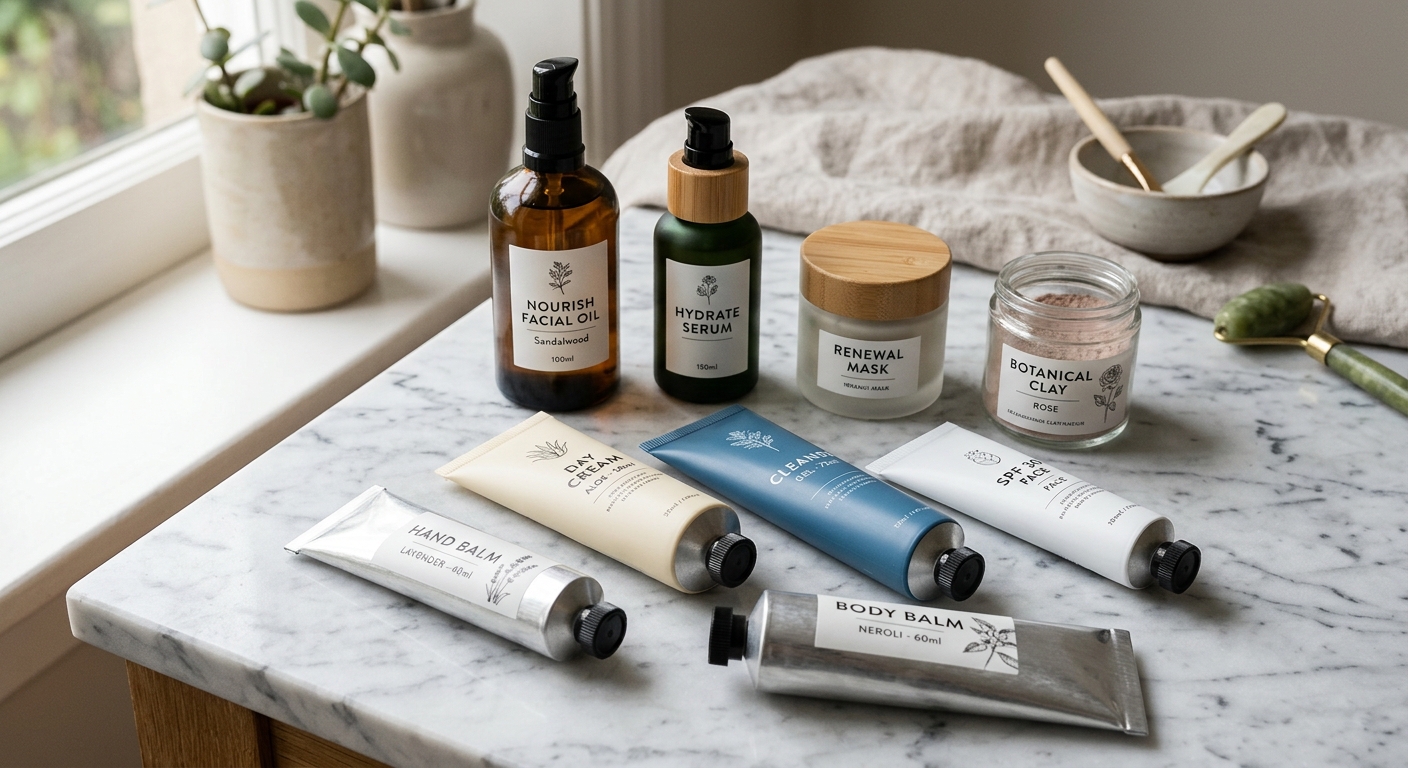
Start with your formula, not your aesthetic vision. A viscous cream belongs in a tube or jar, not a pump bottle designed for liquids. Sensitive actives like retinol or vitamin C need metal tube packaging that limits air exposure. Toothpaste and pharmaceutical gels need tubes with controlled dispensing and tamper evidence — which is why choosing the right wholesale toothpaste tube involves more than picking a diameter.
Map your product’s physical properties (viscosity, pH, light sensitivity, fill temperature) against packaging format capabilities before you request quotes. This single step eliminates the most expensive mistake in the entire packaging process: reformulating or repackaging after launch.
Mistake #4: Treating Sustainability as a Cost Center Instead of a Savings Lever
Most brands think “going sustainable” means paying more. That was partially true in 2018. In 2026, it’s often the opposite — and brands that haven’t caught up are leaving money on the table.
Where Sustainability Actually Saves Money
Consider these real-world economics:
- Material reduction — Sustainable design forces you to eliminate unnecessary layers, which directly cuts material cost
- Weight savings — Lighter packaging = lower freight bills. A switch from glass to aluminum can reduce shipping weight by 60–70%
- Regulatory avoidance — The EU’s Packaging and Packaging Waste Regulation (PPWR) and similar laws in Canada and California are imposing fees on non-recyclable packaging. Compliance now avoids surcharges later
- Consumer willingness to pay — Nielsen data consistently shows 60–70%+ of consumers will pay a premium for brands with sustainable packaging commitments
The Fix
Reframe sustainability as a design constraint that improves your packaging economics. Start with mono-material solutions — packaging made from a single recyclable material like aluminum — because they’re easier and cheaper to recycle, which increasingly translates to lower extended producer responsibility (EPR) fees.
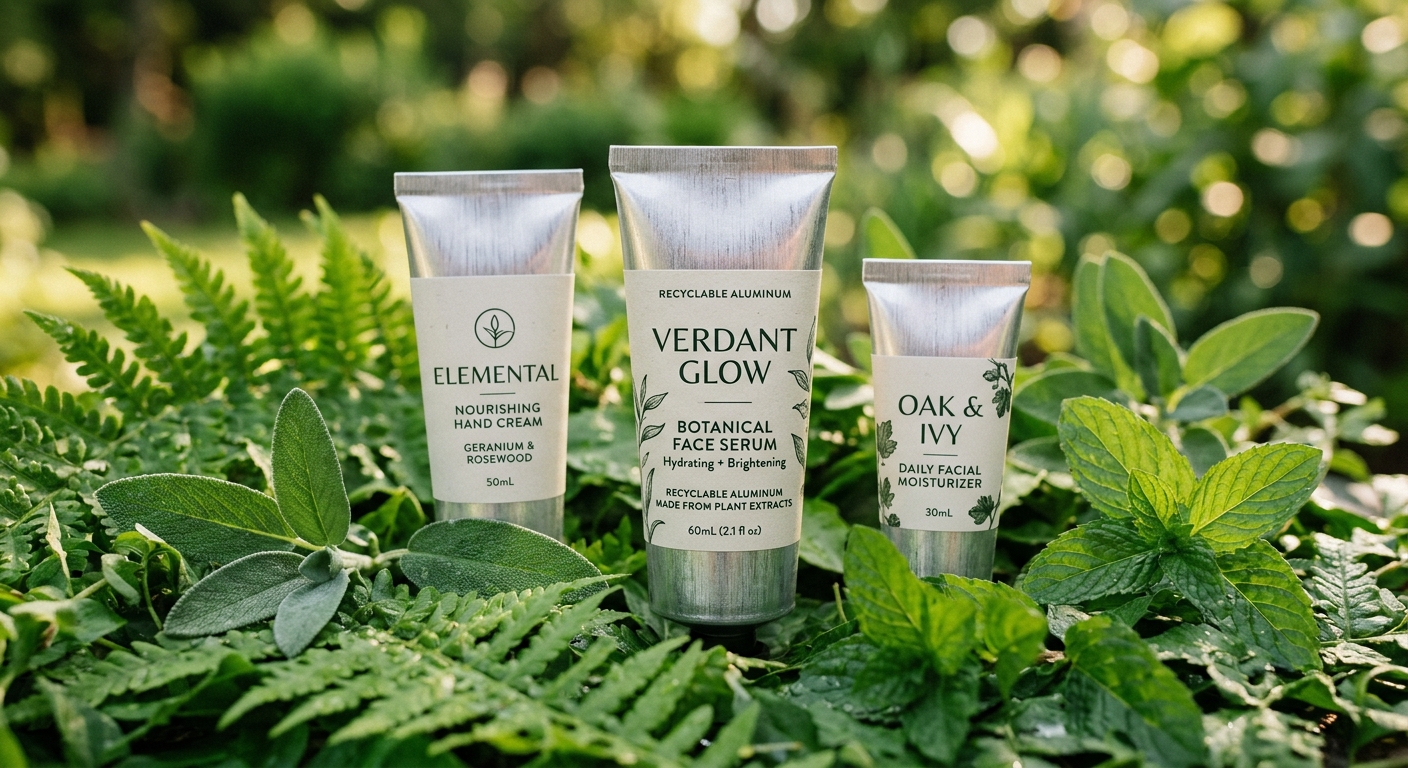
Sustainable aluminum packaging for cosmetics is a prime example: aluminum is infinitely recyclable, lightweight, and provides an excellent oxygen and light barrier. You get preservation performance, brand story, and cost efficiency in one material choice. For a deeper framework on evaluating sustainability in actual procurement decisions, see our guide on what sustainable packaging really means in real procurement.
For instance, a European organic skincare brand we supplied switched from a PET bottle with a PP cap and a paper sleeve (three materials, not easily recyclable together) to a single aluminum tube with direct printing. They eliminated the sleeve entirely, reduced their packaging BOM from three components to one, and cut per-unit cost by 31%. Their recycling claim went from “partially recyclable” to “100% recyclable aluminum” — a message that resonated strongly in their German and Scandinavian markets.
Mistake #5: Skipping Prototype Testing Before Full Production
This is the mistake that causes the most dramatic financial pain — and it’s entirely preventable. Brands finalize artwork, approve a digital mockup on screen, and greenlight a 50,000-unit production run. Then the tubes arrive and the color is off. Or the cap doesn’t seal properly. Or the lacquer reacts with the formula and the interior coating peels after three weeks.
What Prototype Testing Actually Catches
- Color accuracy — Screen colors and printed colors on metal or plastic substrates are never identical. A physical proof reveals the real result
- Seal integrity — Does the crimp or cap maintain a hermetic seal under temperature cycling? You can’t test this on a PDF
- Formula compatibility — Acidic or alkaline formulas can corrode interior linings. A 4–6 week stability test with actual product in the actual tube catches reactions before they become recalls
- Functional ergonomics — How does the tube feel in hand? Does the orifice dispense the right bead size? Is the cap easy to open with wet hands?
The Fix
Always request a pre-production sample run — typically 50–200 units. Yes, this adds 2–3 weeks to your timeline and costs a few hundred dollars. But compare that to the cost of scrapping or reworking 50,000 defective units, which can easily run $15,000–$25,000 including reprinting, reshipping, and lost sales during the delay.
Build prototype testing into your project timeline from day one. At dolypackage, we provide physical samples with actual printing and interior coatings so brands can run real compatibility tests before committing to full production. It’s the single highest-ROI step in the entire packaging procurement process.
The Hidden Sixth Mistake: Not Aligning Packaging with Brand Psychology
This one doesn’t show up on a cost spreadsheet, but it bleeds revenue through lower conversion rates and weaker brand recall. Your packaging is the first physical touchpoint a customer has with your brand. If it sends the wrong psychological signals — cheap when you’re premium, clinical when you’re playful, generic when you’re artisanal — you’re losing sales you’ll never be able to measure.
Why This Matters Financially
Packaging that misaligns with brand positioning creates cognitive dissonance. A customer picks up your product expecting one experience and gets another. They don’t complain — they just don’t repurchase. And customer acquisition costs 5–7x more than retention, so every lost repeat buyer is expensive.
The Fix
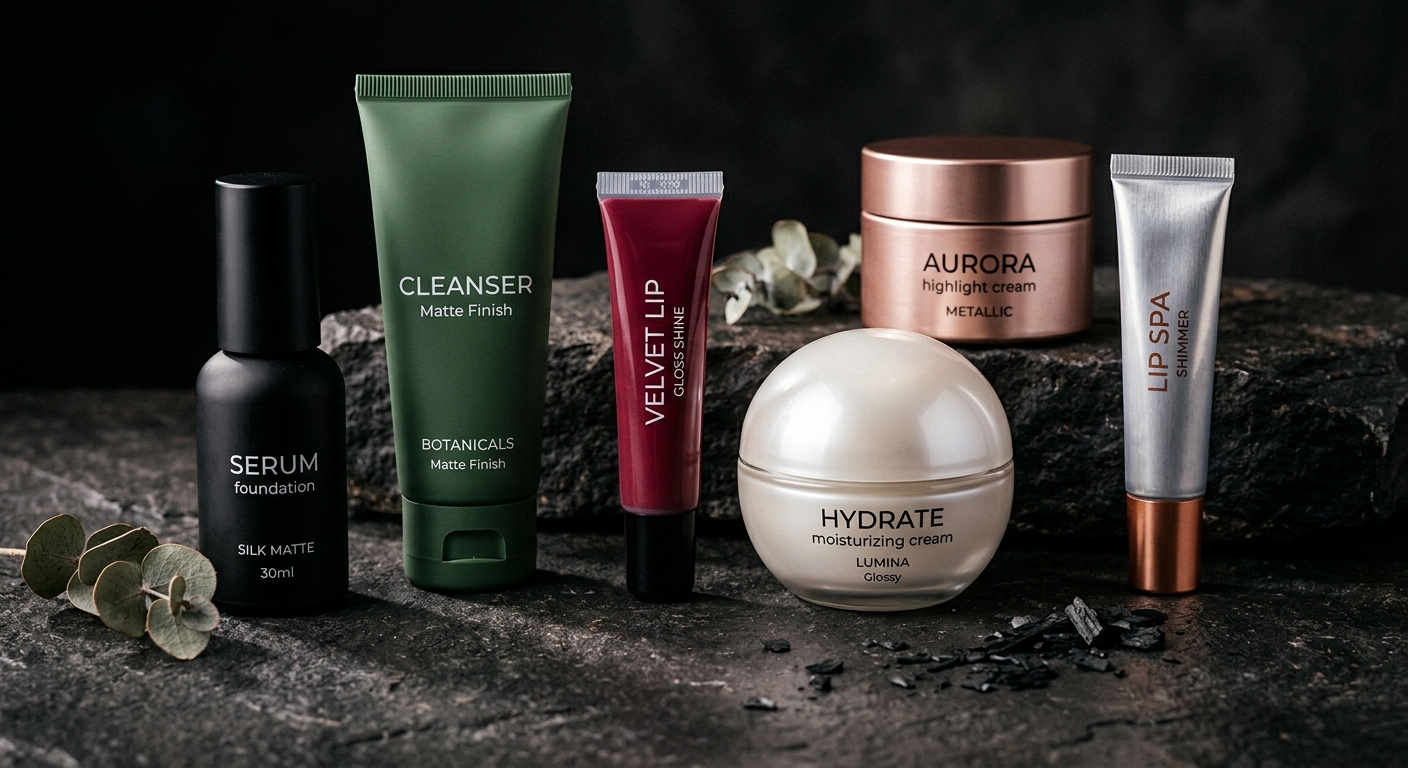
Invest time (not necessarily more money) in understanding cosmetic packaging psychology. Matte finishes signal sophistication. Metallic accents signal luxury. Transparent elements signal honesty. Rounded shapes feel friendly; angular shapes feel technical. These choices cost the same to manufacture — the difference is entirely in intentional design.
Audit your current packaging against your brand positioning statement. If there’s a disconnect, a simple finish change or color shift can realign perception without a complete redesign.
A Quick-Reference Checklist: Stop the Bleeding
Before you place your next packaging order, run through this checklist. Print it out, tape it to your monitor, share it with your procurement team:
- Material audit: Can you remove any packaging layer without hurting protection or brand perception?
- MOQ math: Have you calculated true cost per unit including warehousing, capital, and obsolescence — not just the supplier quote?
- Format-product fit: Does your packaging format match your formula’s viscosity, sensitivity, and dispensing needs?
- Sustainability ROI: Have you evaluated mono-material options that could reduce material cost, shipping weight, and regulatory fees simultaneously?
- Prototype gate: Is a physical sample run built into your timeline before any full production commitment?
- Brand alignment: Does the packaging’s finish, shape, and color palette match your brand positioning?
Each item on this list represents a potential 5–15% cost saving or revenue improvement. Stack them together and you’re looking at a fundamentally different packaging P&L.
Start Fixing These Today
Packaging mistakes compound. Every reorder that carries the same inefficiency multiplies the cost. The good news? Most fixes don’t require starting from scratch — they require asking better questions before you commit.
If you’re reviewing your current packaging setup or planning a new product launch, dolypackage specializes in helping brands right-size their packaging choices. From material selection and format recommendations to prototype sampling and sustainable design, we work with you to eliminate the waste before it hits your budget. Reach out to our team for a packaging consultation — sometimes a 30-minute conversation saves more than months of trial and error.


