The right packaging material is the one that protects your specific formulation, fits your target customer’s expectations, and doesn’t blow up your landed cost per unit. That’s it — everything else is noise. In this guide, we break down aluminum, plastic, glass, laminate, and aluminum cosmetic tubes — with real trade-offs so you can make a decision based on facts, not supplier sales pitches. Whether you're launching a cosmetic line, a pharmaceutical product, or a food-grade paste, the material you choose will affect shelf life, brand perception, regulatory compliance, and yield — for beauty and personal care, aluminum cosmetic tubes offer a proven combination of barrier protection, recyclability, and premium shelf presence.
Start With Your Product, Not Your Preference
Here’s the mistake most brand owners make: they pick a material because they like how it looks on a competitor’s shelf, then try to make their formula work inside it. That’s backwards. Your product’s chemical composition, viscosity, sensitivity to light and oxygen, and required shelf life should dictate the material — not the other way around.
Ask These Five Questions First
Is your product reactive? Certain active ingredients (retinol, vitamin C, some essential oils) degrade rapidly when exposed to light or oxygen. You need an opaque, high-barrier material like aluminum.
What’s the viscosity? Thick pastes and creams — including lip gloss — dispense best from soft squeezable tubes. Thin serums work better in bottles with droppers or pumps.
What’s the target shelf life? If you need 24+ months, you can’t afford a material with oxygen permeability. Period.
Does your product contain volatile compounds? Fragrances and solvents can interact with certain plastics, causing scalping (absorption into the container wall) or leaching.
What regulations apply? Food-contact, pharmaceutical, and cosmetic packaging each have different compliance requirements. Check international regulations and standards for packaging before you commit to a material.
A skincare brand we worked with initially wanted clear PET bottles for their vitamin C serum because “customers want to see the product.” The problem? Ascorbic acid oxidizes in weeks when exposed to light. They switched to opaque aluminum tubes and extended shelf stability from 3 months to over 18 months — without reformulating.
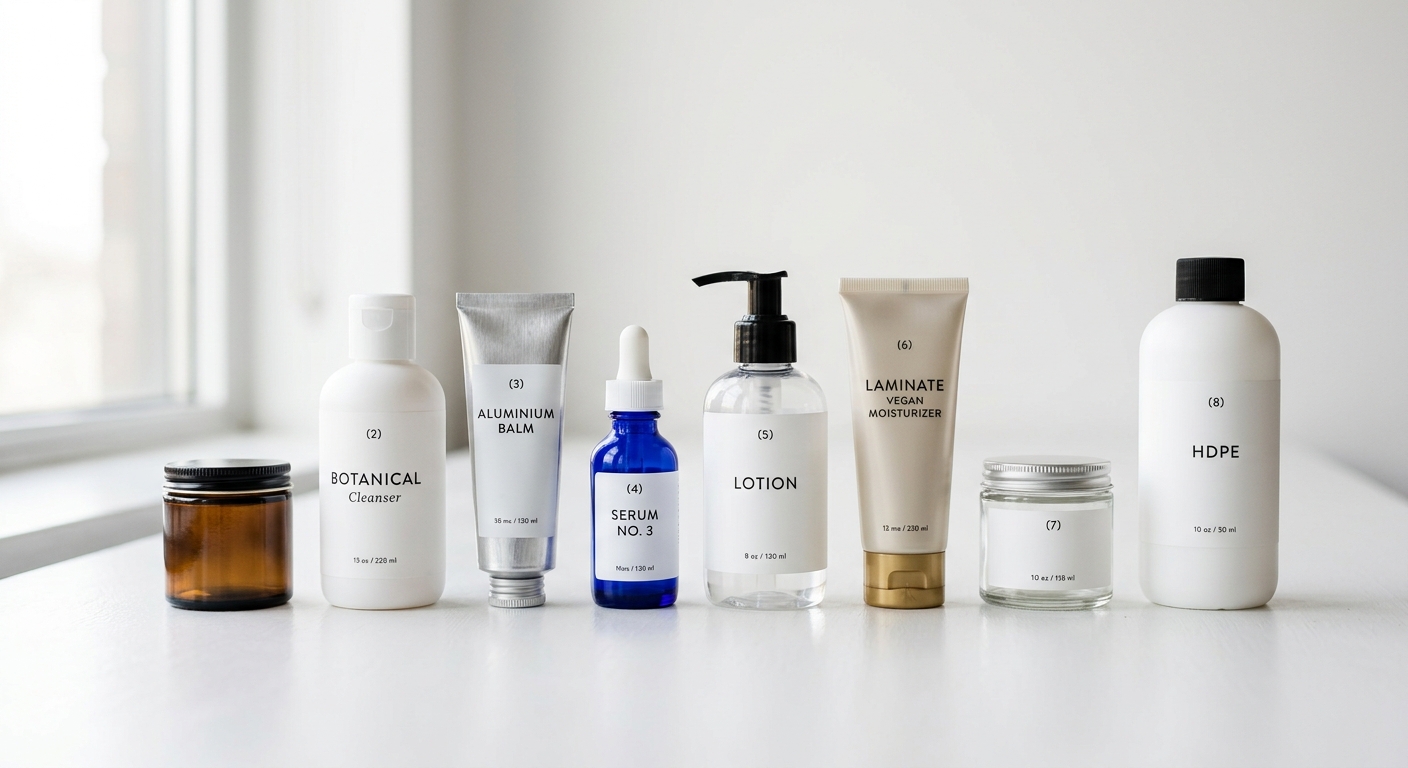
Different packaging material types laid out for product compatibility evaluation
Aluminum: The Workhorse You're Probably Underestimating
Aluminum tubes don’t get the glamour shots on Instagram, but they quietly dominate pharmaceutical packaging, professional cosmetics, and food-grade applications for a reason: they offer a complete barrier against light, moisture, and oxygen in a lightweight, infinitely recyclable format. No other single material checks all three boxes at this price point.
Why Aluminum Outperforms for Sensitive Formulations
When you use an aluminum squeeze tube, it stays compressed. That means zero air re-entry — your product isn't exposed to oxygen every time the customer uses it. Plastic tubes spring back, sucking air in. For products with oxidation-sensitive actives, this difference alone can add months of shelf life.
The Sustainability Angle Is Real
Aluminum is one of the few packaging materials that can be recycled indefinitely without losing quality. That matters more every year as retailers and consumers scrutinize packaging footprints. If sustainability is part of your brand story, aluminum gives you a credible claim — not just a marketing one. Learn more about sustainable aluminum packaging for cosmetics and how it fits into real procurement decisions.
Where Aluminum Falls Short
Transparency. You can’t see through it, which is a dealbreaker for some product categories (think clear gels or color-matched foundations). It also requires internal lacquer coatings for highly acidic or alkaline formulas, which adds a step to quality assurance. And if your brand identity is built around a modern, minimalist plastic aesthetic, aluminum may feel too “clinical” — though that perception is shifting fast.
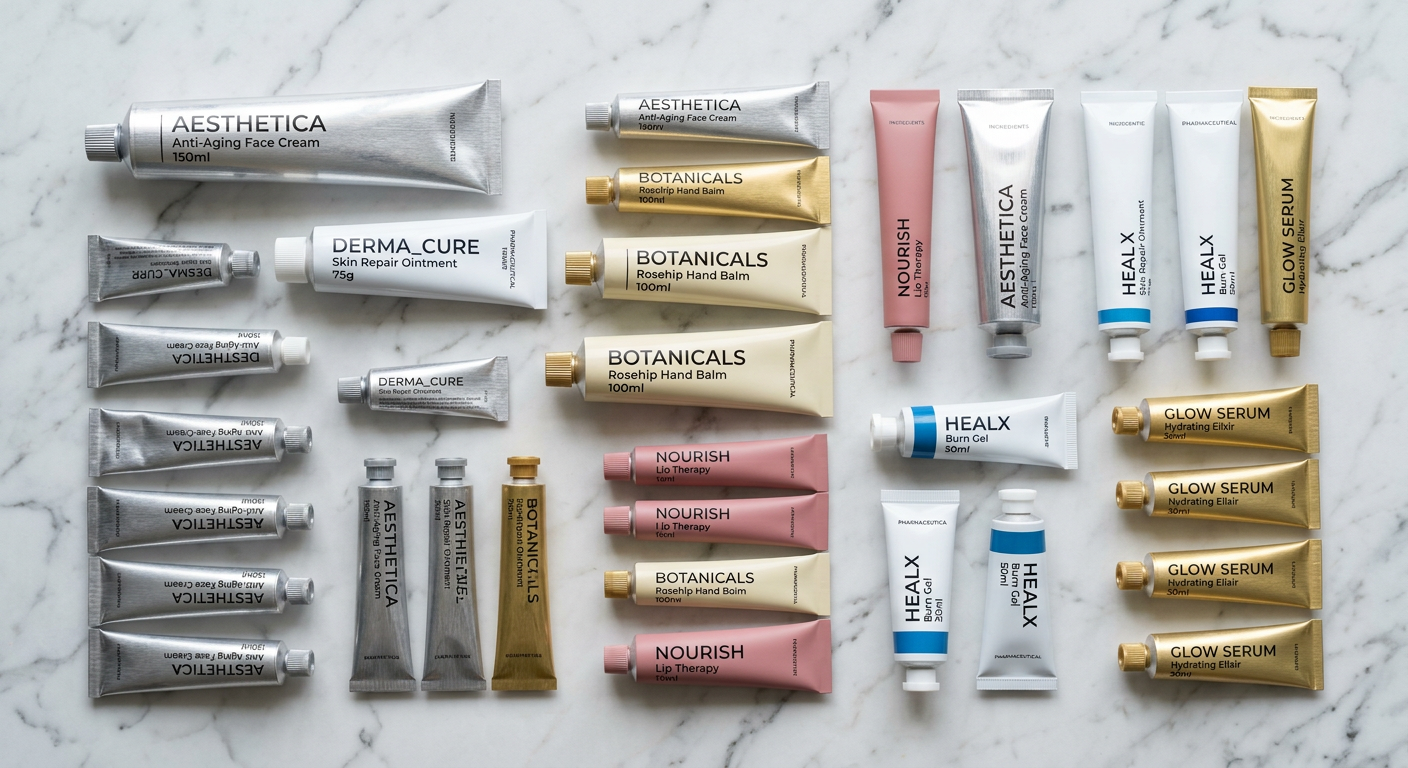
Premium aluminum packaging tubes in various sizes for cosmetic and pharmaceutical use
Plastic: Cheap and Versatile, But Know the Limits
Plastic is the default choice for mass-market personal care, and the economics are hard to argue with. HDPE, LDPE, PP, and PET each offer different balances of flexibility, clarity, and chemical resistance. But “plastic” is not a single material — picking the wrong resin can ruin your product.
Quick Resin Guide
HDPE (High-Density Polyethylene): Stiff, opaque, excellent chemical resistance. Great for shampoos, lotions, and household products. Poor barrier to oxygen.
LDPE (Low-Density Polyethylene): Flexible, squeezable. The classic tube material for mid-range cosmetics. Decent moisture barrier, mediocre oxygen barrier.
PP (Polypropylene): Higher heat resistance, good for hot-fill products. Commonly used for caps and closures.
PET (Polyethylene Terephthalate): Crystal-clear transparency, good barrier properties for a plastic. Popular for serums and toners where visual appeal matters.
The Sustainability Problem
Let’s be honest: most plastic packaging ends up in landfill or incineration, not recycled. Mono-material designs (single resin, no mixed components) improve recyclability, but multi-layer tubes and bottles with different cap materials are notoriously hard to recycle. If your brand is making eco-friendly claims, you need to back them up with material choices that actually work in municipal recycling streams. Read our deep dive on evaluating sustainable packaging in real procurement for a more nuanced take.
Glass: Premium Perception, Premium Problems
Glass screams luxury. It’s inert, impermeable, and customers associate it with quality. For high-end skincare, fragrance, and specialty food products, glass remains the gold standard for shelf presence. But the trade-offs are significant and often underestimated by first-time brand owners.
The Real Costs Beyond Unit Price
A 50ml glass jar might cost 2–3x the equivalent plastic container, but the true cost gap is wider. Glass is heavy — expect 30–50% higher freight costs. It’s fragile — breakage rates during shipping can run 2–5% without premium packaging inserts, and those inserts add more cost and waste. And glass requires secondary packaging (boxes, dividers) that plastic and aluminum tubes often don’t need.
When Glass Makes Sense
If your retail price point is above $40–50 per unit, the premium perception of glass can justify the cost. Luxury serums, artisanal food products, and high-end candles benefit from the weight and tactile feel of glass. But for products under $20 at retail? You’re probably eating margin for aesthetics that don’t move the sales needle enough.
Luxury frosted glass cosmetic jars and bottles showcasing premium packaging
Laminate Tubes: The Middle Ground
Laminate tubes — typically a sandwich of plastic layers with an aluminum foil barrier in the middle — attempt to combine the squeeze-ability of plastic with the barrier properties of metal. They’re the dominant format for toothpaste worldwide and increasingly popular for cosmetics.
Strengths
Laminate tubes offer good barrier protection at a lower cost than pure aluminum. They accept high-quality offset and digital printing, giving brands vibrant, photo-realistic graphics. The plastic outer layer can be customized with matte, gloss, or soft-touch finishes. For brands looking at wholesale toothpaste tubes, laminate is often the default starting point.
The Recyclability Catch
Here’s the uncomfortable truth: multi-layer laminate tubes are extremely difficult to recycle. The aluminum foil layer is bonded to plastic, and most recycling facilities can’t separate them. Some manufacturers are developing mono-material alternatives (all-PE tubes with EVOH barrier layers), but these are still less proven in barrier performance. If end-of-life recyclability is a hard requirement for your brand, pure aluminum or mono-material plastic may be better choices.
Match Your Material to Your Market Channel
A packaging material that works brilliantly in a luxury boutique can fail miserably in e-commerce, and vice versa. Your sales channel should directly influence your material choice.
E-Commerce: Durability Wins
Products sold online endure 15–20 handling touchpoints between your warehouse and the customer’s door. Glass is a liability here unless you invest in protective inserts. Aluminum and plastic tubes are virtually indestructible in transit, which means fewer returns, fewer replacements, and happier customers. A natural skincare brand shipping DTC switched from glass dropper bottles to aluminum tubes for their body creams and saw damage-related returns drop from 4.2% to 0.3%.
Retail Shelf: Visual Impact Matters More
In a physical store, your packaging has about 3 seconds to catch a shopper’s eye. Glass and well-printed laminate tubes perform well here because they communicate quality at a glance. Aluminum tubes with metallic finishes or embossed details can also stand out, especially in the pharma and professional skincare aisles.
Professional/B2B: Function Over Form
If your end user is a salon, clinic, or industrial buyer, they care about dispensing precision, product preservation, and cost per use — not Instagram aesthetics. Aluminum tubes dominate this channel for good reason.
Regulatory Compliance: The Non-Negotiable Filter
No matter how perfect a material looks on paper, it’s worthless if it can’t pass regulatory muster in your target markets. This is where many brands get burned — they finalize packaging design, place a production order, then discover their material doesn’t meet FDA, EU, or local food-contact requirements.
Key Compliance Areas by Industry
Cosmetics: EU Regulation 1223/2009 requires that packaging materials don’t transfer harmful substances to the product. Migration testing is essential for any material in direct contact with the formula. See our guide on safety and compliance in cosmetic packaging.
Pharmaceuticals: USP and EP standards mandate specific extractable and leachable testing. Aluminum tubes with pharmaceutical-grade internal lacquers are the industry standard.
Food: FDA 21 CFR and EU Regulation 1935/2004 govern food-contact materials. Aluminum is generally recognized as safe (GRAS), but coatings and inks must also comply.
The takeaway: choose your material, then immediately verify compliance for every market you plan to sell in. Don’t treat this as a final checkbox — make it an early filter.
Cost Analysis: Think Total Cost, Not Unit Price
The biggest budgeting mistake in packaging procurement is fixating on per-unit material cost while ignoring the total cost of ownership. A $0.15 plastic tube that causes 5% product returns costs more than a $0.30 aluminum tube with near-zero returns. Always calculate total cost.
Components of Total Packaging Cost
Material unit cost: What you pay per piece at your order volume.
Tooling and setup: Molds, printing plates, and dies. Aluminum tube tooling is generally simpler than custom plastic molds.
Freight: Weight and volume directly impact shipping cost. Glass can add 30–50% to freight bills compared to tubes.
Breakage and waste: Factor in realistic damage rates for your supply chain.
Secondary packaging: Does the material require a box, insert, or protective wrap? Tubes often ship box-free; glass almost never does.
Minimum order quantities (MOQs): Some materials and formats have high MOQs that tie up capital. Aluminum tubes typically offer more flexible MOQs than custom glass.
A Practical Example
Consider a 100ml hand cream. A laminate tube might cost $0.18/unit with a 10,000 MOQ. An aluminum tube might cost $0.28/unit with a 5,000 MOQ. But the aluminum tube eliminates the need for a secondary carton ($0.12 saved), reduces freight weight, and extends shelf life by 6 months — meaning less unsold inventory written off. At scale, the aluminum option often wins on total cost despite a higher sticker price.
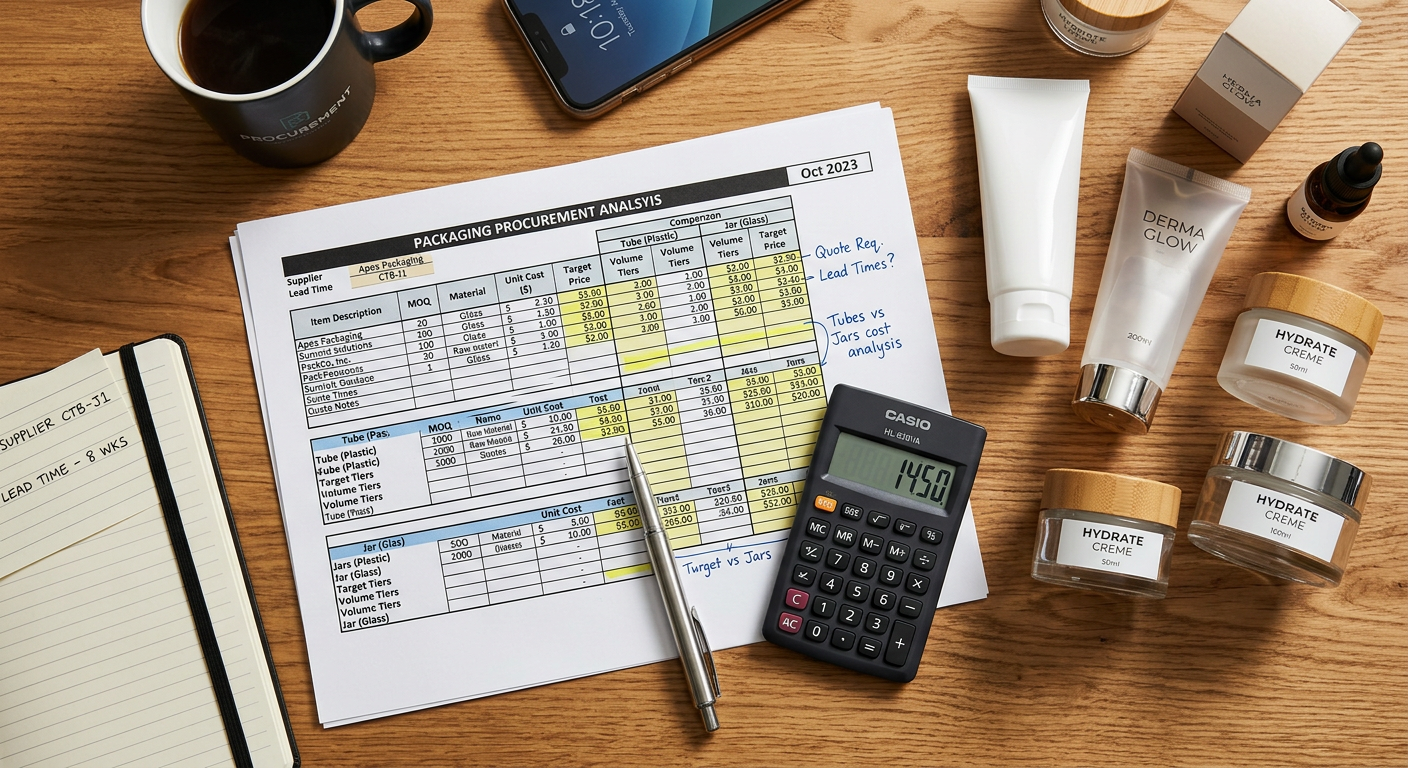
Packaging cost analysis workspace with tube samples and cost comparison documents
Sustainability: Separate the Signal From the Noise
Every packaging supplier will tell you their material is “sustainable.” Most of those claims fall apart under scrutiny. Here’s how to evaluate sustainability with a clear head.
The Hierarchy That Actually Matters
In order of environmental impact reduction: reduce material (use less) → reuse (refillable systems) → recycle (material recovery) → recover (energy from waste). Most brands skip straight to “recyclable” without asking whether the material is actually recycled in practice. A technically recyclable laminate tube that no municipal facility accepts is functionally non-recyclable.
What Buyers Should Demand From Suppliers
Actual recycling rates for the material in your target markets — not theoretical recyclability.
Life cycle assessment (LCA) data, even simplified versions.
Aluminum stands out here because it has one of the highest actual recycling rates of any packaging material globally — around 75% in Europe and growing. Read more about building an eco-friendly brand through sustainable packaging choices that customers genuinely respond to.
Making Your Final Decision: A Practical Framework
You’ve absorbed a lot of information. Here’s how to synthesize it into an actual decision without analysis paralysis.
The Three-Filter Method
Filter 1 — Product compatibility: Eliminate any material that can’t protect your formula for the required shelf life. This is pass/fail, not a sliding scale. If your product degrades in plastic, plastic is off the table regardless of cost.
Filter 2 — Regulatory compliance: Remove any material that can’t meet the standards of your target markets. Don’t assume you’ll “figure it out later.”
Filter 3 — Total cost and brand alignment: Among the remaining options, choose the material that delivers the best total cost of ownership while matching your brand positioning and sustainability commitments.
When In Doubt, Test
Request samples from your shortlisted suppliers. Run stability testing with your actual formula in the actual packaging — not a generic compatibility chart. Three months of accelerated stability testing can save you from a catastrophic product recall.
At dolypackage, we help brands navigate exactly this process every day. Whether you need aluminum tubes for pharmaceuticals, cosmetic-grade collapsible tubes, or custom packaging solutions, our team can provide samples, technical specifications, and compliance documentation to make your decision easier. Reach out through our about us page to start a conversation — no pressure, just practical guidance from people who understand packaging materials inside and out.